
When I first started my search for the ultimate smart gym, I quickly realized “premium” has levels. I wasnU+2019t just looking for a better dumbbell; I was looking for a complete replacement for my gym membership, my trainer, and my motivation.
That search led me straight to OxeFit, a brand that doesnU+2019t just compete in the smart fitness spaceU+2014it aims to redefine it. But I hit a wall. They offer two top-tier machines: the XS1 and the XP1.
My goal with this article is to lay out my entire analysis, from a real user’s perspective, so you can understand which of these incredible, (and incredibly expensive), machines is the right one for your fitness future.
The Quick Comparison
| Feature | OxeFit XS1 (The Home Champion) | OxeFit XP1 (The Pro-Level Beast) |
| Primary Audience | High-end home users, families, fitness enthusiasts | Professional athletes, commercial gyms, physical therapy clinics |
| Key Function | All-in-One: Strength, Cardio, and Digital Pilates | Pure Strength & Performance Analytics |
| Max Resistance | Up to 250 lbs (from the deck) | Up to 500 lbs (dynamic variable resistance) |
| Footprint | Foldable platform; designed for home spaces | Massive, non-folding; requires a dedicated large area |
| Core Activities | Strength, SkiCross, Rowing, Kayaking, Pilates, & more | Strength training only (highly advanced) |
| Screen | 32-inch touchscreen | 43-inch touchscreen |
| Key Tech | OxeAI (for personal users), Virtual Spotter, Force Plate | OxeLead (for trainers/coaches), Advanced Force Plate Asymmetry |
| Hardware | Manually adjustable rack arms | Motorized, digitally controlled rack arms |
| Price Point | Premium Consumer (Est. $4k – $7k) | Commercial Grade (Est. $40,000+) |
My Journey To The Top of The Smart Gym Market

Let me be clear: deciding to buy an OxeFit machine isn’t like choosing between two treadmills at your local sporting goods store.
This is a decision to invest in a piece of technology that costs as much as a used car.
When I started, I just wanted the “best.”
But “best” is subjective. Is “best” the one that offers the most variety?
Or is “best” the one that can handle the most weight?
This is the central conflict between the XS1 and the XP1.
My initial research was confusing. They look similar in photos—big, sleek, black machines with massive screens. But I quickly learned that one is built for my garage, and the other is built for a Division I performance lab.
My goal was total fitness. I’m a person who gets bored. I’ll lift for six months, then get the itch to do cardio, then I’ll hurt my back and wish I’d focused more on mobility. I was looking for a single machine that could handle my fitness A.D.D. and keep me engaged for years.
This is the mindset I’m bringing to this comparison, and it’s a crucial one to have. I’m not a professional athlete, but I’m serious about my health. I’m not a physical therapist, but I’m deeply interested in analytics and form correction.
I quickly realized I was the exact target market for the XS1, but I had to understand the XP1 to know what I wasn’t getting. It turns out, the differences are everything.
Also Read: Comparison of Secretlab Titan Evo And Titan Evo Lite.
The OxeFit XS1: The All-in-One Home Gym Reimagined
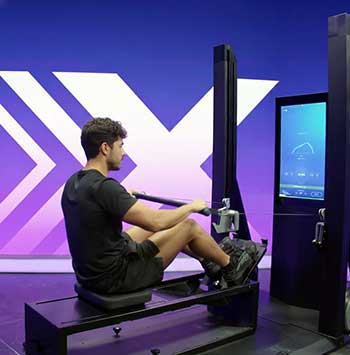
The OxeFit XS1 is the machine you’ve likely seen in luxury home gym showcases.
This is OxeFit’s answer to the consumer market, and it’s designed to be the only piece of fitness equipment you ever need to own.
It’s built on a platform of versatility.
My first “a-ha” moment was realizing the XS1 isn’t just a strength machine.
It’s a strength, cardio, and digital Pilates machine. This is its single greatest selling point and what separates it from most of its digital competition.
The “Total Body” Promise: Strength
First, let’s talk strength. The XS1 uses two digital motors to provide up to 250 pounds of resistance from the deck platform.2 This is where you’ll do your deadlifts, squats, and overhead presses. It also has adjustable rack arms that provide up to 140 pounds of resistance for things like chest presses and rows.3
But it’s not just “weight.” It’s smart weight. This is where I started to get excited. The XS1 offers advanced training modes that I’ve only ever read about:
- Chains: This mode mimics adding real chains to a barbell.4 The weight is lighter at the bottom of the lift (the “weak” point) and gets progressively heavier as you extend (the “strong” point). My bench press felt completely different, engaging my triceps at the top in a way free weights never could.
- Overload: This is an eccentric-focused mode. It gives you a manageable weight on the “up” phase (concentric) and then increases the load on the “down” phase (eccentric). This is a well-known muscle-building technique that is almost impossible to do safely without a partner or two.
- Perturbation: This was the weirdest and coolest. The machine adds random, gentle “tugs” to the cables during an exercise (like a plank or a hold).5 This forces your stabilizer muscles to fire constantly, improving joint stability and balance.
The “Total Body” Promise: Cardio and Pilates
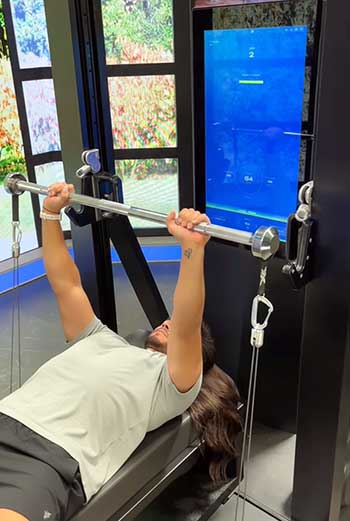
This is where the XS1 completely won me over.
I was expecting to have to buy a separate rower or ski-erg.
The XS1 has accessories for SkiCross, Rowing, Kayaking, Paddleboarding, and Canoeing.
I’m not just mimicking a motion.
With the rower attachment, I am rowing against the machine’s digital resistance.
The SkiCross is a full-on cardio burn. This variety is, in my opinion, the cure for workout boredom.
Then, there’s the Digital Pilates functionality, which uses the machine’s force plate and cables to create a Pilates reformer experience.
This focus on core, mobility, and controlled movement is what’s missing from 99% of “smart gyms” that are just focused on getting you beefy.
The Tech That Teaches
The 32-inch screen is my command center. But the real “smart” part is the technology I can’t see.
- Force Plate: The platform I’m standing on is a force plate. As I’m squatting, the screen shows me, in real-time, if I’m leaning too far left or right or shifting my weight to my toes. This was humbling. I thought my squat form was decent; my first session showed I was favoring my right side by almost 15%. This data is invaluable for preventing injury.
- Virtual Spotter: This is a safety net. I can tell the machine that I want to push to failure on my last set of bench presses. The Virtual Spotter’s AI detects when I’m struggling—when my bar speed slows to a crawl—and it will automatically reduce the weight just enough for me to safely complete the rep and re-rack.8 This gave me the confidence to actually push myself when training alone.
Also Read: Is OxeFit XS1 Worth It?
The OxeFit XP1: The Professional Powerhouse
After analyzing the XS1, I looked at the XP1 and thought, “Okay, so this is just the bigger, badder version, right?”
I was completely wrong.
The XP1 isn’t the “XS1 Pro.” It’s a completely different product built for a completely different user, and it’s less versatile. The XP1 is a highly specialized, clinical-grade strength and analytics machine.9
This is the machine you find in an NFL training camp, a high-end physical therapy clinic, or a human performance lab at a university.
- A Different Beast Entirely
First, the XP1 only does strength. There is no SkiCross. There is no rowing. There is no Digital Pilates. OxeFit stripped all of that away to focus on one thing: creating and measuring athletic power at an elite level.
The resistance goes up to 500 pounds. The screen is a massive 43-inch monitor. The platform isn’t foldable; in fact, the entire unit is a non-folding behemoth that weighs a ton. It’s built to be bolted into a professional facility and used by 300-pound athletes all day, every day.
- The Pro-Level Hardware
The most obvious difference I noticed, besides the size, was the rack arms. On the XS1, I have to manually pull a pin and slide the arms up and down to adjust them, just like at a commercial gym.
On the XP1, the rack arms are motorized. The trainer or athlete selects the exercise on the screen, and the arms automatically move to the correct height. This is a workflow optimization for a commercial setting where time is money and multiple athletes are cycling through.
- The Commercial Brain: OxeLead
This is the most important distinction. As a home user, I interact with the OxeAI, which designs my workouts and tracks my progress.
A professional trainer at a clinic uses OxeLead. This is a separate software platform. A trainer can use OxeLead to manage their entire roster of athletes. They can build custom programs and assign them to 20 different people.
But here’s the killer feature: The XP1’s advanced force plates and sensors conduct performance assessments that are almost medical-grade.
It can generate a report showing a 0.5% asymmetry in power output between an athlete’s left and right leg during a jump. A physical therapist can use this data to prove (to a patient and an insurance company) that their rehab is working, tracking their recovery in minute detail.
You and I don’t need this. We just need to know if we’re leaning. A pro team needs to know if their star player’s surgically repaired knee is firing at 98% or 99%. That’s the XP1.
Pros And Cons of OxeFit XS1
Pros
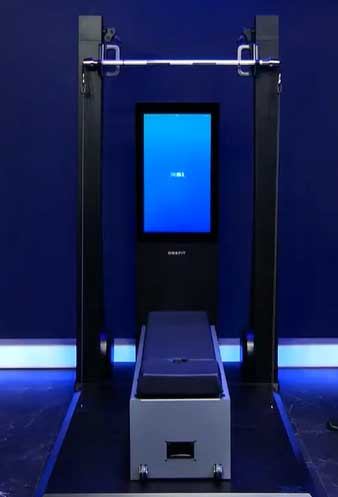
- Unmatched Versatility: This is the biggest win. To get strength, rowing, skiing, and Pilates, I would need to buy four separate, large, expensive machines. The XS1 combines them all into one ecosystem.15 This saves both space and money, relatively speaking.
- Space-Conscious (for what it is): The foldable deck is a non-negotiable for a home gym. When I’m not using it, I can fold the platform up, and it’s relatively flush against the wall. The XP1 is a permanent fixture in the middle of a room.
- Phenomenal Form Correction: The combination of the force plate and the Virtual Spotter is, in my opinion, safer and more effective than 90% of the personal trainers I’ve ever worked with. It’s objective, data-driven feedback that is always watching.
- Engaging and Fun: The variety keeps me coming back. I can do a heavy lifting day, followed by a fast-paced SkiCross cardio session, and end my week with a Digital Pilates mobility class. I’m not getting bored.
Cons
- Still a Premium Price: Let’s not mince words. This is one of the most expensive smart gyms on the market. It is a major financial commitment, far beyond a Tonal or a Peloton.
- The Membership Requirement: To get all this amazing functionality—the AI, the classes, the tracking, the Virtual Spotter—you must pay the ongoing monthly subscription. Without it, the machine is just a “Freestyle” cable machine, and you lose all the smart features.
- Potential Weight Cap for Elite Lifters: For 99% of us, 250 pounds of resistance is more than enough for squats and deadlifts. But if you are a competitive powerlifter who is already squatting 400+ pounds, the XS1 is not going to be your primary strength tool.
Also Read: Comparison of MAXPRO And Vitruvian Home Gyms.
Pros And Cons of OxeFit XP1
Pros
- Absolute Max Resistance: With up to 500 pounds of digital resistance, this machine can challenge the strongest athletes on the planet.
- Elite Performance Analytics: The OxeLead software and advanced sensors provide data that is simply unavailable on any other platform. It’s a performance lab, not just a gym.
- Extreme Durability: This machine is built to withstand constant, heavy, commercial use without breaking a sweat. Its construction is on another level.
- Workflow Efficiency: Features like the motorized rack arms and trainer-focused software are designed to optimize a professional environment, making it faster and easier to train clients.
Cons
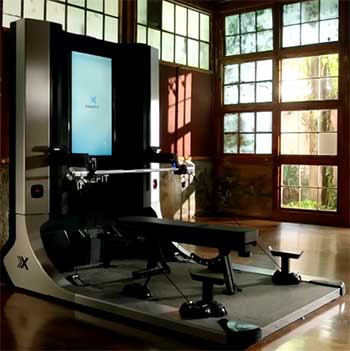
- Commercially Prohibitive Price: The $40,000+ price tag immediately removes this from consideration for 99.9% of home users. It’s not a product for individuals; it’s a capital expense for a business.
- Massive, Permanent Footprint: You need a dedicated room. It does not fold. It does not move easily. It is an installation.
- Strength-Only (No Variety): This is the biggest shocker for most people. You pay 10x the price of the XS1 and you lose the cardio and Pilates. It’s a specialized tool, and that specialization means sacrificing the variety that makes the XS1 so appealing.
- Total Overkill: The level of data is more than a home user could ever need or interpret. It’s like buying a Formula 1 car to commute to the grocery store.
Head-to-Head Comparison of OxeFit XS1 And XP1
So, how did I make my choice? It came down to answering four simple questions.
- The User: Who Are You?
Are you an individual, a couple, or a family looking to get in shape, build muscle, and stay healthy in a fun, engaging way? You are an XS1 user.
Are you a professional trainer, a clinic owner, or a performance-lab manager whose job is to analyze and improve the performance of other people? You are an XP1 user.
- The Goal: What Do You Want?
Is your goal “total fitness”—a blend of strength, cardio, and mobility? Do you want to be challenged but also have variety? You want the XS1.
Is your goal “pure strength and power output”? Is your entire focus on analytics, asymmetry, and eking out a 1% gain in performance? You want the XP1.
- The Space: Where Will It Go?
Is this going into a spare bedroom, a garage, or a living room, where space is shared and the ability to fold it up is a major bonus? You need the XS1.
Is this going into a 5,000-square-foot commercial facility where it will have its own dedicated 10×10-foot area? You need the XP1.
- The Budget: What’s the Real Cost?
Is your budget in the “premium” consumer range? Are you willing to make a significant investment for a top-of-the-line, all-in-one solution? You are an XS1 buyer.
Is your budget in the “commercial equipment” range? Are you purchasing this as a business asset that will generate revenue or improve your professional services? You are an XP1 buyer.
Also Read: Comparison of Cubitt And Fitbit Fitness Trackers.
Frequently Asked Questions (FAQ)
The membership is required to access the OxeFit AI, on-demand classes, data tracking, and advanced training modes.20 The purchase of an XS1 typically requires a one-year membership commitment, and the price is an additional recurring cost on top of the hardware.
Yes, but in a very limited capacity. After your initial commitment, you can cancel your membership. The XS1 will revert to “Freestyle Mode,” which allows you to use the cables with digital weight but without any classes, AI, data tracking, or safety features like the Virtual Spotter.
It’s different. Tonal is a fantastic, compact (wall-mounted) smart-strength machine.22 OxeFit’s XS1 is a much larger, standalone, all-in-one unit that also includes advanced cardio (SkiCross, Rowing) and Digital Pilates.23 If you only want strength, Tonal is a great competitor.24 If you want a total gym replacement, the XS1 offers far more variety.25
Yes, the OxeFit XS1 is excellent for beginners. The system’s AI, real-time form feedback (from the force plate), and Virtual Spotter features are specifically designed to help new users lift with confidence and correct form, which is crucial for preventing injury and building a strong foundation.
Conclusion: My Choice And Your Path Forward
After laying it all out, the answer for me was crystal clear. I am not a professional performance coach. I am not training for the NFL Combine. I am a person who wants to be strong, lean, and healthy, and I don’t want to get bored doing it.
The OxeFit XS1 is the machine built for me. It offers a universe of training options in a single, smart, and (relatively) compact footprint.
The OxeFit XP1 is a magnificent piece of engineering, but it’s a scalpel. The XS1 is the ultimate multi-tool.19
So, when you are looking at these two machines, the question you need to answer isn’t “Which one is better?” The question is “Who am I?” Are you the elite performance lab, or are you the ultimate home gym enthusiast? Once you answer that, your choice becomes simple.