
If you’ve ever stared at the cleaning aisle overwhelmed by the sheer number of bottles promising to “kill 99.9% of germs,” you are definitely not alone.
I’ve been there, standing between the jugs of industrial-looking concentrates and the sleek, familiar aerosol cans, wondering which one actually gets the job done without costing a fortune. Today, I’m breaking down the two heavyweights that likely dominate your decision-making: OdoBan and Lysol.
My goal isn’t just to tell you what’s on the label, but to share how these products actually perform in a messy, real-life home with pets, laundry piles, and mystery smells.
| Feature | OdoBan (Original Concentrate) | Lysol (Disinfectant Spray/All-Purpose) |
| Primary Form | Liquid Concentrate (needs dilution) | Ready-to-Use (Aerosol or Spray) |
| Active Ingredient | Alkyl dimethyl benzyl ammonium chloride (Quats) | Ethanol & Quaternary Ammonium compounds |
| Cost Efficiency | Extremely High (1 gallon makes ~32 gallons) | Low to Medium (Pay for convenience) |
| Kill Time | 10 minutes (Disinfection) / 60 seconds (Sanitizer) | 10 seconds to 3 minutes (varies by product) |
| Mold & Mildew | Mildewstat (Controls/Inhibits growth) | Fungicidal (Kills existing mold) |
| Fabric Safety | Excellent (Laundry, Carpet, Upholstery) | Good (Specific formulas needed for laundry) |
| Scent Profile | Strong Eucalyptus/Herbal (fades to clean) | Crisp Linen/Chemical (lingers longer) |
| Best Use Case | Large areas, laundry, pet odors, mopping | Doorknobs, counters, quick touch-ups, air |
The Key Differences Between OdoBan Fnd Lysol
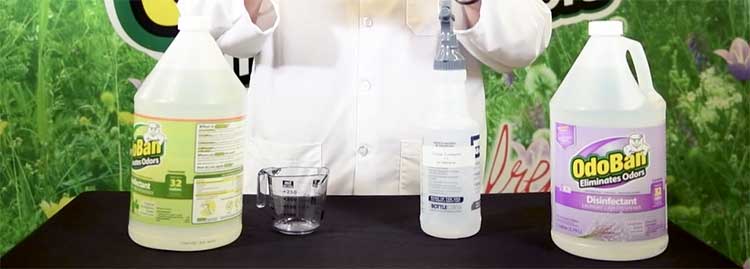
To really understand which one belongs under your sink (or if you need both), we have to look past the marketing and look at the mechanics of how they work.
1. The Economy of Scale (Cost)
- OdoBan is the budget king. I cannot stress this enough. A single gallon of OdoBan concentrate costs roughly the same as 2-3 cans of Lysol spray. However, that single gallon creates up to 32 gallons of cleaning solution. If you are mopping floors or spraying down a large kennel, OdoBan costs pennies per use.
- Lysol is premium pricing. You are paying for the water, the propellant, and the brand name. If you tried to mop your entire floor with Lysol fluid, you’d go bankrupt. It is designed for low-volume, high-frequency use on small targets.
2. The “Dwell Time” Reality
- Lysol is faster. Read the fine print on the back of the bottle. Lysol often claims to sanitize in as little as 10 seconds and disinfect in 2 to 3 minutes. This is crucial for high-touch areas like door handles where you can’t keep the surface wet for long.
- OdoBan requires patience. Because it lacks the high alcohol content of Lysol aerosols, OdoBan often requires a 10-minute wet contact time to fully disinfect against tough viruses and bacteria. You have to spray it and let it sit. If you wipe it off immediately, you’re just cleaning, not disinfecting.
3. Mold: The Killer vs. The Controller
- Lysol Kills. Many Lysol formulations are fungicidal, meaning they can kill the black mold growing on your shower curtain.
- OdoBan Controls. OdoBan is labeled as a “mildewstat.” This is a critical distinction. It is excellent at preventing mold from coming back or inhibiting its growth on clean surfaces, but it is not the primary tool I would use to destroy an active, established colony of toxic mold. You clean the mold first, then hit it with OdoBan to keep it away.
4. The Fabric Factor
- OdoBan loves fabric. This is where OdoBan leaves Lysol in the dust. You can pour OdoBan directly into your washing machine’s fabric softener dispenser to kill gym sock odors. You can spray it on curtains, carpets, and couches without fear of bleaching (though always spot test).
- Lysol is risky on soft surfaces. While Lysol makes specific “Laundry Sanitizers” now, their standard sprays can sometimes leave residues or sticky films on fabrics.
Real-World Scenario: The Laundry Challenge
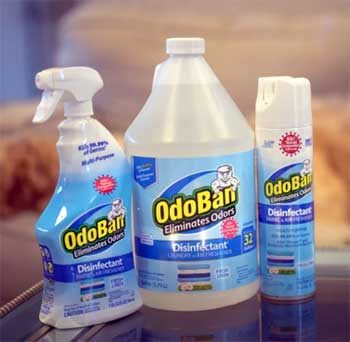
If you have kids who play sports, or if you just forgot a load of wet towels in the washer for two days, you know that “sour” smell.
Detergent alone doesn’t kill the bacteria causing that smell; it just scrubs the dirt off.
Using Lysol:
I’ve used the specialized Lysol Laundry Sanitizer. It works incredibly well, I admit.
It kills the bacteria and leaves clothes smelling zero-odor clean.
The downside? It is expensive. You have to use quite a bit per load, and the bottle drains fast. It feels like a luxury add-on to my laundry routine.
Using OdoBan:
This is my go-to. I add about half a cup of OdoBan concentrate to the rinse cycle (where the fabric softener usually goes). It acts as a fabric softener (reducing static) and a sanitizer. It knocks out the smell of mildewed towels and sweaty hockey gear completely.
Because it’s so cheap, I don’t feel guilty using it in every single load of bedding or towels. It leaves a faint eucalyptus scent that feels much more natural than the “chemical floral” scent of other sanitizers.
Real-World Scenario: Pet Ownership
I have a dog who occasionally forgets he’s house-trained. Dealing with pet urine is the ultimate test for any cleaner because if you don’t neutralize the ammonia, the dog will mark that spot again.
Using Lysol:
Lysol covers the smell. The aerosol spray is great for a quick blast to mask the odor before guests arrive, but I’ve found that it doesn’t always break down the urine crystals. It layers a perfume over the pee smell, which results in a weird, hybrid “lavender-urine” aroma that is arguably worse than the original problem.
Using OdoBan:
OdoBan is an enzymatic killer’s best friend. I saturate the carpet spot with a diluted OdoBan solution and let it sit for the full 10 minutes. It penetrates the fibers and the pad underneath. When it dries, the smell is gone—not masked, but gone.
For pet owners, OdoBan is non-negotiable. It’s also safe to use on hard floors where pets walk (once dried), which gives me peace of mind.
Real-World Scenario: The Flu Season Defense
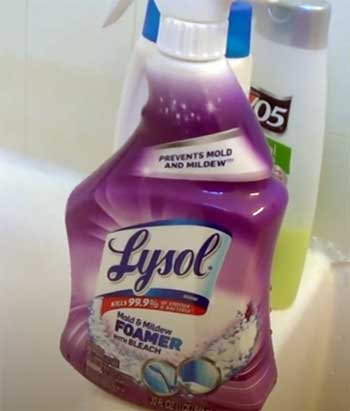
When a family member catches a cold, the strategy changes from “cleaning” to “biological warfare.”
Using OdoBan:
I mix a spray bottle of OdoBan disinfectant strength (usually 5 oz per gallon).
I walk around the house spraying door frames, the banister, and the counters.
The problem is the wetness. To get that 10-minute kill time, I have to leave surfaces soaking wet.
This isn’t practical for light switches or my phone screen.
Using Lysol:
This is Lysol’s home turf. I can walk through the house with a can in each hand like an action hero, misting knobs, handles, and remotes. It dries in minutes, kills the flu virus rapidly, and I don’t have to worry about water damage on sensitive electronics (if misted lightly). For rapid viral containment, Lysol wins.
Detailed Pros And Cons: OdoBan
The Pros
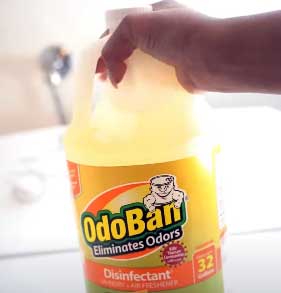
- Incredible Value: The cost-per-ounce after dilution is unbeatable. You can clean your whole house for a year on one gallon.
- Versatility: It replaces your floor cleaner, your fabric refresher, your laundry sanitizer, and your bathroom spray.
- Odor Elimination: It doesn’t just perfume the air; it neutralizes the source of the smell, especially organic odors like urine, smoke, and mildew.
- Eco-Friendlier Packaging: Buying one plastic jug of concentrate saves dozens of single-use spray bottles from the landfill.
- Laundry Safe: It is one of the few disinfectants that doubles as a legitimate laundry additive.
The Cons
- Manual Labor Required: You have to measure and mix. If you are lazy (like I am sometimes), this is a barrier.
- Long Kill Times: You need to plan ahead. You can’t just spray and wipe if you want true disinfection; you have to let it sit wet for 10 minutes.
- Medicinal Smell: The original scent is strong. Some people love the “clean” smell, but others find it too industrial or clinical.
- Not a Mold Killer: It stops mold from growing, but it won’t bleach away the black stains in your grout.
Detailed Pros And Cons: Lysol
The Pros
- Speed and Convenience: Grab, spray, done. No mixing, no measuring.
- Fast Kill Times: Perfect for high-traffic areas where you can’t leave a surface wet for 10 minutes.
- Wide Availability: You can find it at gas stations, grocery stores, and pharmacies everywhere.
- Aerosol Coverage: The mist can get into hard-to-reach cracks and crevices that a trigger spray might miss.
- Trusted Efficacy: It is the standard for killing everything from the flu to Norovirus quickly.
The Cons
- Expense: It is expensive to use as a primary cleaner. You literally spray money into the air.
- Chemical Heavy: The aerosols can be harsh on the lungs if used in a small, unventilated bathroom.
- Residue: On some surfaces, especially dark wood or glass, Lysol spray can leave a sticky or streaky residue that requires a second wipe down.
- Limited Fabric Use: While you can mist it on couches, you can’t soak your laundry in the standard spray effectively.
Safety and Environmental Considerations
We have to talk about what we are spraying into the air we breathe. Both products are chemical disinfectants—they are pesticides by definition (that’s how they kill bacteria).
OdoBan is generally considered safer for septic systems, which is a big plus if you live in a rural area.
Because you control the dilution, you can use a lighter solution for general cleaning, reducing the chemical load in your home.
However, in its concentrated form, it is corrosive and dangerous. You must keep the jug high and locked away from kids.
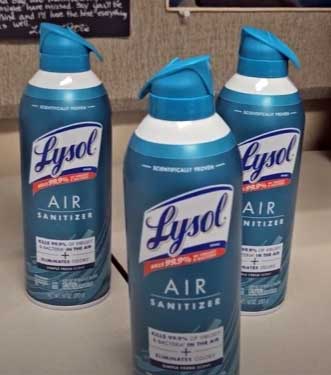
Lysol aerosols contain propellants and often higher levels of VOCs (Volatile Organic Compounds).
I always turn on the fan when I use Lysol in the bathroom. If you have asthmatics in the house, the fine mist of an aerosol can be a trigger, whereas the heavier droplets of an OdoBan trigger spray might be less irritating to the airways.
From an environmental standpoint, OdoBan is the clear winner simply due to plastic reduction. One jug of OdoBan equals roughly 30-50 plastic spray bottles of Lysol. That is a massive reduction in plastic waste.
Also Read: Is Force of Nature Cleaner Worth It?
Frequently Asked Questions (FAQ)
For speed, Lysol is generally more effective because it kills germs faster (often in minutes). For deep cleaning and odor removal on porous surfaces, OdoBan is more effective if allowed the proper dwell time.
If you want an eco-friendly alternative, look for disinfectants using Thymol (like Seventh Generation) or Hydrogen Peroxide. If you want a bulk alternative, OdoBan is the best cost-effective substitute.
Yes, it acts as an excellent cleaner for dirt and grime because it contains surfactants (soap-like ingredients) alongside the disinfectant. It cleans better than Lysol aerosol, which is strictly a disinfectant.
Absolutely. It is great for showers because it cuts through soap scum and prevents mildew from returning. Use it at the disinfectant strength (5-7 oz per gallon) for the best results on tile and grout.
Conclusion: Which One Wins?
After years of using both, I have settled on a hybrid approach, but if I had to choose only one to take to a desert island (assuming this island had a lot of laundry and pet odors), I would choose OdoBan.
The reason is simple: Utility. OdoBan can do 90% of what Lysol does, plus it handles laundry, carpets, and massive floor cleaning jobs that Lysol simply can’t touch. The value proposition of turning a single jug into 30 gallons of cleaner is just too good to ignore for a family home.
However, I still keep a can of Lysol under the sink. Why? because sometimes I just don’t have 10 minutes to wait. When the stomach bug hits my house, I want the nuclear option that kills on contact. Lysol is my emergency response team; OdoBan is my daily infantry.
If you are a pet owner, a budget-conscious shopper, or someone with a lot of laundry, buy the OdoBan. If you live in a small apartment, want zero hassle, and prioritize killing germs instantly on door handles, stick with Lysol.