
I’ve spent years experimenting with homemade frozen treats, trying everything from simple no-churn recipes to dedicated machines. When it comes to choosing between the Ninja Creami and the KitchenAid Ice Cream Maker attachment, there’s no one-size-fits-all winner.
My goal here is to break down both options in detail—how they work, what I love, what frustrates me—so you can decide which one fits your lifestyle, kitchen space, and craving for perfect scoops.
Whether you’re after classic creamy ice cream or creative low-calorie experiments, I’ll walk you through it all from my own experience.
| Feature | Ninja Creami | KitchenAid Ice Cream Maker Attachment |
| Type | Standalone countertop machine | Attachment for KitchenAid stand mixer |
| Capacity | 1–3 pints (16–24 oz each, depending on model) | Up to 2 quarts per batch |
| Method | Shaves and blends pre-frozen solid bases | Traditional churning in a pre-frozen bowl |
| Processing Time | 2–5 minutes per pint | 20–30 minutes per batch |
| Prep Time Required | 24 hours freezing the base | 24 hours freezing the bowl + liquid base prep |
| Versatility | High (ice cream, sorbet, gelato, milkshakes, lite versions, mix-ins) | Moderate (primarily ice cream, sorbet, frozen yogurt) |
| Batch Size Flexibility | Small individual portions | Larger family-sized batches |
| Noise Level | Very loud | Moderate (mixer hum) |
| Cleanup | Easy, mostly dishwasher-safe | Moderate, some hand-washing needed |
| Price Range (approx.) | $200–$300 (machine) + extra pints | $80–$120 (attachment) + cost of mixer if needed |
| Best For | Quick experiments, dietary tweaks, small households | Classic textures, larger gatherings, traditionalists |
Key Differences Between Ninja Creami And KitchenAid Ice Cream Maker
Here’s where the Ninja Creami and KitchenAid Ice Cream Maker attachment truly part ways, based on my direct side-by-side testing over many batches.
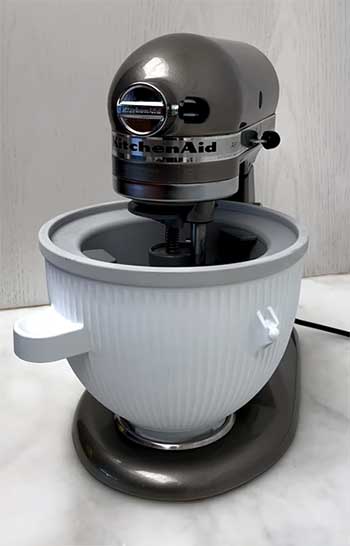
- Processing method and resulting texture The Creami uses a high-speed blade to shave and aerate a completely solid frozen block, which produces a light, almost whipped texture that’s incredibly smooth for low-fat or alternative recipes but can sometimes feel airier and less dense. The KitchenAid, by contrast, slowly churns a liquid base against the frozen bowl walls, incorporating air gradually for that rich, dense, premium scoop-shop creaminess that holds up better in cones and feels more substantial on the tongue.
- Speed versus tradition With the Creami, once your pints are frozen (24 hours ahead), you’re eating in 2–5 minutes—perfect for instant gratification. The KitchenAid takes 20–30 minutes of active churning time on the day you make it, plus the same bowl freeze-ahead, rewarding you with the satisfying, hands-on ritual of traditional ice cream making.
- Versatility versus specialization The Creami dominates when you want to experiment: dedicated modes for lite ice cream, sorbet, milkshakes, smoothie bowls, and more, making it ideal for dietary tweaks like high-protein or low-sugar treats. The KitchenAid sticks closer to classic ice cream, frozen yogurt, and sorbet, excelling at traditional custard or Philadelphia-style bases but lacking specific settings for unconventional creations.
- Batch size and serving style Creami works in small, pre-portioned pints (usually 16–24 oz each), encouraging single servings or flavor variety without waste—great for solo treat nights or testing recipes. KitchenAid handles up to 2 quarts in one go, making it far better for family desserts, parties, or when you want plenty of one flavor to share and store.
- Noise and convenience The Creami is notoriously loud—like a blender on steroids grinding through ice—which can be disruptive in open kitchens. It’s almost entirely hands-off once you press start. The KitchenAid is much quieter (just the familiar hum of the stand mixer), but you often need to monitor progress, scrape sides occasionally, and be present for the full churning cycle.
- Storage and space considerations The Creami is a standalone vertical unit that needs permanent counter or cabinet space, plus room in the freezer for multiple pints. The KitchenAid attachment is compact when stored (the bowl is bulky in the freezer, though), and it leverages your existing mixer, so it adds minimal footprint if you’re already a KitchenAid household.
- Recipe flexibility Creami shines with simple, no-cook bases and unusual ingredients (canned fruit, protein powder, cottage cheese hacks) that traditional churners would turn icy. KitchenAid performs best with richer, fat-heavy cooked custards or well-balanced liquid mixes that benefit from slow aeration.
- Long-term durability perception The KitchenAid attachment feels indestructible—metal components and simple mechanics that have lasted decades for many users. The Creami, while convenient, has more plastic parts and a powerful motor that works hard shaving frozen blocks, leading to occasional user reports of burnout or pint container wear after heavy use.
Also Read: My Experience With Kismile Ice Maker.
Key Features of The Ninja Creami
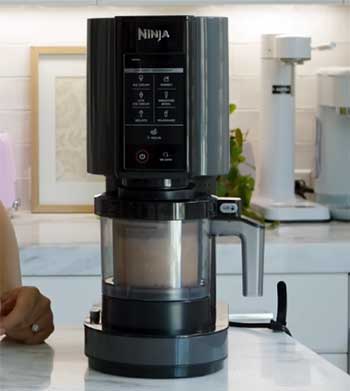
I’ve owned a Ninja Creami Deluxe for over a year now, and it’s become my go-to for impulsive frozen dessert nights. Here’s what stands out to me as its core strengths.
- Multiple processing modes that open up endless possibilities. You get dedicated settings for regular ice cream, lite ice cream (great for lower calorie recipes), sorbet, gelato, milkshakes, smoothie bowls, and even frozen drinks. I love how I can freeze a simple protein shake base and turn it into something that feels indulgent without the guilt. The re-spin function is a lifesaver—if the texture comes out powdery, one quick re-spin fixes it.
- Pre-portioned pints for convenience and portion control. The machine uses special plastic pints that you fill, freeze flat for 24 hours, then pop right into the unit. This means no messy pouring while churning, and I can prep several different flavors ahead of time. It’s perfect when I want just one serving without leftovers going bad.
- Mix-in capability with a dedicated function. After the initial spin, you can create a well in the center, add cookies, nuts, or chocolate chips, and run the mix-in cycle. It distributes chunks fairly evenly, though not quite as perfectly as traditional churning.
- Compact vertical design that saves counter space. It’s tall but narrow, so it fits nicely in my cabinet. The outer bowl, lid, and blade assembly all come apart easily, and most parts are top-rack dishwasher safe.
- Ability to work with unconventional ingredients. This is where the Creami shines for me—I’ve made dairy-free sorbets from canned fruit, high-protein ice creams with fairlife milk, and even savory experiments. The shaving process incorporates air in a unique way that traditional makers can’t match for certain recipes.
Pros of The Ninja Creami
After hundreds of pints, these are the things that keep me reaching for the Creami regularly.
- Incredible versatility for dietary needs and creativity. I can make low-sugar, high-protein, vegan, or keto-friendly treats that actually taste good. The lite ice cream setting is genius for reducing calories while maintaining creaminess—something impossible with traditional churning.
- Super fast on serving day. Once the bases are frozen, I’m eating in under five minutes. No waiting around while a machine slowly churns. This makes it ideal for last-minute cravings or when kids (or adults) are impatient.
- Portion control and variety without waste. I prep multiple pints with different flavors—chocolate peanut butter, strawberry cheesecake, mango sorbet—and store them ready to go. Leftovers? Just re-spin them the next day for fresh texture.
- Easy to achieve smooth results with minimal air incorporation issues. The shaving method breaks down ice crystals effectively, especially with the re-spin option. I’ve gotten restaurant-quality smoothness from simple ingredients.
- Fun factor and experimentation encouragement. The different modes inspire me to try wild recipes I see online. Frozen yogurt from Greek yogurt? Done. Protein slushies? Absolutely. It’s addictive in the best way.
- No continuous monitoring needed. Lock the pint in, press a button, walk away. The machine handles everything automatically.
Cons of The Ninja Creami
It’s not perfect, and these drawbacks have made me question whether it’s my everyday machine.
- Extremely loud operation. The blade grinding through a solid frozen block sounds like a jackhammer. My whole kitchen vibrates, and I can’t hear the TV or have a conversation. It’s the number one complaint I have.
- Requires precise recipes to avoid icy or powdery results. If your base isn’t balanced—too much water, not enough fat or stabilizers—it can come out crumbly. You often need a re-spin with a splash of milk added through the top.
- Limited batch size means more work for groups. One or two pints at a time isn’t great for parties. Extra pints cost money, and processing multiple takes time.
- Reliability concerns over time. I’ve read numerous reports of motors burning out after heavy use, and the plastic pints can crack or warp. My unit is still going strong, but it makes me nervous.
- Higher upfront and ongoing costs. The machine itself is pricey, and if you want backups, those official pints add up quickly. Third-party ones work but aren’t always reliable.
- Texture isn’t always “true” ice cream. It’s creamy, but the aeration is different—sometimes lighter and more icy than the dense richness from churning.
Also Read: My Experience With GE Profile Opal 2.0 Nugget Ice Maker.
Key Features of The KitchenAid Ice Cream Maker Attachment
I’ve had my KitchenAid stand mixer for years, and adding the ice cream attachment felt like a natural upgrade. It’s a completely different experience from the Creami, more old-school and satisfying in its own way.
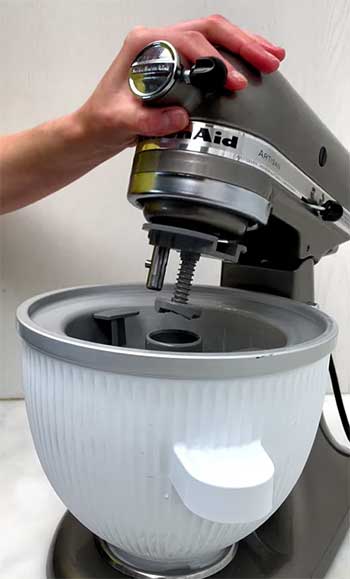
- Double-walled freeze bowl that holds up to 2 quarts. You freeze the bowl for at least 24 hours (I usually keep mine in the freezer permanently), then attach it to the mixer. The dasher and drive assembly churn the liquid base as it freezes against the bowl walls.
- Powered by the stand mixer’s motor for consistent churning. No extra appliance motor—just the reliable power of the mixer. It runs on low speed for gentle aeration, which helps create that dense, creamy texture I associate with premium store-bought ice cream.
- Simple three-piece design that’s durable. The bowl, dasher, and adapter ring are all straightforward. I’ve dropped mine a few times without issues, and it cleans up reasonably well with warm soapy water (the bowl needs hand-washing to protect the coolant).
- Excellent for classic custard-based ice creams. Pour in your cooked and chilled base, let it churn for 20-30 minutes, and you get soft-serve consistency right away. Transfer to a container for firming up in the freezer, and the results are scoopable and rich.
- Great integration with other mixer functions. I often use the mixer to whip egg whites or make the base itself before switching to the ice cream attachment. It’s seamless if you’re already a KitchenAid user.
Pros of The KitchenAid Ice Cream Maker Attachment
These are the reasons I keep coming back to this attachment for special occasions.
- Superior classic ice cream texture. The slow churning incorporates just the right amount of air for dense, creamy results that scoop beautifully. It’s what I think of when I want real vanilla bean or chocolate fudge brownie ice cream.
- Larger capacity perfect for sharing. Two quarts means enough for a family dinner or small gathering without running multiple cycles.
- Even distribution of mix-ins. Add-ins get folded throughout as it churns, so every bite has chunks—no settling at the bottom like sometimes happens in the Creami.
- Affordable if you already own the mixer. The attachment itself is reasonably priced, and you leverage equipment you likely already have.
- Satisfying traditional process. There’s something therapeutic about watching the liquid transform into soft-serve. It feels more like “making” ice cream than pressing a button.
- Consistent results with standard recipes. Classic custard bases work perfectly every time without much tweaking needed.
Cons of The KitchenAid Ice Cream Maker Attachment
It’s reliable, but it has limitations that frustrate me on busy days.
- Long freeze bowl recovery time. After one batch, the bowl needs 24+ hours to refreeze. No back-to-back flavors unless you buy extra bowls (which take up freezer space).
- Requires owning a KitchenAid stand mixer. If you don’t, the total cost jumps significantly, making it less economical.
- Longer active time during churning. You need to babysit for 20-30 minutes, occasionally scraping sides or checking consistency.
- Messier cleanup in some cases. Liquid can splash, and the dasher collects frozen bits that need thorough washing by hand.
- Limited to traditional frozen desserts. No dedicated modes for milkshakes or lite versions—it’s best at standard ice cream and sorbet.
- Takes up significant freezer real estate. That big bowl lives in my freezer year-round, crowding out other items.
Also Read: My Experience With COWSAR Nugget Ice Maker.
Frequently Asked Questions (FAQ)
Its extreme noise, potential motor reliability issues, and occasional inconsistent textures make it less ideal as a primary machine for traditional ice cream lovers.
Yes—compressor models like Breville Smart Scoop or high-end Cuisinart units eliminate pre-freezing entirely and produce superior textures without the noise.
It depends: better for versatility and quick experiments, but not for classic creamy textures or larger batches compared to traditional churners.
Cuisinart often tops lists for reliability and value, especially compressor models, though KitchenAid and Breville are strong contenders for different needs.
Final Thoughts
In the end, I’ve found myself using both depending on the mood. If I’m craving authentic, scoopable ice cream to share with friends, I reach for the KitchenAid attachment—there’s just no beating that classic richness.
But when I want a quick, customized treat tailored to my macros or dietary preferences, the Ninja Creami is unbeatable. You have to weigh what matters most to you: tradition and texture, or speed and creativity. Whichever you choose, homemade will always beat store-bought.
Enjoy the scoops!