
As someone who has spent years navigating the ever-growing world of home fitness, I’ve seen it all. From simple resistance bands to massive, screen-dominated contraptions.
My search for the perfect, powerful, and compact solution led me to two of the most talked-about names in the smart gym space: MAXPRO and Vitruvian. I was looking for a serious comparison, not a marketing pamphlet.
I’m here to lay out my findings on how these two heavy-hitters stack up, from the way they create resistance to the day-to-day experience of actually using them, so you can figure out which one truly fits your life.
A Quick Comparison
| Feature | MAXPRO SmartConnect | Vitruvian Trainer+ |
| Resistance Type | Concentric-Only (Clutch-Based) | Digital & Adaptive (Motor-Based) |
| Eccentric Mode? | No (Not by default) | Yes (Fully adjustable) |
| Max Resistance | Up to 300 lbs | Up to 440 lbs (200 kg) |
| Portability | Extreme: Under 10 lbs, folds up | High: Under 80 lbs, has wheels |
| Footprint | Tiny (Folds) / Stand-on platform | Flat platform (slides under a bed) |
| “Smart” Features | Bluetooth app for tracking & classes | AI-driven weight, rep tracking, classes |
| Subscription | Optional: Base app is free | Required: For full functionality |
| Best For… | Travelers, small apartments, hybrid training | Dedicated strength athletes, data junkies |
This is, without a doubt, the most important distinction. How these two machines create “weight” is fundamentally different, and it completely changes the feel of the workout.
Head-to-Head Comparison of MAXPRO And Vitruvian
Let’s move past the resistance types and look at what it’s like to live with these machines.
- Portability and Footprint
This isn’t even a fair fight. The MAXPRO wins by a landslide.
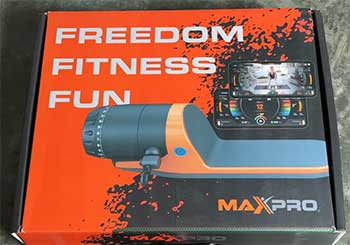
The MAXPRO weighs under 10 pounds.It folds in half and fits into a small backpack.
I can take this thing to the park, on a business trip, or just to my living room from my closet.
It’s the definition of a “no-excuses” machine.
I can be in a hotel room and get a 300-lb workout. That is, frankly, incredible.
The Vitruvian is “storable,” not “portable.” At nearly 80 pounds, it’s a dense, premium piece of tech. It has wheels, and I can roll it and slide it under my bed or sofa.
This is a fantastic feature for a small apartment, as it completely disappears when I’m not using it. But I’m not throwing it in my car for a weekend trip. It’s a permanent home-gym fixture that’s easy to hide.
- Setup and Versatility
This is where things get more complicated.
The MAXPRO’s portability is also its biggest setup hurdle. Out of the box, I can do exercises by standing on the platform (like deadlifts, upright rows, and curls). This works well. But to do things like a chest press or an overhead press, I need an anchor. It comes with a door mount, which is okay, but I always worry about my door frame.
To truly unlock the MAXPRO, I found the wall track (a separate purchase) is almost non-negotiable. Bolting this to my wall allows me to set the cable height just like a functional trainer at the gym.
I can do high-to-low chest flies, low-to-high uppercuts, lat pulldowns (with the bench), and so much more. But, this makes it a permanent, wall-mounted fixture, which negates some of the portability. The foldable bench is also a key accessory for presses and rows.3
The Vitruvian setup is simpler: put it on the floor, plug it into the wall, and open the app. That’s it. It’s self-contained. However, its versatility is also limited by this. Every single exercise originates from the floor.
For squats, deadlifts, and floor presses, this is perfect. But for lat pulldowns? I have to sit on the floor or on a bench placed over the machine, and the angle can feel awkward. There’s no way to do a high-to-low cable fly. Vitruvian has a growing list of accessories (like a custom bench and a lat pulldown rack) to solve this, but they add significant cost and complexity to what starts as a sleek, simple platform.
- The App and “Smart” Experience

Both machines connect to an app, but their reliance on it is worlds apart.
The MAXPRO SmartConnect app is a value-add.
The machine works perfectly without it.
When I connect via Bluetooth, the app tracks my reps, sets, weight, and “power.
It has a library of coached workouts and classes. I found the app to be functional, if a bit “clunky” at times.
It gets the job done.
The best part?
The base app and tracking are free.
There is an optional premium subscription for more classes, but I never felt pressured to buy it.
The Vitruvian app is the machine. I cannot use the Trainer+ without it. The app is where I turn the machine on, set the weight, choose my training mode, and track every metric. It is beautiful, polished, and data-rich.
It tracks my personal bests on every lift, graphs my progress, and suggests weights for my next workout. The classes are high-quality, and the trainers’ data is integrated, so the machine changes weight as the class progresses.
This is a double-edged sword. The experience is premium, but it’s 100% dependent on a mandatory subscription. After the initial trial period, I have to pay a monthly fee to use the machine I already bought. This is a common model (look at Peloton), but it’s a significant ongoing cost to factor in.
Also Read: Differences Between OxeFit And Tonal Home Gyms.
MAXPRO’s Concentric-Only World
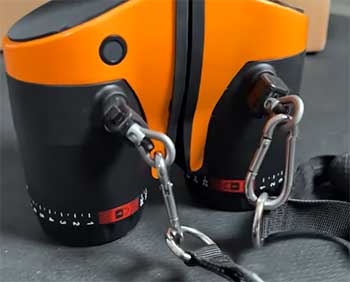
When I first used the MAXPRO, the feeling was unique. It uses what they call a patented power clutch system.
In simple terms: it’s hard when you pull, and there’s no resistance when you return.
Think about a bicep curl. With the MAXPRO, I feel all 50 pounds (or whatever I set it to) on the way up (the concentric phase).
But on the way down (the eccentric phase), the cable retracts with almost no resistance. I have to control my arm’s return, but the machine isn’t actively pulling against me.
This has a few massive implications. First, it’s claimed to reduce Delayed Onset Muscle Soreness (DOMS). A lot of muscle soreness comes from that eccentric “negative” movement. I found that I could go hard on a MAXPRO workout and feel less wrecked the next day, which could be a huge plus for consistency.
The resistance is adjusted with two large dials on the machine itself.1 I can change it in seconds, from 5 lbs all the way up to 300 lbs. It’s a very physical, tactile adjustment, which I appreciate. There’s no waiting for a motor to spin up. It’s instant.
However, the lack of eccentric loading is also its most-discussed drawback. For bodybuilders and strength purists, the eccentric phase is where a significant amount of muscle fiber damage (and thus, growth) and strength development happens.
With the MAXPRO, I’m missing half of that traditional equation. It’s not a deal-breaker, but it’s a different way to train.
Vitruvian’s Digital & Eccentric Powerhouse
The Vitruvian Trainer+ is a completely different beast. This is a motorized, AI-driven platform. When I select “100 pounds” in the app, electromagnetic motors create that precise amount of resistance, and it feels heavy.
But the real magic is in its modes.

- Old School Mode: This is what I use for a straightforward set. I set the weight to 100 lbs, and it’s 100 lbs on the way up and 100 lbs on the way down. It feels just like a cable machine at a commercial gym. It’s smooth, consistent, and relentless.
- Adaptive Mode: This is where the “smart” part comes in. The machine’s AI detects my speed and position. If I’m struggling on the last rep of a bench press, it can subtly reduce the weight just enough for me to finish the rep safely. It’s like having a perfect, invisible spotter. It pushes me to my limit without letting me fail dangerously.
- Eccentric Mode: This is the feature strength athletes will obsess over. I can set the concentric (up) weight to 100 lbs and the eccentric (down) weight to 120 lbs. This “negative” overload is incredibly effective for building raw strength, and it’s almost impossible to replicate safely without a training partner or specialized equipment.
The feel is futuristic. The machine whirs to life, the cables load with tension, and I’m locked in. At 440 lbs, its maximum resistance is far beyond what most people will ever need, making it a legitimate replacement for a full power rack for squats and deadlifts.
Also Read: Differences Between OxeFit XS1 And XP1 Home Gyms.
The Good and The Bad: My Breakdown
After using both, here is my honest list of pros and cons.
MAXPRO: The Good Stuff (Pros)
- Unmatched Portability: This is its superpower. Weighing less than 10 lbs, it is the only serious, high-resistance gym I can fit in a carry-on.
- No Mandatory Subscription: I love this. I can buy the machine and use it forever with its core tracking features without paying another dime.
- Impressive Resistance-to-Size Ratio: Getting 300 lbs of resistance from a tiny device is an engineering marvel. For 99% of exercises, this is more than enough.
- Reduced Muscle Soreness: The concentric-only focus is a real feature. I found I could train more frequently because I wasn’t as sore, which could lead to better long-term results.
- Tactile and Instant: I love turning the dial. It’s fast, simple, and satisfying. No waiting for an app to load or a motor to adjust.
MAXPRO: The Downsides (Cons)
- The Eccentric Void: This is the big one. The lack of eccentric resistance is a deal-breaker for some. It just feels different, and for building maximum strength and muscle mass, it’s arguably less effective than traditional training.
- Accessory Dependence: Out of the box, it’s a bit limited. I feel the wall track and bench are essential to replace a full gym experience, which adds hundreds of dollars and makes it a permanent, non-portable setup.
- Cable Smoothness: At very high resistance levels, I’ve noticed the clutch system can feel a tiny bit less smooth than a high-end digital or pin-stack machine. It’s a minor complaint, but noticeable.
Vitruvian: The Good Stuff (Pros)
- Incredible Digital Weight: This is a strength athlete’s dream. 440 lbs of perfectly controlled resistance is no joke. It can handle my heaviest deadlifts and squats.
- Advanced Training Modes: The Adaptive and Eccentric-Only modes are game-changers. This is technology improving training, not just tracking it. It’s like having a world-class personal trainer and spotter 24/7.
- Data and Feedback: The app is phenomenal. It knows my strength, tracks my power output on every rep, and pushes me to progress. I’m a data nerd, and this scratches that itch perfectly.
- Sleek, Storable Design: For a machine this powerful, the fact that I can slide it under my bed is brilliant. It’s the ultimate “stealth” home gym.
Vitruvian: The Downsides (Cons)
- The Mandatory Subscription: This is my biggest gripe. It feels bad to pay a monthly fee to use a premium product I’ve already paid thousands for. It’s a significant, never-ending cost.
- It’s Heavy and Not Portable: Don’t be fooled by the “portable” marketing. It’s “storable.” At almost 80 lbs, I’m not carrying this around. It’s a dedicated, plug-in appliance.
- The Floor-Based Anchor Point: This is a real limitation. The awkwardness of trying to do lat pulldowns or any high-pulley exercise is a problem. The expensive add-on rack solves this but ruins the machine’s sleek, minimalist appeal.
- The Price: This is a premium-tier product with a premium-tier price tag. The initial investment is significantly higher than the MAXPRO.
Also Read: Comparison of iTouch And Fitbit Fitness Trackers.
Frequently Asked Questions (FAQ)
Yes, absolutely. A UCLA study even found that its concentric-only training is highly effective for building muscle strength and size, comparable to traditional training. Muscle growth is triggered by resistance, and MAXPRO provides up to 300 lbs of it.
It became a huge success. After founder Nezar Akeel struck a deal with Mark Cuban, the company’s sales exploded. It’s still in business, growing, and has reportedly generated tens of millions of dollars in sales.
This is the impossible question. “Effective” depends on your goals. For cardio, a Concept2 rower is hard to beat. For all-in-one smart gyms, Tonal is a major player. But for compact and portable smart strength, the MAXPRO and Vitruvian are at the very top of the list.
No. This is a key advantage. The machine and its base app (for tracking workouts) are usable without any monthly fee. They offer an optional, paid subscription for premium coaching classes, but it is not required.
My Final Verdict: Who Should Buy Which?
After laying it all out, my conclusion is that these two machines aren’t really competitors. They are solving two completely different problems for two very different people.
When I’m advising my friends, I tell them this:
You should buy the MAXPRO if: You are a frequent traveler, live in a very small space (like a studio or dorm), or want a supplemental “no-excuses” machine to keep at the office or in your living room. You value portability and a one-time cost over the most advanced strength features. It’s the ultimate “gym-in-a-bag.”
You should buy the Vitruvian Trainer+ if: You are a dedicated strength athlete or a data-driven fitness enthusiast. You want to replace a full weights-and-rack setup.
You want the most advanced digital training, including eccentric loading, and are willing to pay a premium price and a monthly subscription for that power. It’s a serious, high-tech strength-training platform.
For me, the choice comes down to honesty about your habits. Will you really bolt a track to your wall, or do you need a machine you can just roll under the bed? Do you need 440 lbs of resistance, or is 300 lbs of portable resistance more than you’ll ever use?
Only you can answer that. But if you choose the one that actually fits your lifestyle, you’ll be getting a fantastic piece of fitness technology either way.