
For the past few months, I’ve been testing out cardio equipment in my home gym setup to find the perfect machine that delivers results without taking over my space. That’s why I put the MaxiClimber XL 2000 and StairMaster head to head.
My main goal with this article is to give you a clear, honest breakdown of their differences so you can pick the one that matches your fitness needs, budget, and available room. Let’s see which climbing machine comes out on top for real users like us.
| Feature | MaxiClimber XL 2000 | StairMaster |
| Price Range | $300 to $400 | $3,000 to $6,500+ |
| Footprint | 26 x 41 inches, folds to 14 x 26 inches | 46 x 29 inches, no folding |
| Height | 93 inches | 65 to 73 inches |
| Machine Weight | Around 50 pounds | 200 to 350 pounds |
| User Weight Capacity | 300 pounds | 350+ pounds |
| Resistance Options | 12 hydraulic levels, adjustable by hand | 20+ electronic levels, console controlled |
| Motion Type | Vertical climbing with arm pull and leg push | Revolving stairs or independent stepping |
| Muscle Focus | Full body – arms, legs, core, back | Primarily lower body with core stability |
| Setup and Portability | 90 percent pre-assembled, rollers for moving | Professional installation, stationary |
| Display and Tracking | Basic steps and calories, pairs with app | Advanced console with programs and metrics |
| Best Suited For | Home workouts, limited space, full-body burn | Gym sessions, endurance training, durability |
Key Differences Between the MaxiClimber And The StairMaster
- Motion and Body Position Create Totally Different Feels During Workouts
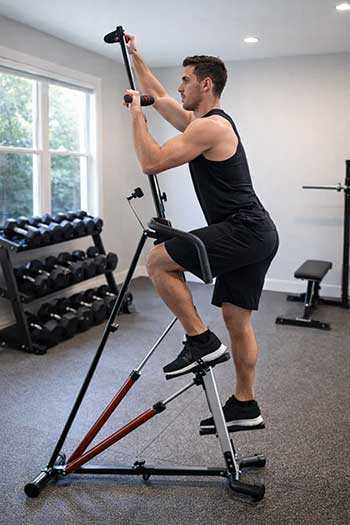
When I climb on the MaxiClimber XL 2000, my body leans forward at a steeper angle, almost like scaling a ladder or rock wall.
My arms pull down on the handles while my legs drive the pedals upward in a coordinated rhythm.
This pulls my entire upper body into the action every single rep.
On the StairMaster, I stay more upright, stepping onto moving platforms that mimic real stairs.
My arms rest lightly on the rails for balance, and the work stays concentrated below my waist.
That upright posture on the StairMaster lets me go longer without arm fatigue, but I miss the upper-body pump I get from the MaxiClimber.
If you want something that mimics outdoor climbing or hiking with poles, the vertical style wins hands down for me.
- Space Requirements Make One Practical for Apartments and the Other for Dedicated Rooms
My basement has low ceilings and limited floor area, so the MaxiClimber XL 2000 folds down to a slim profile I can roll behind the couch when company comes over. The whole base takes less room than my coffee table.
The StairMaster I use at the gym needs a permanent footprint the size of a small dining table plus clearance all around for safety. At home, installing one would mean rearranging furniture or building an addition.
For anyone living in a condo, townhouse, or shared space, the compact folding design of the MaxiClimber changes the game completely.
- Cost Over Time Shifts the Value Equation Dramatically
I paid less than four hundred dollars for my MaxiClimber XL 2000 and have used it daily for months with zero extra fees beyond the free app. The StairMaster at my gym represents thousands in membership costs every year, or buying one outright would require saving for a major purchase.
When I factor in electricity, maintenance visits for commercial machines, and potential repairs on plastic components, the MaxiClimber still comes out cheaper even after three years of ownership. If budget is tight but you crave climbing cardio, the affordable entry point opens the door without guilt.
- Muscle Engagement Hits Different Groups and Builds Balanced Strength
Every session on the MaxiClimber lights up my shoulders, lats, biceps, triceps, quads, hamstrings, glutes, and deep core all at once. The pulling motion on the handles forces my back to work hard, creating that V-shape I notice in the mirror after consistent weeks.
The StairMaster focuses fire on my quads and calves with some glute activation, but my arms and back stay mostly passive except for grip. I love the StairMaster for pure leg endurance on days I want to zone out, yet I return to the MaxiClimber when I need a complete upper and lower blast that leaves me sore in places I forgot existed.
- Intensity Build-Up and Progression Options Suit Different Training Styles
I twist the dial on the MaxiClimber XL 2000 to level 8 or 9 and feel immediate resistance that challenges my coordination and power output. The hydraulic system gives smooth, consistent pushback that scales with my effort.
The StairMaster lets me program intervals or steady climbs at precise speeds from 24 to 162 steps per minute, with the machine adjusting automatically. For HIIT fans who crave quick, explosive efforts, the MaxiClimber delivers fast heart-rate spikes.
For longer zone-two endurance rides where I read a book or watch shows, the StairMaster keeps a steady rhythm without me fiddling with handles.
- Noise Levels and Home Compatibility Affect Daily Use
My MaxiClimber operates almost silently thanks to the roller mechanism and hydraulic pistons – perfect for early mornings when the household sleeps. The StairMaster in the gym produces a rhythmic clunk from the revolving steps that echoes across the floor.
At home that sound would carry through walls and annoy neighbors or family. If quiet operation matters for your living situation, the difference becomes a deal-breaker.
- Durability and Long-Term Reliability Vary by Environment
The MaxiClimber handles my 180-pound frame and daily abuse without complaint, but I notice more plastic components that could wear over years of heavy use. The StairMaster feels bombproof with its commercial-grade steel and chains, surviving thousands of gym users daily.
For serious athletes training multiple hours weekly or sharing with multiple family members, the heavier construction justifies the investment.
- Learning Curve and Accessibility for Beginners Differ Noticeably
New users on the MaxiClimber sometimes struggle with coordination between arms and legs at first, but within a week the motion clicks and feels natural. The StairMaster feels intuitive right away – just step on and go – making it friendlier for absolute beginners or older adults focused on balance.
I started both machines as an intermediate lifter, and the MaxiClimber rewarded patience with faster overall fitness gains.
Key Features of The MaxiClimber XL 2000
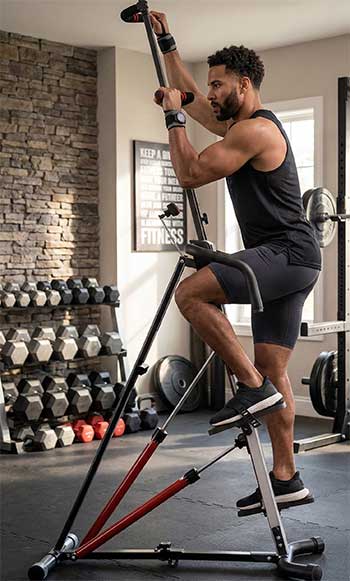
- Hydraulic Resistance System with 12 Precise Levels: I can dial from feather-light warm-up to lung-busting effort in seconds. The bi-directional pistons create smooth resistance both up and down, so every phase of the stroke builds strength without jerky stops.
- Swiveling and Large Foot Pedals for Comfort: My size-11 shoes fit fully supported, and the swivel lets my feet find a natural angle that protects knees during longer sessions. No more numb toes or slipping like on smaller platforms.
- Adjustable Handle Height and Multiple Grip Positions: I tweak the handles to match my 5-foot-10 frame perfectly, then switch between wide and narrow grips to target different back muscles. This customization keeps workouts fresh week after week.
- Built-in Rollers and Folding Mechanism: I roll the machine from closet to workout spot in ten seconds flat. Folding takes under a minute, and the compact stored size means it disappears when not in use.
- Free Coach-Led App with On-Demand Classes: I fire up the app on my tablet, follow a 20-minute HIIT class, and the guided voice keeps me pushing when I want to quit. Tracking steps and calories motivates me to beat yesterday’s numbers.
- Lightweight Aluminum Frame with Leveling Feet: The whole unit weighs little enough for me to move alone, yet stays rock-solid once positioned. Levelers handle my slightly uneven basement floor without wobbling.
- Basic Digital Display Showing Real-Time Metrics: Steps and estimated calories appear at eye level, giving instant feedback that helps me stay in the right heart-rate zone without needing extra gadgets.
Also Read: Differences Between Tonal And Mirror.
Pros of The MaxiClimber XL 2000
- Delivers exceptional full-body calorie burn in minimal time: I finish 20 minutes dripping sweat and often burn 300 to 400 calories, far more than the same time on a bike because my arms and core contribute constantly.
- Fits any home layout thanks to compact folding design: Even in a one-bedroom apartment I can store it upright in a corner and pull it out for quick sessions between meetings.
- Low-impact design protects joints while building strength: My knees and ankles feel fine after months of use, unlike running or high-step machines that sometimes flare old injuries.
- Affordable entry lets me start immediately without loans: The price matches a few months of gym fees, so I own the machine outright and save money long-term.
- App integration adds variety and accountability: Following trainer-led workouts prevents boredom and pushes me harder than solo sessions ever could.
- Quiet operation supports early or late workouts: I train at 5 a.m. without waking anyone, which keeps my routine consistent year-round.
- Easy assembly means I started using it the same day it arrived: Ninety percent pre-assembled, I tightened a few bolts and climbed on within 30 minutes.
- Versatile resistance suits beginners to advanced users: I began at level 3 and now hit level 10 for serious conditioning, so the machine grows with me.
- Portable enough to move between rooms or even take on trips: I once brought it to a vacation rental for continued training.
- Full engagement improves posture and coordination over time: My shoulders sit back naturally now, and my balance on everyday stairs feels noticeably better.
Cons of the MaxiClimber XL 2000
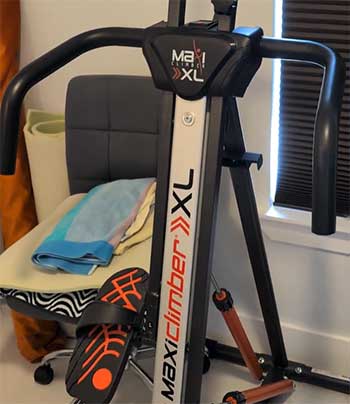
- Upper-body fatigue can limit session length at first: My arms burn before my legs on higher resistances, so I had to build grip and shoulder endurance gradually.
- Display accuracy depends on consistent form: Without heart-rate input, calorie counts sometimes feel optimistic, requiring me to cross-check with a watch.
- Plastic components may show wear after heavy daily use: After six months I notice minor scuffs, though nothing affects function yet.
- Requires coordination that beginners might find frustrating initially: The arm-leg sync took me a few sessions to master, and I wobbled a bit at the start.
- No built-in entertainment options beyond the app: I prop my phone separately, which works but feels less seamless than dedicated mounts.
- Weight limit excludes some heavier users: At 300 pounds maximum, larger athletes need to look elsewhere for safety.
- Folding mechanism takes practice to master smoothly: Early attempts felt clunky until I learned the exact sequence.
- Lack of foot straps means focus on balance remains important: On sweaty days I stay extra mindful of foot placement.
Key Features of The StairMaster
- Revolving Staircase or Independent Step Platforms: The continuous belt or moving steps create a realistic climbing sensation that never ends until I step off. This nonstop motion builds mental toughness like few other machines.
- Advanced Console with Pre-Set Programs and Heart-Rate Control: I select fat-burn intervals or custom heart-rate zones, and the machine automatically adjusts speed. The large screen shows every metric I could want, including estimated METs and power output.
- Heavy-Duty Steel Construction Built for Commercial Abuse: Handrails, steps, and frame handle constant pounding from users of all sizes. I never worry about stability even at top speeds.
- Variable Step Heights and Speeds for Progression: I can change stride feel or crank speed for hill simulations that torch calories faster than steady climbs.
- Integrated Cooling Fans and Entertainment Mounts: Some models include built-in fans that keep me from overheating during 45-minute sessions, plus spots to prop phones or tablets.
- Contact Heart-Rate Sensors on Handrails: I grip the rails and get accurate beats-per-minute readings that guide my training zones without wearing a chest strap.
Also Read: Differences Between OxeFit And Tonal.
Pros of the StairMaster
- Builds incredible lower-body endurance for sports and daily life: My stair-climbing power at airports and hikes improved dramatically after regular sessions.
- Commercial durability means years of reliable service: The machine at my gym has thousands of hours on it and still feels brand new.
- Motivating programs keep workouts structured and progressive: I follow the machine’s built-in challenges and watch metrics improve month after month.
- Upright posture allows longer sessions without upper-body burnout: I can easily hit 45 minutes while listening to podcasts.
- High step rates simulate real-world stair climbing perfectly: The motion transfers directly to everyday activities like carrying groceries upstairs.
- Advanced metrics help serious athletes track precise training zones: Power output and MET readings guide my programming accurately.
- Stable platform supports users of all sizes confidently: Wide steps and solid rails give peace of mind during intense efforts.
- Community atmosphere in gyms adds social motivation: Seeing others push hard inspires me to dig deeper.
Cons of the StairMaster
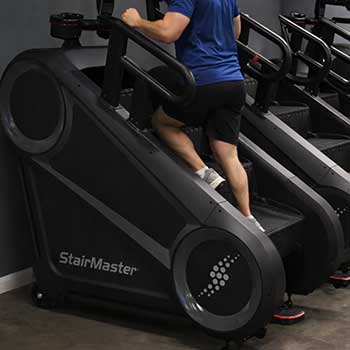
- Huge price tag puts it out of reach for most home users: Saving for one means delaying other fitness investments or home upgrades.
- Massive footprint demands dedicated space most homes lack: I could never fit it without sacrificing a bedroom or garage area.
- Heavy and non-portable design locks it in one location: Once installed, moving it requires professionals and significant effort.
- Louder operation can disturb quiet environments: The mechanical clunk travels farther than I expected even in large gyms.
- Primarily lower-body focus leaves upper body underworked: I often pair it with separate arm exercises to stay balanced.
- Requires gym membership or large investment for access: Not everyone lives near quality facilities or wants ongoing fees.
- Higher step-on height challenges shorter users or those with mobility issues: Getting on and off takes more effort than the lower MaxiClimber pedals.
- Maintenance and repair costs add up over time: Professional servicing every few years becomes necessary for peak performance.
How My Workouts Changed After Comparing Both Machines?
I started alternating days between the two to see real differences in recovery and results. On MaxiClimber days I feel a pleasant full-body tiredness that improves my posture and energy levels all afternoon. StairMaster days leave my legs fried in the best way but my upper body fresh.
Combining both gives me the best of everything – leg power from one and total-body conditioning from the other. My body-fat percentage dropped faster once I added the vertical climber because the extra muscle activation kept my metabolism elevated longer.
- Who Should Choose the MaxiClimber XL 2000?
If you live in a small home, travel often, or want maximum calorie burn with minimum equipment footprint, this machine matches your lifestyle perfectly.
Busy parents, apartment dwellers, or anyone who hates waiting for gym machines will appreciate the instant access and quick setup. Beginners building overall fitness or advanced users adding variety also benefit from the full-body demand.
- Who Should Choose the StairMaster?
Serious endurance athletes, competitive stair climbers, or people with large dedicated gym spaces gain the most from the commercial quality and precise programming. If leg strength for sports or daily stair-heavy living matters most and budget allows, the investment pays off in durability and motivation.
Also Read: My Experience With Echelon Row-S.
Frequently Asked Questions (FAQ)
Yes, it delivers real calorie burn and strength gains through consistent full-body climbing motion when used regularly with proper form.
It provides more upper-body and core engagement in a compact vertical motion versus the primarily leg-focused stepping of traditional stair climbers.
StairMaster is a leading brand of stair climbers, but other machines exist with similar stepping designs; the brand sets the industry standard for quality.
It offers low-impact full-body cardio, space efficiency, adjustable resistance, and app-guided workouts that improve coordination, burn fat, and build lean muscle efficiently.
Final Thoughts
After hundreds of combined sessions, I still reach for the MaxiClimber XL 2000 most mornings because it fits my space, budget, and desire for complete workouts without leaving home. You might feel the same if convenience and full-body results top your list.
If you have room and resources for premium equipment plus prefer focused leg training, the StairMaster will serve you exceptionally well for years. Consider your available square footage, financial comfort, and training priorities, then test both if possible at a local gym or store.
I am confident one of them will become your new favorite way to climb toward better fitness. What matters most to you – space-saving versatility or commercial-grade endurance? Your answer will point you to the perfect choice.