
I’ve spent years tinkering with multi-tools, and when it comes to choosing between the Leatherman Wave and the Surge, I know the decision can feel tricky.
In this article, I’ll break down their features, differences, pros, and cons from my own hands-on experience to help you pick the one that fits your lifestyle, whether you’re into everyday carry or heavy-duty tasks.
| Feature | Leatherman Wave | Leatherman Surge |
| Weight | 241 grams | 335 grams |
| Closed Length | 4 inches | 4.5 inches |
| Number of Tools | 18 | 21 |
| Primary Blade Length | 2.9 inches | 3.1 inches |
| Pliers | Needlenose and regular, with replaceable wire cutters | Larger needlenose and regular, with replaceable wire cutters and stranded-wire cutters |
| Scissors | Spring-action | Larger spring-action |
| Saw | Included | Included, with blade exchanger for T-shank compatibility |
| File | Wood/metal and diamond-coated | Wood/metal and diamond-coated, removable |
| Bit Drivers | Large and small | Large, with large and small screwdrivers |
| Additional Tools | Ruler (8 inches), can opener, bottle opener, electrical crimper, wire stripper | Awl with thread loop, ruler (8 inches), can opener, bottle opener, electrical crimper, wire stripper |
| Warranty | 25 years | 25 years |
| Price Range (Approximate) | $100-$120 | $120-$140 |
Key Differences Between The Leatherman Wave And Surge
Picking between these two often comes down to how you plan to use them. From my testing, here are the main distinctions, elaborated a touch:
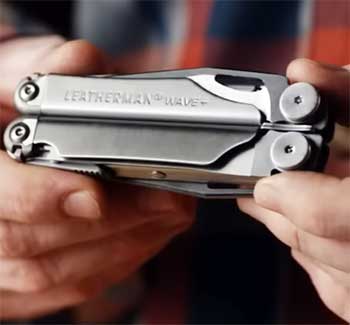
- Size and Weight: The Wave is compact at 4 inches closed and 241 grams, making it pocket-friendly. The Surge stretches to 4.5 inches and 335 grams, which adds bulk but improves handling for gloved hands or big grips.
- Tool Count and Variety: Wave has 18 tools, focusing on essentials. Surge ups it to 21 with extras like an awl and blade exchanger, giving more options for specialized tasks.
- Pliers and Scissors: Surge’s are larger for better leverage and cutting power. I’ve noticed the difference when crimping heavy wires—the Wave handles it, but the Surge feels effortless.
- Blade Length and Accessibility: Surge’s blades are a tad longer, and both tools allow one-handed opening, but the Surge’s design supports quicker deployment in tough spots.
- File and Saw Systems: Wave’s are fixed, while Surge’s removable setup lets you adapt or replace, which I’ve appreciated after wearing down a saw on rough wood.
- Portability vs. Durability: Wave wins for everyday carry due to lightness; Surge for rugged use where extra strength prevents flexing under load.
- Price Point: Surge typically costs a bit more, reflecting its heavy-duty build, but both offer great value.
These differences shape how each performs in real scenarios.
Key Features of The Leatherman Wave
When I first got my hands on the Wave, it struck me as the kind of tool that’s always ready without weighing me down. Here’s what stands out, with a bit more on each:
- Needlenose and Regular Pliers: These are precise for grabbing small wires or bending metal. I’ve used them for everything from fixing a loose bike chain to pulling out a splinter, and the replaceable wire cutters mean I can swap them if they dull over time.
- 420HC Knife and Serrated Knife: The straight blade is sharp for slicing rope or opening packages, while the serrated one handles tougher materials like thick cords. Both lock securely, which gives me peace of mind during use.
- Spring-Action Scissors: Compact but effective for cutting paper, thread, or even light fabrics. I remember using them to trim fishing line on a trip, and they snapped back smoothly every time.
- Saw and Files: The saw cuts through wood branches easily, and the dual files—one for wood/metal, one diamond-coated—let me sharpen edges or smooth surfaces. These are great for outdoor prep work.
- Bit Drivers and Screwdrivers: With large and small drivers, plus included bits, it’s versatile for assembling furniture or tweaking electronics. The small one is perfect for eyeglass repairs.
- Other Essentials: A ruler for quick measurements, can and bottle openers for picnics, a crimper for electrical work, and a wire stripper that’s saved me during home wiring tweaks.
Overall, the Wave feels like a reliable companion that packs a lot into a slim profile.
Pros And Cons of The Leatherman Wave
I’ve carried the Wave daily for months, and it’s become my go-to for light fixes. But like anything, it has upsides and downsides.
Pros
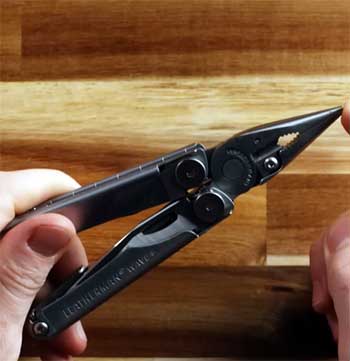
- Compact and Lightweight: At just 241 grams, it slips into my pocket without notice. Perfect for hikes or urban errands where I don’t want extra weight dragging me down.
- One-Handed Tool Access: Blades and pliers deploy quickly with one hand, which is crucial when I’m holding something else, like a flashlight during a repair.
- Versatile Tool Set: 18 functions cover most needs—from wiring to cutting—without overwhelming me. The bit drivers have handled everything from bike adjustments to gadget tweaks.
- Durable Construction: Made from stainless steel with a 25-year warranty, it withstands drops and rust. I’ve used it in rain without issues.
- Affordable Entry Point: Often under $120, it’s a solid investment for beginners or casual users, delivering pro-level quality.
- Ergonomic Design: Comfortable in hand, even for extended use, reducing fatigue on longer projects.
Cons
- Limited Leverage: The smaller pliers struggle with very thick materials compared to bulkier tools. I’ve had to switch to dedicated pliers for stubborn bolts.
- Fixed Saw and File: No easy replacement means wear over time could require sending it in for service, which interrupts my workflow.
- Smaller Scissors: They work for light tasks but falter on heavier fabrics, forcing me to grab separate shears occasionally.
- Less Heavy-Duty: For intense jobs like construction, it flexes under high torque, making me cautious about overworking it.
- No Awl: Missing this for piercing tasks, like starting holes in wood, means I sometimes improvise with the knife tip.
Despite these, it’s a winner for balanced use.
Key Features of The Leatherman Surge
The Surge, on the other hand, feels like the big brother—more robust and ready for demanding jobs. I’ve taken it on construction sites, and it holds up. Let me run through its highlights:
- Larger Needlenose and Regular Pliers: These are beefier, offering better leverage for gripping nuts or cutting thicker wires. The added stranded-wire cutters make it ideal for electrical tasks where precision matters.
- 420HC Knife and Serrated Knife: Slightly longer blades than the Wave, which means more cutting power. I’ve sliced through heavy-duty straps with ease, and the locks are rock-solid.
- Larger Spring-Action Scissors: These cut through tougher materials like leather or canvas without straining. On a camping outing, they handled paracord like butter.
- Saw with Blade Exchanger: The T-shank compatibility lets me swap in specialized blades, which is a game-changer for custom work. The awl with thread loop is handy for punching holes in belts or canvas.
- Removable Files: Wood/metal and diamond-coated, but the removability means I can replace or sharpen them separately. This extends the tool’s life significantly.
- Bit Drivers and Screwdrivers: A large driver plus dedicated large and small screwdrivers cover more screw types. I’ve used them for heavy torque on machinery.
- Other Essentials: Similar ruler, openers, crimper, and stripper, but the overall build supports more force.
The Surge is built for those moments when you need extra muscle.
Pros And Cons of The Leatherman Surge
The Surge has been my choice for tougher gigs, like home renovations. It’s powerful, but that comes with trade-offs.
Pros
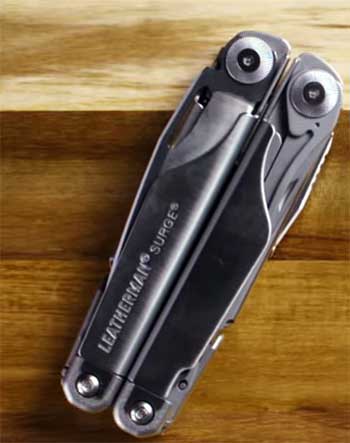
- Superior Leverage and Strength: Larger handles and pliers let me apply more force without straining. Great for gripping rusted nuts or cutting thick cables.
- Expandable Tool Options: The blade exchanger and removable file allow customization, like swapping in a jigsaw blade for precise cuts.
- Larger Blades and Scissors: Extra length means faster work on big materials. The scissors have tackled denim and rope where smaller ones might slip.
- Heavy-Duty Build: Weighing 335 grams, it feels indestructible, backed by the same 25-year warranty. I’ve hammered with it in a pinch without damage.
- Awl Inclusion: Punching holes or scribing lines is straightforward, adding utility for leatherwork or marking metal.
- Glove-Friendly: The size accommodates gloved hands, ideal for cold-weather or protective gear scenarios.
Cons
- Bulkier and Heavier: At 4.5 inches closed, it’s not as pocketable. I often belt-carry it, which can feel cumbersome on light days.
- Higher Price: Around $120-$140, it’s pricier, though the extras justify it for pros.
- Steeper Learning Curve: More tools mean figuring out the best configurations, which took me a few uses to master.
- Potential for Overkill: For simple tasks, the weight feels unnecessary, and I’ve left it behind for quick outings.
- Less Discreet: The size draws attention, not ideal if you prefer low-profile carry.
It’s a beast when you need it most.
Why I Chose The Wave for Everyday Tasks?
Let me share a bit about my routine. Mornings often involve fixing something around the house—a loose screw on a cabinet or stripping wires for a lamp. The Wave shines here because it’s always on me. Its compact size means I clip it to my jeans and forget it’s there until needed.
One time, I was out walking the dog and found a neighbor’s fence post wobbling. Pulled out the Wave, tightened the bolts with the pliers, and used the screwdriver bit to secure it—all in under five minutes. The one-handed access is a lifesaver when you’re juggling leashes or tools.
But it’s not just about convenience. The materials hold up well. The 420HC steel on the blades stays sharp longer than I expected, and after months of use, the only wear is minor scratches.
I appreciate how the locking mechanisms click firmly, preventing accidents. For someone like me who values quick fixes without bulk, the Wave feels tailored. If your days are filled with similar light duties—maybe office tweaks or weekend DIY—the Wave won’t disappoint. It’s that friend who’s reliable without demanding much space.
When The Surge Steps Up For Heavy Work?
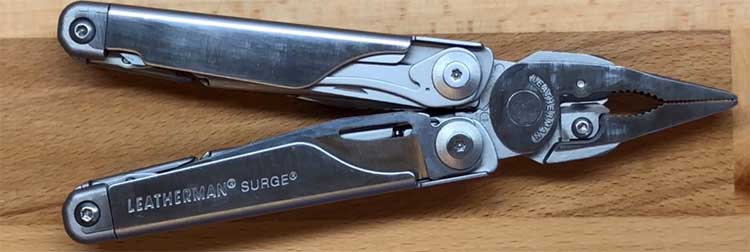
Now, flip the script to weekends when I’m tackling bigger projects, like building a deck or repairing my truck. That’s where the Surge takes over. Its extra weight translates to stability; I can really lean into the pliers without worrying about slippage.
Remember that time I had to cut through a chain link? The Surge’s larger wire cutters handled it effortlessly, while the Wave might have required multiple snips.
The awl has been invaluable for starting pilot holes in tough wood, saving my drill bits from unnecessary wear. And the blade exchanger?
Genius.
I swapped in a fine-tooth saw for intricate cuts on plywood, something the Wave’s fixed setup couldn’t match. Sure, it’s heavier, but in a tool belt, that added mass feels reassuring, like it’s built to last through abuse.
If you’re in trades, mechanics, or outdoor adventures involving gear mods, the Surge’s robustness makes sense. It’s like upgrading from a sedan to a truck—more power when the road gets rough.
Also Read: Comparison of Gerber Dime And Vise.
Real-World Scenarios
- Wave in Action
Picture this: I’m at a family barbecue, and the grill’s propane hose springs a leak. No panic—the Wave’s wire stripper lets me expose the ends, the crimper secures a new fitting, and the knife trims excess. All done without leaving the yard.
Another day, hiking a trail, a branch snags my backpack strap. Out comes the serrated blade for a clean cut, followed by the scissors to neaten the edges. The ruler even helped measure a replacement length later.
These moments highlight the Wave’s strength in portability. It’s not overwhelming for casual users, yet packs enough punch for surprises. I’ve lent it to friends who aren’t tool enthusiasts, and they always comment on how intuitive it is.
No fumbling with tiny parts; everything deploys smoothly. If your life mixes urban commutes with occasional outdoors, this is your match.
- Surge Dominating Demands
Contrast that with a recent garage overhaul. Shelves needed assembly, involving metal brackets and wood panels. The Surge’s larger pliers gripped the brackets firmly, applying torque without bending.
The awl punched starter holes, the saw trimmed excess wood, and the file smoothed rough edges. It felt like having a mini toolbox in my hand.
On a fishing trip, the bigger scissors cut braided line cleanly, and the blade exchanger let me use a metal file for sharpening hooks.
Even in gloves during cold weather, the handles provided grip. The weight? Noticeable, but worth it for the confidence in tough spots. For anyone whose hobbies or job involve physical labor, the Surge reduces trips back to the toolbox.
Maintenance and Longevity: What I’ve Learned
Both tools are low-maintenance, but I’ve picked up tips over time. For the Wave, a quick wipe after use keeps rust at bay, and oiling the joints monthly ensures smooth operation. The replaceable cutters are a boon—I’ve swapped mine once after heavy wire work, extending its life.
The Surge demands similar care, but its removable parts make cleaning easier. I disassemble the file occasionally to clear debris. Both benefit from the 25-year warranty; Leatherman’s service is top-notch, fixing issues without hassle.
In my experience, treating them right means they’ll outlast expectations.
Also Read: Comparison of Gerber Dime And Leatherman Micra.
Frequently Asked Questions (FAQ)
It depends on your needs—the Wave for portability, the Surge for heavy-duty power.
For demanding tasks yes, due to size and extras; otherwise, the Wave suffices.
Yes, it’s longer and heavier, offering more leverage.
Absolutely, its compact size makes it ideal for pockets or belts.
Conclusion
Wrapping this up, I’ve shared my experiences with the Leatherman Wave and Surge to guide you through your choice. If you’re after something lightweight and versatile for daily life, grab the Wave—it won’t let you down.
For those tougher challenges where power matters, the Surge is your ally. Whichever you pick, you’ll have a trusty tool by your side. Think about your routine, and let that decide.