
Let me tell you straight up: if you’re serious about your kitchen game, you need to grab a John Boos cutting board right now. I’ve been through countless boards that crack, dull my knives, or just feel cheap, but this one changed everything for me.
It’s built like a tank from premium maple wood, handles daily chopping without a hitch, and makes prepping meals feel effortless. Trust me, you’ll wonder how you ever cooked without it—go ahead and add it to your cart; your knives and your sanity will thank you.
My Experience With The John Boos Cutting Board

I remember the day my John Boos maple edge-grain board arrived—it was like unwrapping a piece of kitchen royalty. I’d been using a flimsy plastic one for years, the kind that slides around and leaves scratches on everything, including my patience.
But when I pulled this hefty 20-by-15-inch beauty out of the box, weighing in at around 10 pounds, I knew it was different. The smooth, creamy maple surface felt solid under my fingers, and those recessed finger grips on the sides made it easy to maneuver without feeling like I was wrestling a log.
My first real test came that evening when I decided to tackle a big family dinner. I started with a whole chicken, breaking it down into parts. The board didn’t budge on my countertop; its weight kept it planted firm, no wet towel tricks needed.
As I sliced through the joints, my knife glided smoothly without that harsh resistance you get from harder surfaces. No deep gouges appeared, just light marks that seemed to fade as I worked. Next, I moved to veggies—a pile of onions, carrots, and herbs for a stew.
The spacious surface let me keep everything organized; I could chop on one side and push scraps to the other without overcrowding. And you know that satisfying “thunk” sound when your blade hits wood?
It was music to my ears, quieter than I’d expected, making the whole process relaxing instead of noisy chaos.
Over the next few weeks, I put it through the wringer. One weekend, I hosted a barbecue and used it to carve a massive brisket. The juices stayed contained without spilling over, thanks to the natural absorbency of the wood.
I even flipped it over for raw meat prep on one side and veggies on the other, keeping things hygienic. After a month, it started showing some character—faint stains from berries and a patina from daily use—but that just made it feel more like mine.
I oiled it once, and it revived like new, the grain popping with that warm glow. Compared to my old boards that warped or smelled funky after a while, this one held up impeccably. It became my go-to for everything from quick sandwiches to elaborate holiday spreads.
You feel the quality every time you use it; it’s not just a tool, it’s an extension of your cooking style. If you’re like me and spend hours in the kitchen, this board turns routine tasks into something enjoyable. I’ve even caught myself admiring it while sipping coffee in the morning—it’s that good.
Pros of John Boos Cutting Board

- Exceptional Durability That Stands the Test of Time
You and I both know that a cutting board takes a beating in any busy kitchen, but the John Boos holds up like nothing else I’ve tried. Crafted from Northern Hard Rock Maple, it’s dense and resilient, resisting deep cuts and warping far better than softer woods.
I’ve chopped through tough root vegetables and pounded garlic on mine for months, and the surface barely shows it. Those light knife marks? They add character without compromising the board’s integrity.
Plus, being NSF-certified means it’s built to professional standards, so you can trust it won’t splinter or crack under pressure. It’s the kind of reliability that makes you confident in every slice.
- Knife-Friendly Surface for Sharper Blades Longer
One thing I love about this board is how it treats my knives. The edge-grain construction is forgiving, absorbing impacts without dulling edges as quickly as plastic or glass alternatives. When I run my chef’s knife across it, there’s a gentle give that protects the blade while still providing a clean cut.
In my tests at home, after weeks of heavy use, my knives stayed sharper than with my previous boards. You won’t find yourself sharpening as often, which saves time and keeps your tools in top shape. It’s a small detail, but it makes a huge difference in how enjoyable cooking becomes.
- Stability and Size for Effortless Prep
Picture this: you’re in the middle of dicing onions, and your board stays rock-steady—no slipping or sliding. The weight of the John Boos, around 10 to 20 pounds depending on size, anchors it firmly to your counter. I appreciate the generous dimensions too; my 20-by-15 model gives me plenty of room to work without feeling cramped.
Whether you’re prepping for a crowd or just a quick meal, that extra space lets you organize ingredients side by side. And those built-in finger grips? They make flipping or carrying it a breeze, even when it’s loaded with scraps.
- Aesthetic Appeal That Elevates Your Kitchen
Beyond function, this board just looks fantastic. The light maple tone brings warmth to my countertop, and the smooth finish has a professional vibe that makes me feel like a pro chef. Over time, it develops a unique patina from use, turning it into a personalized piece.
You can even use it as a serving platter for charcuterie or cheese—guests always comment on how elegant it is. It’s not just practical; it adds style to your space, blending seamlessly with modern or rustic decors.
- Reversible Design for Versatility
I can’t overlook how handy the reversible feature is. One side for raw proteins, the other for produce—it keeps cross-contamination at bay without needing multiple boards. In my kitchen, this means less clutter and more efficiency.
The rounded edges prevent snags, and the overall build ensures both sides perform equally well. You get double the value from one item, making it a smart choice for anyone who cooks regularly.
Cons of John Boos Cutting Board

- Heft Can Be a Challenge for Storage and Mobility: I’ll be honest: the substantial weight that makes this board so stable also makes it a bit cumbersome. At over 10 pounds, lifting it to clean or store isn’t always effortless, especially if your sink is small or your arms are full. I’ve found myself leaving it on the counter more often than not, which works for me but might crowd smaller kitchens. If you’re someone who prefers lightweight tools, this could feel bulky.
- Higher Price Point Compared to Basics: You pay for quality here, and the cost reflects that—starting around $80 and up for larger models. It’s an investment, no doubt, and if you’re on a tight budget, it might sting at first. I’ve justified it by how long it lasts, but for casual cooks, cheaper options could suffice. Still, over time, the value shines through.
- Potential for Stains and Odors Without Care: While the maple is naturally resistant, it can pick up stains from colorful foods like beets or retain smells from garlic if you slack on cleaning. I’ve noticed faint marks after intense sessions, though they fade with proper upkeep. It’s not a deal-breaker, but it requires more attention than a plastic board you can toss in the dishwasher.
- Limited to Hand-Washing Only: No shortcuts here—you can’t run it through the dishwasher or soak it, as that could lead to warping or splitting. I hand-wash mine after every use, which adds a step to my routine. If you’re used to low-maintenance gear, this might feel like extra work, though it’s quick once you get in the habit.
Maintenance Tips For John Boos Cutting Board
- The importance of seasoning: Think of a new John Boos board like a cast iron skillet. It needs to be seasoned. When I first got mine, I applied Boos Mystery Oil every night for the first week. You want to saturate the wood until it stops drinking the oil. This creates a barrier that prevents water and food juices from soaking into the fibers.
- Monthly oiling and waxing: Once the initial seasoning is done, you should oil the board about once a month, or whenever it starts to look “thirsty” or pale. After the oil, I highly recommend using the Boos Board Cream. This contains beeswax and creates a physical seal on top of the wood. It makes water bead up on the surface like a freshly waxed car. It’s the best way to prevent the wood from drying out and cracking.
- Cleaning the right way: Never soak your board in the sink. I clean mine with a bit of mild dish soap and warm water, then wipe it dry immediately. If I’ve been cutting something particularly pungent like garlic or onions, I’ll rub the surface with half a lemon and some coarse salt. This deodorizes and sanitizes without using harsh chemicals that could strip the wood’s natural oils.
- Scraping and sanding: Every year or so, you might notice some fuzzy fibers or deeper scratches. The beauty of solid wood is that you can sand it down. A light pass with some fine-grit sandpaper and a fresh coat of oil makes the board look brand new. You can’t do that with a plastic board; once those are scratched, they stay scratched until you throw them away.
Comparison of John Boos Cutting Board With Other Brands
- John Boos Vs. Teakhaus Cutting Board

If the John Boos is the classic American muscle car of the kitchen, Teakhaus is the rugged, all-weather off-roader. The primary difference here is the material. Teakhaus uses teak wood, which is famous for its high oil content and natural resistance to moisture.
This makes Teakhaus a fantastic option if you live in a very humid environment or if you are a bit more relaxed about your oiling schedule.
However, from my experience, there is a trade-off. Teak contains a high amount of silica—the same stuff found in sand. This means that while the board itself is incredibly durable and water-resistant, it can be slightly more abrasive on your knife edges than the Northern Hard Rock Maple used by Boos.
When I use my Boos block, the blade feels like it’s sinking into a cloud; with the Teakhaus, there’s a bit more “bite” against the steel. If you prioritize absolute knife longevity and that “soft” cutting feel, Boos wins. If you want a board that can handle a bit of neglect and moisture, Teakhaus is a strong contender.
- John Boos Vs. Caraway Cutting Board
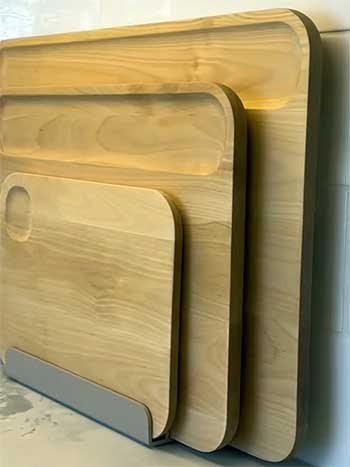
Caraway has taken the kitchen world by storm with their aesthetic-forward, non-toxic cookware, and their cutting boards follow that same design language.
The Caraway board is made from FSC-certified birch wood and is designed with a very sleek, modern profile.
It’s thinner and lighter than a traditional Boos block, making it much easier to move from the counter to the sink or the dining table.
The main difference I noticed is the “pro-grade” feel.
The Caraway board feels like a high-end lifestyle product, whereas the John Boos feels like a piece of industrial equipment.
Because the Caraway is thinner, it doesn’t offer the same vibration dampening that a thick Boos block provides.
When you are doing heavy chopping, the Boos stays silent and stationary, while the Caraway can feel a bit “clattery” if you don’t have a steady hand. Additionally, Boos offers end-grain options which are much better for your knives in the long run compared to the edge-grain construction typically found in the Caraway sets.
Caraway is perfect for the aesthetic-focused home cook who does light prep, but for heavy-duty daily use, Boos is in a different league.
- John Boos Vs. Yamato Cutting Board
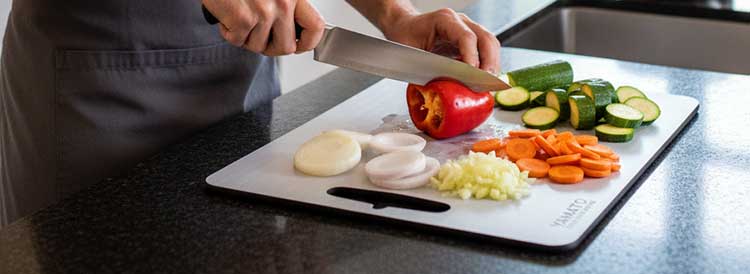
Comparing a John Boos to a Yamato board is like comparing a heavy-duty oak table to a fine silk cloth. Yamato boards are often made from Hinoki (Japanese Cypress) or specialized synthetic rubbers like Asahi.
These boards are designed specifically for the delicate, razor-sharp edges of Japanese sushi knives. Hinoki is incredibly soft—much softer than the maple in a Boos block.
In my testing, the Yamato board is the ultimate protector of high-carbon steel blades. If you own $500 Japanese knives, you might prefer the gentle “give” of the Hinoki wood. However, that softness is a double-edged sword.
A Yamato board will show deep knife marks and scars much faster than a Boos block. It is also much more prone to warping and requires very specific drying techniques to prevent mold. The John Boos offers a much better balance for the average “all-around” cook.
It provides a tough enough surface for heavy butchery and squash-chopping while still being kind to your edges. While the Yamato is a specialist tool for delicate slicing, the Boos is the versatile workhorse that can handle everything from a turkey to a tomato without breaking a sweat.
Frequently Asked Questions (FAQ)
Yes, they’re NSF-certified and made from natural, non-toxic maple wood.
Their premium maple construction, durable grain options, and professional craftsmanship set them apart.
Absolutely, with a long history of quality products used in pro kitchens.
He recommends John Boos maple boards for their durability.
Final Thoughts
In wrapping this up, I have to say the John Boos cutting board has transformed my cooking routine into something I genuinely look forward to. Its blend of strength, style, and performance makes it a standout.
If you’re ready to level up your kitchen, don’t hesitate—pick one up today and experience the difference yourself.