
I’ve spent years obsessing over sleep technology, and if you’re reading this, you’re likely stuck in the same analysis paralysis I was: iSense vs. Sleep Number. Both promise the holy grail of sleep—customizable firmness—but they go about it in radically different ways.
One is the heavyweight champion we all know; the other is the challenger fixing the champion’s flaws. In this comparison, I’m breaking down exactly how they differ, why the “air chamber” count matters more than you think, and which one actually delivers on the promise of a pain-free morning.
| Feature | iSense Hybrid Premier | Sleep Number i8 (Comparable Model) |
| Core Technology | 14 Air Chambers + Pocket Coils | 2 Large Air Chambers (DualAir™) |
| Support System | Pocket Coils & Foam | Air (The air is the support) |
| Adjustment Range | 20 settings per side | 0-100 (Sleep Number setting) |
| Motion Isolation | High (Foam + Coils dampen movement) | Low to Medium (Air transfers motion) |
| Trial Period | 180 Nights | 100 Nights |
| Middle “Trench” | Minimal to None | Noticeable foam divider |
| Estimated Price (Queen) | ~$3,299 | ~$3,999 |
Key Differences Between iSense And Sleep Number
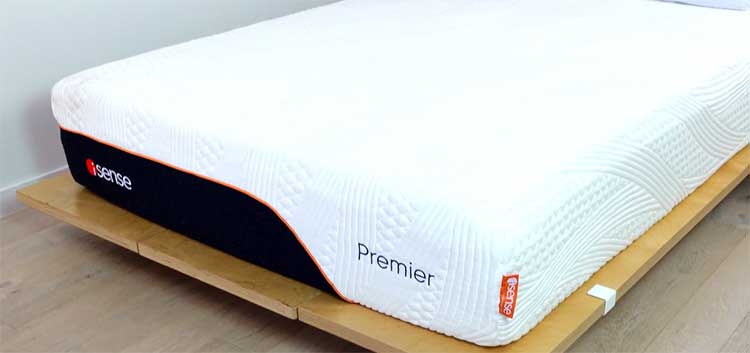
- The Support Engine: Sleep Number uses the air chamber as the primary support. If the air fails, the bed fails. iSense uses a hybrid design where the air is for “Comfort Control,” but the actual weight-bearing is done by pocket coils and high-density foam. This means even if you set the iSense to its softest setting, you don’t taco in the middle.
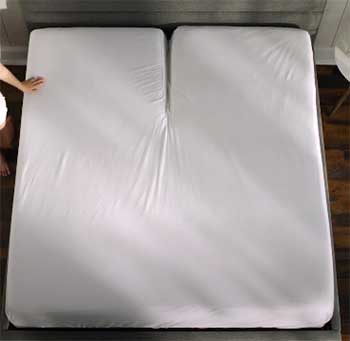
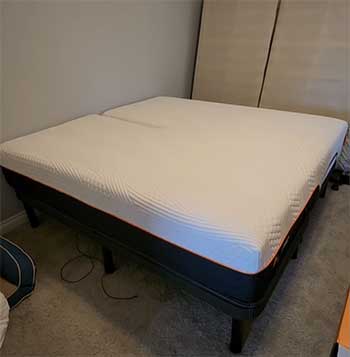
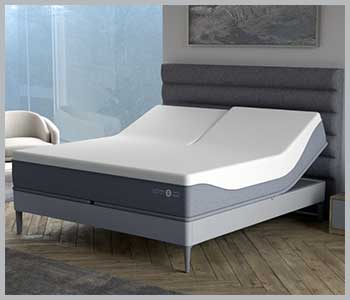
- The “Trench” Effect: This is a huge talking point for couples. On a Sleep Number, because there are two distinct large chambers, there is often a foam divider in the middle. If I roll to the center of the bed to cuddle, I can feel that hard foam strip, or worse, I fall into a dip between the two chambers. iSense mitigates this by using smaller, more integrated chambers and a thicker continuous comfort layer on top. The transition from one side to the other feels much more seamless.
- Motion Transfer: Air is terrible at stopping motion. If you push on one side of a balloon, the other side moves. Sleep Number fights this with foam layers, but in my testing, you can still feel a partner move. iSense behaves like a traditional high-end hybrid mattress. The pocket coils are individually wrapped, meaning they move independently. The air chambers are small enough that they don’t create a wave effect across the bed.
- Adjustability Granularity: Sleep Number wins on the sheer number of digits—0 to 100. However, I found that functionally, I couldn’t feel the difference between a 40 and a 45. iSense uses 20 settings per side. While the number is lower, the changes feel more distinct. It’s quality of adjustment over quantity of digits.
Key Features of Sleep Number
- SleepIQ Technology: This is their killer app. It tracks your heart rate, breathing, and movement without you wearing a watch. I found the “biometric sensors” to be surprisingly accurate. It gives you a daily score, which gamifies sleep in a way that actually made me pay attention to my bedtime habits.
- Responsive Air: On the higher-end models (like the i8 and i10), the bed automatically adjusts firmness while you sleep. If you roll onto your side, the bed senses the pressure spike on your shoulder and lets a little air out. It’s a “set it and forget it” feature that iSense doesn’t replicate in the exact same way.
- Integration Ecosystem: Sleep Number is a lifestyle brand. They have foot warmers, adjustable bases that talk to the bed (automatically raising your head if you snore), and a massive retail footprint. You can walk into a mall and try one. That physical accessibility is a feature in itself.
Pros And Cons of Sleep Number
- Proven Track Record: You are buying from a company that has been doing this for decades. They have parts, service technicians, and a warranty structure that is well-understood. If something breaks, you know who to call.
- SleepIQ Data: For data nerds like me, seeing a graph of my heart rate variability and breath rate in the morning is addictive. It effectively replaces a distinct sleep tracker or Oura ring for basic metrics.
- Resale Value: Oddly enough, there is a secondary market for Sleep Number components (pumps, remotes). It’s like the Toyota of beds; it holds a weird amount of value because the brand is so strong.
- Dual Adjustability: If you and your partner are polar opposites—one wants a brick, the other wants a cloud—Sleep Number separates you completely. The isolation of the air chambers ensures my setting of 100 doesn’t stiffen up my wife’s side set to 35.
- Mechanical Failure Risks: It is a machine. Pumps fail. Hoses leak. Sensors glitch. Unlike a block of foam, this bed has moving parts. I have read plenty of horror stories about pumps dying right after the warranty coverage drops off.
- The “Air” Feel: No matter how much foam they put on top (and the i8 has a lot), you can sometimes tell you are floating on air. It lacks the deep, visceral “hug” of a high-density memory foam or the solid pushback of steel coils.
- Assembly Required: Unless you pay for the white glove setup (which is often mandatory and expensive), these beds come in boxes of parts. Putting together the air chambers, zip covers, and hoses is a project.
Key Features of iSense
- Comfort Control Technology: This is their proprietary system of 14 air chambers. It allows for target pressure relief that feels more “zoned.” Because the air isn’t doing the heavy lifting of support, the pressure relief feels more consistent across the entire body, rather than just where your hips sink in.
- Hybrid Construction: The iSense Hybrid Premier is a beast of a mattress—13.5 inches thick. It combines the air technology with legitimate mattress materials: cooling foam and pocketed coils. It feels substantial. You don’t get that “bouncy castle” feel that can sometimes happen with pure air beds.
- Open-Cell Foam: Heat retention is the enemy of sleep. iSense uses a specific open-cell foam structure that dissipates heat very effectively. Since air chambers don’t hold heat like memory foam, and the coils allow airflow, I found the iSense to sleep significantly cooler than many memory foam competitors, and comparable to the best cooling models from Sleep Number.
Pros And Cons of iSense
- Genuine Mattress Feel: This is the biggest pro. It feels like a luxury mattress first, and a gadget second. If the electricity went out and the pump died, you would still be sleeping on a very comfortable hybrid mattress.
- Superior Motion Isolation: For light sleepers, this is the winner. The combination of foam and individually wrapped coils absorbs the shock of a partner getting up to use the bathroom far better than two large air balloons do.
- No Trench: I cannot overstate how much better the middle of the bed feels. You can utilize the entire surface area of the Queen or King size without feeling like you are rolling off a cliff into the middle divider.
- Longer Trial Period: 180 nights is a massive amount of time. It signals confidence. It takes about 30 days to adjust to a new bed, so having six months removes almost all the risk.
- Newer Company: iSense does not have the 30-year history of Sleep Number. You are betting on a newer player. While their support is currently rated highly, we don’t know what their 15-year support landscape looks like yet.
- Heavier and Harder to Move: Because it contains real coils and dense foam, the iSense is heavy. Moving it to a new house is more like moving a traditional mattress, whereas a Sleep Number can be disassembled into lighter components.
- Less “Smart” Integration: While the app works well for adjusting firmness, it doesn’t quite match the cohesive “Sleep Health” ecosystem that Sleep Number has built with SleepIQ.
Also Read: Is Avocado Eco Organic Mattress Worth It?
The Sleeping Experience With iSense And Sleep Number
I want to talk about what it actually feels like to sleep on these for a week.
When I first laid on the Sleep Number, specifically the Classic c4 model during a test, I immediately noticed the “air” sensation. It’s unique. As I lowered the setting, I could feel my body displacing the air. It’s very responsive.
However, I found myself constantly tweaking the number. “Is 45 right?
Maybe 50?
No, let’s try 35.” The anxiety of finding the perfect number kept me awake for the first few nights.
Once I dialed it in (I settled on a 40), it was comfortable, but I had to stay in my lane. If I drifted to the middle, the support changed.
The iSense experience was different. I laid down, and it felt firm. I opened the app and lowered the setting. I didn’t feel the bed “deflate” in the same way. Instead, I just felt the pressure points on my hips and shoulders vanish.
The support remained rigid, but the contact points softened. It was a more subtle sensation. I found that I messed with the settings less on the iSense. I found a spot that felt like a great hotel bed and left it there.
For side sleeping, I give the edge to iSense. The coils allow your shoulder to plunge deep without compromising the support for your waist. On the Sleep Number, deep sinkage sometimes meant my spine went out of alignment unless the air pressure was just right.
For back sleeping, Sleep Number is a strong contender. You can crank that air pressure up to 100 and get a board-stiff surface that is fantastic for lumbar support, something that is harder to achieve with foam-based hybrids.
Is The “Smart Bed” Trend Worth It?
Before you buy either, you have to ask yourself: Do I actually need to change my firmness?
I found that for the first month, I changed the firmness every night. I was playing with the toy.
After month three? I rarely touched the remote.
So why buy adjustable?
- Life Changes: Pregnancy, injury, or weight change. What you need today might not be what you need in a year.
- Partners: This is the real killer app. I like a firm bed; my wife likes a soft bed. Buying a traditional mattress is always a compromise where neither of us is happy. With both iSense and Sleep Number, we both win. That alone is worth the price of admission.
Also Read: Is BedStory Mattress Worth It?
Frequently Asked Questions (FAQ)
For many sleepers, the iSense Hybrid Premier is considered “better” because it combines the adjustability of air with the support of a traditional hybrid coil mattress. It eliminates the “trench effect” found in Sleep Number beds and offers superior motion isolation. Other alternatives include the Saatva Solaire, which also uses air chambers but with a more unified feel.
Yes, if you prioritize motion isolation and a traditional mattress feel over brand recognition. At a price point lower than comparable high-end Sleep Number models (like the i8), iSense offers better materials (pocket coils and cooling foam) and a longer 180-night trial period, making it a high-value investment for couples with different firmness needs.
Sleep Number has faced class-action lawsuits primarily revolving around deceptive pricing practices (alleging they use inflated “reference prices” to make sales look better than they are) and issues related to supply chain failures (specifically foam shortages during the 2021 Texas freeze) that led to delayed shipments and unfulfilled orders. There have also been consumer complaints regarding mold in air chambers, though this is less of a formal class action focus currently.
Yes, it is excellent for back pain. Because it uses a hybrid design with pocket coils for deep support and adjustable air chambers for surface pressure relief, you can stiffen the bed to support lumbar alignment while softening the pressure points. This dual-action support is often more effective for back pain than the single-action support of a standard air bed.
Final Verdict: Which One Should You Buy?
If I had to spend my own money right now, here is how I would decide.
I would buy the Sleep Number if:
- I wanted the absolute best sleep tracking data integrated into my bed.
- I needed a very specific “board stiff” setting for back sleeping that only air support can truly provide.
- I was on a tighter budget and wanted the entry-level c2 model just to get the adjustability.
I would buy the iSense if:
- I sleep with a partner and we are sensitive to each other’s movements (motion isolation).
- I hate the “trench” in the middle of the bed and want to cuddle.
- I want the bed to feel like a luxury hotel mattress, not an air mattress.
- I am a side sleeper who needs deep pressure relief without losing spinal support.
Both of these beds are engineering marvels that save marriages. The ability to customize your side of the bed is the future of sleep. Sleep Number paved the road, but iSense has repaved it with smoother asphalt. The choice comes down to whether you trust the legacy of the pioneer or the innovation of the challenger.