
If you’re tired of cramming everything into your kitchen fridge’s tiny freezer compartment or losing food to spoilage because you can’t stock up, an Insignia upright freezer is a smart move.
I’ve owned one for a couple of years now, and it has changed how my family handles groceries, bulk buys, and meal prep. Affordable, spacious, and reliable for everyday use, it’s perfect if you want extra frozen storage without breaking the bank.
Trust me, you’ll wonder how you managed without it.
My Experience With The Insignia Upright Freezer
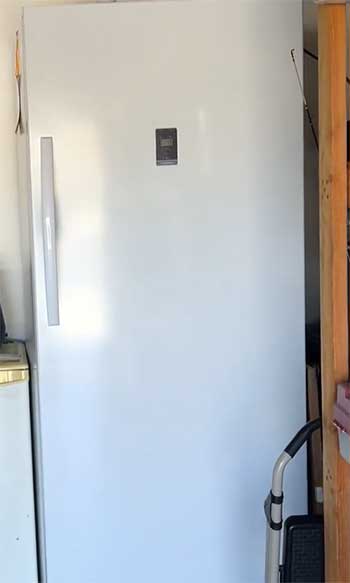
Let me tell you about the day my Insignia upright freezer arrived.
I remember unboxing it in the garage, excited but a little nervous—would this budget-friendly model live up to the hype I’d read in customer feedback?
I went with the 13.8 cubic foot convertible version because I liked the idea of switching it to fridge mode if needed.
Setup was straightforward; I plugged it in, let it stand upright for a few hours as recommended, and started loading it up.
Right away, I noticed how quiet it runs.
You barely hear the compressor kick on, unlike some older models I’ve had that hummed loudly.
The shelves are adjustable glass ones, which make cleaning spills easy—no more food falling through wire racks.
I organized everything: bulk meat on the bottom drawer, veggies and ice cream on the middle shelves, and quick-grab items like frozen pizzas up top. The door bins hold smaller packages perfectly, and there’s even a spot for ice trays.
One feature I love is the garage-ready design. My unit sits in an unheated garage, and it handles temperature swings from freezing winters to hot summers without missing a beat. During a power outage last year, it kept everything frozen solid for over a day thanks to good insulation.
The convertible option came in handy when I hosted a big family gathering—I flipped it to fridge mode for extra cold drinks and party platters.
Of course, it’s not perfect. It’s manual defrost in many models, so I set reminders to check for ice buildup every few months. The door seal is strong, almost too strong sometimes; you have to wait a moment before reopening it or it resists.
But overall, the space it provides has saved me countless trips to the store. I stock up on sales, freeze garden produce, and even portion out meals for busy weeks. If you’re like me and hate wasting food or money, this freezer makes life easier.
I’ve filled it with half a cow’s worth of beef before, and there was still room. You get a lot of practical storage for the price, and it feels sturdy enough for daily use.
Also Read: Is Arctic King Mini Fridge Worth It?
What I Love About My Insignia Upright Freezer?
You know that feeling when an appliance just works without drama? That’s my Insignia upright freezer every day. I’ve put it through real-life tests—bulk meat storage, holiday overflows, garage extremes—and it keeps delivering.
After owning it for over two years, I’ve come to appreciate so many little things that add up to a big difference in how I manage food at home. Here’s what stands out most to me, broken down so you can see why it feels like such a win.
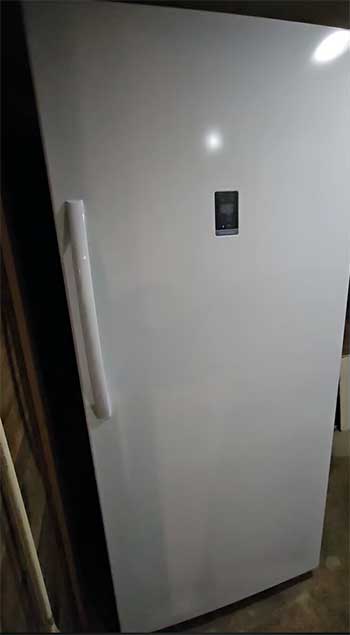
- Spacious and organized interior: This is probably my favorite part. Standing in front of an upright freezer feels like opening a pantry—you see everything immediately. No kneeling or digging like with chest models. The glass shelves are adjustable, so I can raise them for tall ice cream tubs or lower for flat pizza boxes. Food doesn’t fall through gaps, and spills wipe up in seconds. The door has multiple bins that perfectly hold bags of frozen fruit, peas, or even bottles of vodka for parties. I can fit so much more than I expected, and organization makes meal planning effortless.
- Garage-ready reliability: Living where temperatures swing wildly, this feature sold me. My freezer sits in an unheated garage, enduring below-zero winters and 100-degree summers. It never struggles—I’ve checked internal temps with a separate thermometer during heat waves, and it stays rock-steady at 0°F. The insulation is solid enough that during a 30-hour power outage, nothing thawed. If you don’t have basement or indoor space, this capability alone makes it worth considering.
- Quiet operation: Seriously, you forget it’s running. The compressor cycles on softly, nothing like the loud hums from older freezers that drove me nuts. Even when it’s in fridge mode for parties, the noise doesn’t carry into the house. This quietness means I can place it anywhere without annoyance.
- Convertible versatility: Not every model has this, but mine does, and it’s a game-changer. With a simple control switch, it becomes a full fridge. I’ve used it for extra beer and soda during barbecues, overflow milk and produce when the kitchen fridge was packed, or even as temporary storage during renovations. The digital controls are precise and easy to read, no guessing with dials.
- Energy efficiency and value: I was worried about electric bills, but the increase was minimal—even running 24/7 in the garage. It’s Energy Star rated in many sizes, and you get premium-like features at a fraction of the cost. For the capacity (mine is 13.8 cu ft), you’re paying hundreds less than comparable name brands, yet performance feels similar in daily use.
- Strong door alarm and seal: The alarm beeps insistently if the door stays open too long—saved me multiple times when kids left it ajar. The magnetic seal is powerful, keeping cold air in and humidity out. This contributes to longer food freshness and fewer freezer burns.
- Easy organization for meal prep: Because everything is visible and accessible, prepping freezer meals became a habit. I portion out chicken, sauces, veggies, and label shelves. It encourages buying in bulk on sales, freezing garden harvests, or stocking emergency food without waste. My grocery bills dropped noticeably because I’m not throwing out spoiled food anymore.
- Reversible door and sturdy shelving: Swapping the door side made placement flexible in my tight garage. The shelves hold heavy loads without bending—I’ve stacked gallons of ice cream and bags of meat with no issues.
These advantages make it feel like an essential appliance rather than just extra storage. You get convenience, savings, and peace of mind wrapped in one affordable package.
Also Read: Is KRIB BLING Mini Fridge Worth It?
Potential Drawbacks of Insignia Upright Freezer I’ve Noticed
Look, I love my Insignia, but I’m keeping it real—it’s a budget appliance, and that shows in a few areas. These issues haven’t made me regret the purchase, but they’ve required some adjustments on my part. If you’re expecting premium perfection, you might notice them more.
Here’s the honest downside after long-term use.
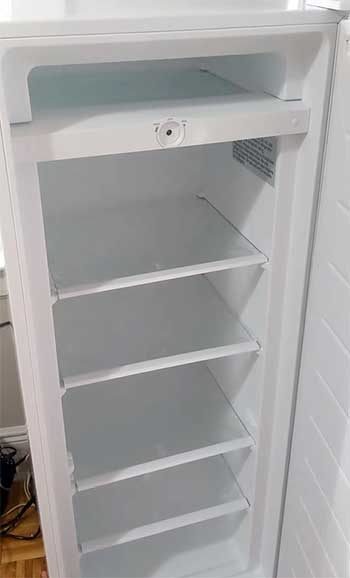
- Manual defrost requirement: This is the biggest hassle for me. Unlike frost-free models, ice builds up gradually, especially if you open the door often or live in humid areas. Every 6-12 months, I have to fully defrost: unplug, empty everything into coolers, wait hours for melt, mop water, dry, reload. It’s a chore that takes half a day, and if you forget, efficiency drops and space shrinks from thick frost.
- Tricky door handling: The seal is super strong (which is good for efficiency), but it creates suction. If you close and try to reopen immediately, it resists hard—you wait 10-20 seconds or pull forcefully. Worse, if you don’t push it fully shut, it can pop slightly ajar without triggering the alarm loudly enough, letting warm air in overnight and causing partial thaws. I’ve lost a few items this way early on.
- No interior light in some models: My model lacks one, so nighttime or garage grabs mean bringing a phone flashlight. It’s minor, but annoying when you’re half-asleep hunting for ice cream.
- Build feels budget: The plastic shelves, bins, and handle aren’t as heavy-duty as pricier brands. The handle has a bit of flex, and I’ve read about them breaking over time with rough use. Shelves hold weight fine, but they don’t feel indestructible.
- Occasional compressor noise: It’s quiet 95% of the time, but during certain cycles or after defrosting, the startup hum or click can be noticeable, especially in dead silence. Not loud enough to bother indoors, but something to note.
- Faster frost buildup in humid environments: If your garage or basement is damp, moisture sneaks in with every opening, accelerating ice formation. I combat it by minimizing door time, but it’s still faster than frost-free competitors.
- Limited premium features: No auto-defrost, no fancy LED lighting, no turbo freeze modes, no soft-close door. The controls are basic digital, not touchscreen or app-connected. If you want modern extras, you’ll miss them.
- Potential for uneven cooling if overloaded: Pack it too tightly without air circulation, and bottom shelves can be slightly warmer. I’ve learned to leave vents clear and rotate items.
These cons are manageable for the price point, and none have caused major failures for me. But if low-maintenance is your priority, you might prefer spending more on frost-free alternatives.
Keeping Your Insignia Upright Freezer Running Smoothly
I’ve learned that consistent care keeps my Insignia performing like new, saves energy, and avoids repairs. It’s not hard—just habits that pay off. Here’s my detailed routine, built from trial and experience.
- Regular Cleaning Routine: I clean monthly to prevent odors and buildup. Wipe shelves, bins, and walls with warm water plus mild dish soap—nothing abrasive. Rinse well, dry thoroughly to avoid new ice. Exterior gets a damp cloth wipe. The door gasket needs gentle cleaning; debris weakens the seal, letting warm air in and forcing harder work.
- Vacuuming the Coils: Every 6 months, I vacuum condenser coils (back or bottom). Dust forces the compressor to run longer, spiking bills and wear. Move the unit if needed, use brush attachment carefully. This alone improved efficiency noticeably.
- Defrosting When Needed: Most models manual defrost—watch for ¼-inch ice. I do it 1-2 times yearly. Unplug, empty to coolers, prop door open. Place hot water pans inside to speed melt (change water often). Towels soak runoff; never chip ice with metal—risk puncturing coils. Drain plug/hose helps if equipped. Post-melt, wipe baking soda solution for freshness, dry completely before restart.
- Optimal Placement and Temperature Settings: Give it breathing room—inches around sides/back/top for airflow. Level floor prevents strain. Set to 0°F; thermometer confirms accuracy. Avoid hot food direct in—cool first to reduce moisture/frost.
- Door and Seal Care: Test seal monthly: dollar bill trapped should resist pull. Clean/tear-free keeps efficiency. Minimize openings; organize for quick access. Label items reduces rummaging.
- Energy-Saving Habits: Keep ¾ full—frozen items help maintain cold. Cover everything tightly against moisture. Unplug long vacations, but clean/defrost first. Garage placement leverages cool ambient air.
- Troubleshooting Small Issues: If uneven cooling, check overload or vents blocked. Alarm beeps? Door ajar or temp spike—adjust load. Sides warm? Normal heat dissipation, but ensure ventilation.
These steps extend life (mine’s going strong years in), cut costs, keep food safe. You’ll thank yourself when it runs flawlessly.
How Insignia Stacks Up Against Other Brands?
- Insignia Vs. Criterion Upright Freezers
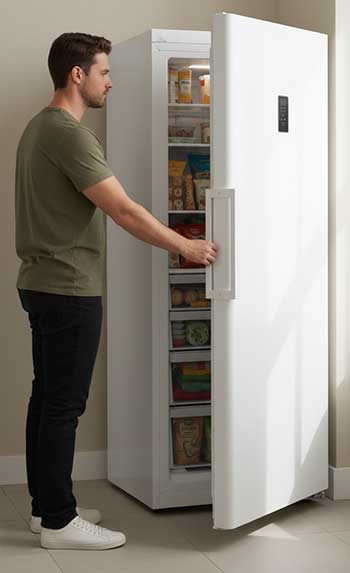
You and I both know that when shopping for a budget upright freezer, Insignia and Criterion often come up as the house-brand contenders—Insignia at Best Buy, Criterion exclusive to Menards.
They’re remarkably similar in many ways since both are typically manufactured by the same OEMs like Midea or Haier.
My Insignia feels almost identical to what I’ve heard about Criterion models in terms of build and features.
Both offer garage-ready options, manual defrost on most, adjustable shelves, and solid capacity for the price.
You’ll pay roughly the same—around $400-700 depending on size—with comparable energy efficiency.
Where they differ slightly is availability and minor design tweaks. Criterion sometimes gets praise for deeper shelves or clearer bins in user feedback, but I’ve seen just as many reports of similar quirks like door seal issues or slower cooling on both.
If you’re near a Menards, Criterion might edge out for convenience, but my Insignia has been rock-solid in performance. Neither is premium, but for everyday bulk storage without fuss, they’re neck-and-neck. You can’t go wrong with either if value is your priority.
- Insignia Vs. Frigidaire Upright Freezers
Frigidaire is the step-up brand that many consider when outgrowing budget options like my Insignia. You get frost-free operation standard on most models—no more manual defrost days for you—which alone saves hours of hassle compared to my routine.
Frigidaire builds feel sturdier with better insulation, quieter compressors, and extras like LED lighting, reversible doors, and more precise controls. They often hold temperatures more evenly and recover faster after door openings. Energy efficiency tilts toward Frigidaire too, especially in larger sizes.
The trade-off? You’ll pay 50-100% more for similar capacity. My Insignia convertible feature matches some Frigidaire versatility, and it handles garage extremes just as well. If you hate maintenance and want polished reliability, Frigidaire wins hands down.
But if you’re like me and okay with occasional defrosting to save cash, Insignia delivers 90% of the experience for less.
- Insignia Vs. Whirlpool Upright Freezers
Whirlpool brings that established-brand peace of mind with thicker builds, robust compressors, and often frost-free tech across the lineup. Their uprights shine in consistent cooling, better organization with removable shelves and bins, and features like fast-freeze modes or interior lights that my Insignia lacks.
Durability stories favor Whirlpool for longer life in tough conditions, and they tend to run quieter with superior insulation holding cold during outages. Garage-ready models perform reliably year-round.
That said, you pay a premium—often double my Insignia’s cost—for those refinements. My unit organizes well enough with glass shelves and door storage, and the convertible option adds flexibility Whirlpool sometimes skips in base models.
Whirlpool is ideal if you want set-it-and-forget-it longevity. For practical, no-frills freezing on a budget, my Insignia holds its own without the extra expense.
Overall, these comparisons show Insignia punches above its weight as a budget champ. Premium brands like Frigidaire and Whirlpool offer refinements worth the upgrade if maintenance or extras matter most to you. But for straightforward, affordable performance that gets the job done, I stick with mine happily.
Also Read: Is Magic Chef Freezer Worth It?
Frequently Asked Questions (FAQ)
Yes, it’s solid for the price with good capacity, quiet operation, and garage-ready performance.
Typically 5-8 years with proper care, though some go longer.
Primarily Haier or Midea, as Best Buy’s house brand.
It’s reliable for budget appliances, with mixed but mostly positive user experiences.
Wrapping Up My Thoughts On The Insignia Upright Freezer
After years with my Insignia upright freezer, I can say it’s been a reliable addition to our home. The space, ease of use, and affordability make it worth every penny. If you need extra frozen storage for bulk shopping, meal prep, or just peace of mind, go for it—you’ll love the convenience and savings.
It’s not fancy, but it gets the job done well. Highly recommend adding one to your setup.