
If you’re tired of struggling with dull blades that mash tomatoes instead of slicing them cleanly, or sets that rust after a few uses, the Imarku knife set is the upgrade your kitchen needs.
It’s sharp right out of the box, built to last without costing a fortune, and makes everyday cooking feel effortless. Trust me, once you try it, you’ll wonder how you managed without one—it’s that good of a value.
My Hands-On Experience With The Imarku Knife Set
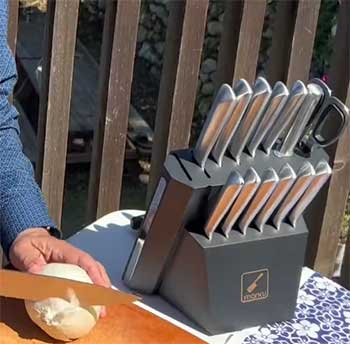
When my Imarku 16-piece set arrived, I was skeptical.
I’d gone through cheap knives before that promised the world but dulled fast.
But opening the box changed everything.
The knives felt solid, with that satisfying weight in my hand—not too heavy, not flimsy.
I started with the 8-inch chef’s knife on onions.
No more tears from crushing them; it glided through, giving perfect dices. Then tomatoes—clean slices, no juice squirting everywhere. You know that frustration when a dull knife squishes soft produce? Gone.
The santoku was next for veggies. Its granted edge made quick work of carrots and peppers, feeling almost effortless. I prepped a stir-fry in half the usual time.
The bread knife tackled crusty loaves without crumbling them, and the steak knives cut through grilled meat like butter at dinner—my family noticed immediately.
Even the paring knife handled delicate tasks, like peeling apples, with precision. The kitchen shears snipped herbs cleanly.
After months of daily use—chopping, slicing, dicing everything from herbs to roasts—the sharpness held up impressively. Minor honing kept them performing like new.
The block looks sleek on my counter, keeping everything organized and safe. Ergonomic handles fit comfortably, no fatigue even during big meal preps.
Overall, this set transformed cooking from a chore into something enjoyable. If you’re on the fence, just go for it—you’ll feel the difference from the first cut.
The Pros of Owning An Imarku Knife Set
You and I both know how a great knife changes everything in the kitchen. Here’s why I keep reaching for my Imarku knives every single day.
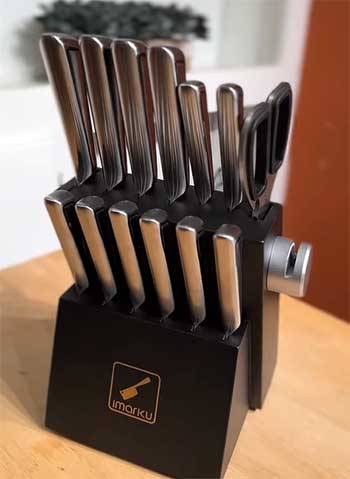
- Incredible Factory Sharpness: These come sharper than almost any knife I’ve unboxed. You can literally shave with the chef’s knife right away. Slicing ripe tomatoes or julienning herbs feels almost magical—no pressure needed, just guide the blade.
- Impressive Edge Retention for the Price: After months of chopping onions, carrots, garlic, and proteins almost daily, they still cut cleanly. I only hone every couple of weeks, which is amazing compared to cheaper sets that go dull in days.
- Comfortable, Secure Handles: The ergonomic pakkawood or ABS handles mold to your hand perfectly. I’ve prepped for hours—Thanksgiving turkey breakdown, big batches of salsa—and never felt cramps or hot spots. They stay grippy even when your hands are wet or oily.
- Perfect Balance and Control: Full-tang construction means weight distributes evenly from tip to handle. You get that confident “locked-in” feel when rocking through herbs or push-cutting vegetables. It makes techniques you see on cooking shows actually doable at home.
- Strong Resistance to Rust and Stains: I’ve cut lemons, limes, tomatoes, and even left them damp overnight by accident. Minor spots wipe off easily, and there’s no pitting. The high-carbon stainless steel holds up way better than I expected.
- Versatile and Complete Set: You get every knife you actually use—chef’s, santoku, bread, slicer, utility, paring, six steak knives, shears, and often a honing steel or sharpener. No filler pieces you’ll never touch.
- Beautiful Modern Design: The hammered tsuchime finish or polished look makes them stand proud on the counter. Guests always comment on how professional the block looks.
- Easy Cleanup: While I hand-wash everything, many owners run them through the dishwasher without issues. Food doesn’t stick badly, and a quick rinse is usually enough.
- Unbeatable Price-to-Performance Ratio: You’re getting sharpness, durability, and comfort that rival sets costing three or four times more. It feels like stealing when you compare the quality.
- Responsive Customer Service: When my block arrived with a small crack (rare), they sent a replacement immediately—no hassle, no return needed. That kind of support gives you peace of mind.
- Safe and Family-Friendly: The block keeps blades covered, and the handles are rounded enough that they’re comfortable for my teenager to use safely under supervision.
These advantages add up to a set that makes you actually enjoy cooking more. You save time, reduce frustration, and feel like a better cook overnight.
The Cons of Owning An Imarku Knife Set
I love my set, but I won’t pretend it’s perfect. Here are the honest drawbacks I’ve noticed—and some that other owners commonly mention—so you know exactly what you’re getting.
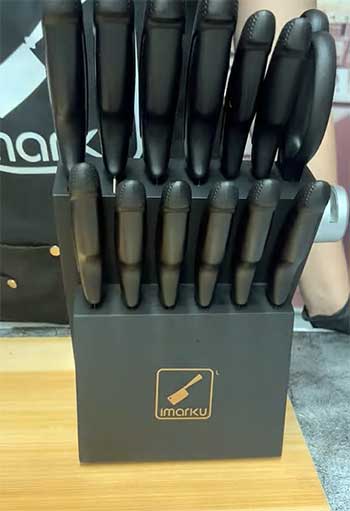
- Rust Can Appear If Neglected: Despite good corrosion resistance, if you leave them wet for hours or soak them overnight, small rust spots can form, especially near the bolster or logo. You have to dry them properly every time.
- Requires More Frequent Honing Than Premium Brands: Edge retention is excellent for the price, but it’s not on the level of VG-10 or powdered steel knives. You’ll hone every 1-2 weeks with heavy use, whereas my old Shun needed it maybe monthly.
- Occasional Quality Control Issues: Some sets arrive with minor cosmetic flaws—slight handle gaps, uneven grind lines, or block damage. It’s not widespread, but it happens more often than with German giants like Wüsthof.
- Not Authentic Japanese Steel: The marketing leans heavily on “Japanese-style” 15-degree edges, but the steel is usually 7Cr17MoV or similar Chinese/German high-carbon stainless. It performs great but doesn’t match the hardness or longevity of true Japanese steels.
- Handles Can Feel Slippery When Very Greasy: The smooth pakkawood or ABS is comfortable, but if you’re working with lots of oil or fatty meat and your hands get slick, the grip isn’t as aggressive as heavily textured Micarta or G10 handles.
- Serrated Steak Knives Limit Versatility: They’re fantastic for cutting cooked steak without tearing, but you can’t sharpen them easily at home, and they’re useless for other kitchen tasks.
- Some Pieces Might Stay Unused: In larger 16- or 20-piece sets, you might rarely touch the boning knife or certain utility sizes. The block takes counter space for tools you don’t need daily.
- Heavier Than Traditional Japanese Knives: The German-inspired design means more heft, which I like for control, but if you prefer ultra-light gyutos for delicate slicing, these can feel a bit chunky.
- Dishwasher Use Shortens Lifespan: While many do it without immediate problems, repeated dishwasher cycles can dull the edge faster and cause minor handle swelling or spotting over years.
- Sharpening Takes Practice: The steel is hard enough that cheap pull-through sharpeners struggle. You’ll get best results with whetstones or a good guided system, which adds a small learning curve if you’re new to sharpening.
- Branding Can Feel Over-Promising: The heavy “Japanese-inspired” marketing sometimes sets expectations too high for what is essentially a very good Chinese-made hybrid knife.
These cons don’t ruin the experience for most home cooks—especially at this price point—but they’re worth considering if you’re a perfectionist or plan professional-level abuse.
Also Read: Comparison of Victorinox And Zwilling.
Maintenance Tips For Your Imarku Knives
Keeping your Imarku knives in top shape isn’t hard—it just takes consistent habits. I’ve learned these the hard way and now my set stays sharp and beautiful longer.
- Daily Cleaning Habits: Hand-wash immediately after use with warm soapy water and a soft sponge. Avoid soaking or harsh scrubbers that could scratch the blade. Dry right away with a towel to prevent water spots or rust risks—I’ve seen minor spots vanish easily when caught early.
- Proper Storage Solutions: Always store in the block, on a magnetic strip, or in blade guards. Never toss loose in drawers where edges bang and dull or chip. Your block keeps them safe and accessible—you’ll grab the right knife faster.
- Honing for Edge Alignment: Hone before most uses with the included steel or a rolling sharpener. Hold at 15-20 degrees, swipe alternately from heel to tip. This realigns the edge without removing metal, extending time between full sharpenings. You notice cuts stay effortless longer.
- Sharpening Techniques When Needed: When honing isn’t enough—test on tomato skin or paper—use a whetstone (soak first) or Imarku’s rolling sharpener with magnetic angles. Maintain consistent 15-18 degree angle, alternate sides. For beginners, the rolling tool makes it foolproof and safe.
- Choosing the Right Cutting Boards: Stick to wood, bamboo, or soft plastic. Avoid glass, marble, or ceramic—they dull blades fast. Your edges last way longer, and you reduce chipping risks.
- Avoiding Common Mistakes: Never cut frozen foods, bones, or hard items—use a cleaver for that. No twisting or prying motions; these are for slicing. Don’t put in dishwasher regularly—heat and detergents can warp or dull over time.
- Handling and Safety Tips: Grip firmly but comfortably. Keep fingers curled under for safety. Store out of kids’ reach. Oil pakkawood handles occasionally with mineral oil to prevent drying.
- Long-Term Preservation: Check for loose rivets or wear periodically. If rust appears, gently scrub with a non-abrasive pad. Follow these, and your Imarku set performs like new for years—you save money and enjoy sharper cooking daily.
Comparing Imarku To Other Popular Brands
- Imarku Versus Wüsthof
Wüsthof offers classic German forged knives with unbeatable durability and perfect balance—you feel the heirloom quality. Edges endure heavy use. Imarku matches much of that toughness with sharper factory edges and lighter feel, all at lower cost.
For pro-level longevity, Wüsthof leads, but Imarku delivers everyday excellence without the investment.
- Imarku Versus Zwilling
Zwilling provides reliable German engineering—consistent sharpness, secure grips, and versatile sets. You trust them in busy kitchens. Imarku rivals the stain resistance and retention, adding modern looks and built-in sharpeners often.
Zwilling excels in pure build, but Imarku offers similar daily performance when price counts.
- Imarku Versus Victorinox
Victorinox delivers affordable, lightweight utility—tough and simple for commercial or home abuse. You can’t beat basic reliability. Imarku upgrades with superior out-of-box sharpness, better ergonomics, and stylish hammered blades.
Victorinox stays utilitarian, while Imarku adds comfort and visual appeal.
- Imarku Versus Shun
Shun captures authentic Japanese precision—thin Damascus blades slice like lasers with stunning patterns. You get unmatched finesse. Imarku adopts sharper angles for easy cuts but uses forgiving steel.
Shun requires careful handling to avoid chips; Imarku handles mistakes better. For beauty and ultimate sharpness, Shun shines, but Imarku provides 80-90% performance affordably.
Also Read: Is Chicago Cutlery Knife Set Worth It?
Frequently Asked Questions (FAQ)
No, it’s a Chinese brand with Japanese-inspired designs.
He primarily uses Wüsthof and Henckels knives.
Several months with regular honing and proper care.
Imarku offers excellent value, often rivaling more expensive sets in performance.
Final Thoughts
I’ve used my Imarku set for everything from quick weeknight salads to holiday roasts, and it never lets me down. The sharpness makes prep faster, the balance reduces strain, and the durability means I don’t baby them. You get so much quality without overspending—it’s practical luxury.
Compared to pricier options I’ve tried, Imarku punches way above its weight, turning ordinary meals into something special. If sharp, reliable knives will make your time in the kitchen better, this set is absolutely worth it.