
If you need extra frozen storage without spending a fortune, a Hotpoint chest freezer is a smart choice. I’ve used one for years, and it reliably keeps bulk groceries, meal preps, and seasonal harvests rock-solid frozen.
You get generous space, consistent cooling, and solid value that makes stocking up feel effortless and worry-free. It’s perfect for families or anyone who wants to save money on food without sacrificing quality.
My Personal Experience With The Hotpoint Chest Freezer
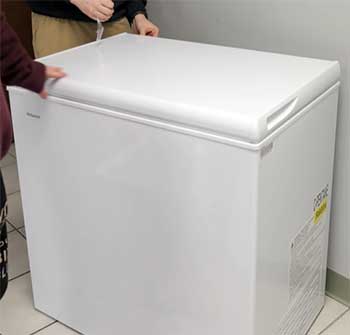
Let me tell you how I ended up with my Hotpoint chest freezer.
A couple of years ago, my family started buying in bulk—meat from local farmers, berries in summer, and big packs from warehouse stores.
Our fridge freezer just couldn’t keep up.
Items got buried, freezer burn crept in, and I was constantly rearranging to find anything.
I needed something bigger, reliable, and not too expensive.
After reading reviews and comparing options, I chose a Hotpoint 7.1 cubic foot model. It arrived, and setup was straightforward. I plugged it in in the garage, let it cool down for a few hours, and started loading it.
Right away, I noticed how quickly it reached freezing temperature. Within a day, everything was solidly frozen, and the power light gave me peace of mind that it was running properly.
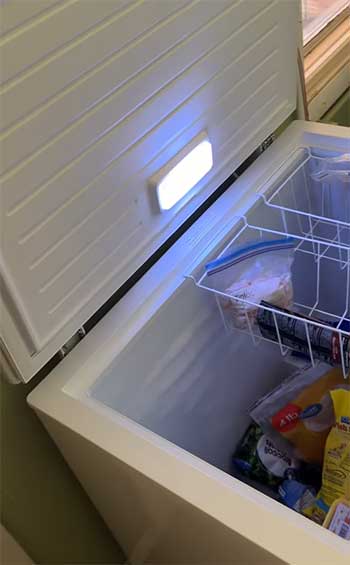
What I love most is the organization. It comes with removable baskets that sit on top, so I keep frequently used items like ice cream or frozen veggies right there. Below, I stack larger cuts of meat or bulk bags.
You know that feeling when you open a freezer and everything is easy to see? That’s what this gives me—no more digging through piles.
It’s also surprisingly quiet. In the garage, I barely hear it cycle on and off. During power outages, it holds temperature well; once, we lost power for eight hours, and nothing thawed. The manual defrost isn’t my favorite task, but I do it once or twice a year, and it keeps everything efficient.
One time, I overloaded it after a big shopping trip. I worried it wouldn’t cool properly, but it handled the load without issue. The exterior stays cool to the touch, and the lock feature is handy since we have kids around.
Overall, this freezer has saved me countless trips to the store and reduced food waste. If you’re on the fence, I can honestly say it’s made my life easier in ways I didn’t expect. You’ll wonder how you managed without one.
Also Read: My Experience With Insignia Upright Freezer.
The Pros of Owning A Hotpoint Chest Freezer
- Generous Storage Capacity That Fits Real Life
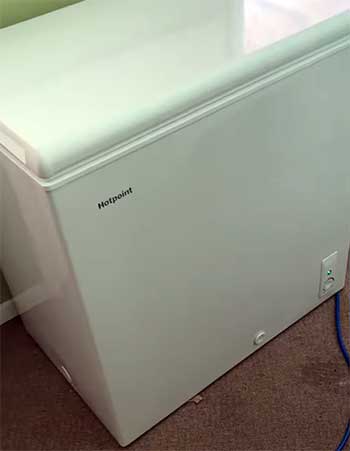
One of the biggest reasons I recommend Hotpoint chest freezers is the space you get for the price.
My 7.1 cubic foot model holds so much more than I imagined.
I can fit whole turkeys, multiple bags of frozen fruit, and stacks of prepared meals without cramming.
You know how upright freezers have shelves that limit big items?
Chest designs let you use every inch vertically and horizontally.
I organize with baskets on top and larger boxes below, and it feels like having a second pantry dedicated to frozen goods.
- Consistent and Reliable Cooling Performance
You want a freezer that actually freezes, right? My Hotpoint has never let me down here. It maintains steady temperatures, even when I add warm items. The adjustable thermostat is simple—I set it midway, and everything stays rock-solid.
I’ve checked with a thermometer, and it holds right around 0°F. That consistency means no surprise thaw-outs or freezer burn on my food. For families who buy in bulk or preserve garden produce, this reliability is everything.
- Energy Efficiency That Keeps Bills Manageable
I was pleasantly surprised by how little this freezer adds to my electric bill. Hotpoint models are designed with good insulation, and mine runs efficiently. You don’t hear the compressor cycling constantly, which tells me it’s not working overtime.
Compared to older freezers I’ve had, this one uses noticeably less power while keeping everything frozen. If you’re worried about running costs, especially with rising energy prices, this is a strong point in Hotpoint’s favor.
- Quiet Operation for Peaceful Living
Noise matters, especially if your freezer is in a garage near living spaces or even in a basement you use often. My Hotpoint is remarkably quiet.
When the compressor kicks on, it’s a low hum you barely notice. I’ve had friends over with louder models that sound like a small airplane taking off—mine doesn’t do that. You can place it where you need without it becoming an annoyance.
- Practical Features Like Baskets and Lighting
The little things make a big difference. My model has sturdy sliding baskets that keep smaller items accessible. No more losing bags of peas at the bottom. Some larger Hotpoint models even have interior LED lighting, which is a game-changer when you’re rummaging late at night.
The power-on indicator light is reassuring too—you glance and know it’s working. These thoughtful touches show Hotpoint understands what real users need.
- Excellent Value for Money
Let’s be honest: you don’t want to spend thousands on a freezer. Hotpoint delivers solid performance at a budget-friendly price. I paid far less than for comparable sizes from premium brands, and I haven’t felt shortchanged.
You get durability, space, and reliability without the markup. For first-time buyers or anyone adding extra storage, this makes Hotpoint an easy yes.
- Durability That Stands Up Over Time
After years of use, my Hotpoint still looks and performs like new. The exterior enamel resists scratches, and the lid seal remains tight. I’ve moved it once, and it handled the transport without issues. You want something that lasts, and Hotpoint builds them tough enough for everyday family demands.
The Cons of Hotpoint Chest Freezer I’ve Noticed
- Manual Defrost Requirement: The biggest drawback for me is manual defrosting. Unlike frost-free uprights, you have to unplug, empty, and let ice build-up melt every year or so. It’s messy and time-consuming, though I schedule it when I can clean the garage anyway. If you hate maintenance, this might frustrate you.
- Limited Organization Options: While baskets help, chest freezers aren’t as naturally organized as uprights with shelves. You still dig for buried items sometimes. I use extra bins, but it’s not as grab-and-go as a door full of shelves.
- Heavier and Harder to Move: These units are bulky. Once placed, mine stays put. If you move often or need to rearrange, the weight is a consideration.
- Performance in Extreme Heat: In very hot garages, some users report the compressor working harder. Mine is fine in moderate temperatures, but if you live where summers hit 100°F regularly, you might notice slightly higher temps or more cycling.
- Basic Design Without Fancy Extras: You won’t get digital controls or smart features. It’s straightforward, which I like, but if you want temperature alarms or Wi-Fi monitoring, look elsewhere.
Also Read: My Experience With Criterion Upright Freezer.
Keeping Your Hotpoint Chest Freezer In Top Shape
- Regular Defrosting Schedule: Defrosting is essential for efficiency. I do mine once a year or when ice reaches half an inch. Unplug, remove food to coolers, and let it melt. Use warm water and a plastic scraper—never metal. Wipe dry thoroughly before restarting. This prevents ice buildup that makes the compressor work harder and raises energy use.
- Cleaning Inside and Out: Every few months, I empty it and clean with mild soap and warm water. Baking soda solution neutralizes odors. For the exterior, a damp cloth keeps it looking good. Don’t forget the lid gasket—wipe it to maintain the seal and prevent air leaks.
- Optimal Placement and Ventilation: Place yours on a level surface with space around for airflow. Poor ventilation makes the unit struggle. I keep mine a few inches from walls and avoid direct sunlight. In garages, moderate temperatures help longevity.
- Temperature Monitoring and Adjustment: I check internal temperature occasionally with a thermometer. Aim for 0°F. If you add lots of unfrozen food, turn it colder temporarily, then back to normal. Avoid overfilling—air needs to circulate.
- Vacuuming Coils and Checking Seals: Every six months, I pull it out and vacuum condenser coils. Dust buildup reduces efficiency. Inspect the door seal for cracks; a dollar bill test works—if it pulls out easily, the seal might need replacement.
- Power Outage Preparedness: Keep it full—frozen items help maintain cold longer. During outages, keep the lid closed. Mine holds cold for 24-48 hours when full.
- Annual Deep Inspection: Once a year, I check drain plugs, baskets for rust, and listen for unusual noises. Early catches prevent bigger issues.
Following these habits keeps my Hotpoint running smoothly and efficiently year after year.
How Hotpoint Stacks Up Against Other Brands?
- Hotpoint Vs. Frigidaire Chest Freezers
Frigidaire is arguably the heavyweight champion in this space, and honestly, it was the hardest alternative for me to turn down. The most distinct difference you will notice immediately is mobility. Many Frigidaire models, even the mid-sized ones, come standard with caster wheels.
Hotpoint units usually come with fixed leveling legs. If you plan on keeping your freezer in one spot in the garage forever, this doesn’t matter. However, if you think you might need to slide it out to clean behind it or reorganize your space, the Frigidaire wins on portability.
You have to wrestle the Hotpoint a bit more to move it once it is loaded.
On the other hand, I found the Hotpoint build to feel slightly more industrial in a good way. The lid seal on the Hotpoint feels thicker and creates a stronger vacuum suction than the entry-level Frigidaire models I tested in the store.
While Frigidaire often includes better interior organization out of the box—sometimes offering adjustable dividers that Hotpoint lacks—the Hotpoint feels like it is built to take a beating. If you prioritize easy movement and organization, Frigidaire has the edge.
If you want a stationary tank that feels like it seals tighter than a bank vault, Hotpoint is the better pick.
- Hotpoint Vs. Vissani Chest Freezers
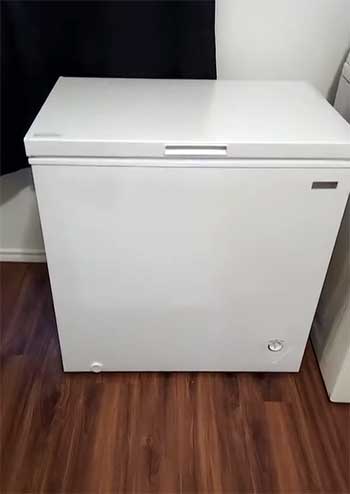
You will often see Vissani sitting right next to Hotpoint at Home Depot, usually with a tempting price tag that is fifty to a hundred dollars cheaper.
It is very easy to be swayed by that initial savings, but I strongly advise looking at the long-term picture here.
Vissani is essentially a budget-focused house brand, and the difference shows in the insulation and compressor duty cycle.
In my research, I found that Vissani units tend to have thinner walls compared to the Hotpoint.
Thinner walls mean the compressor has to kick on more frequently to maintain that zero-degree baseline, especially if you are keeping it in a garage during summer.
While the upfront cost of the Vissani is lower, the Hotpoint is likely to cost you less in electricity over the span of five years. Furthermore, the availability of replacement parts is a major factor. Since Hotpoint is backed by the massive GE/Haier service network, finding a replacement gasket or hinge in ten years is plausible.
With Vissani, you are often out of luck if a component fails after the warranty expires, turning a cheap purchase into a disposable one.
- Hotpoint Vs. Midea Chest Freezers
Midea is a fascinating competitor because they are actually a massive original equipment manufacturer (OEM) that builds appliances for many other brands. However, their own branded units often feature more modern “bells and whistles” than Hotpoint.
For instance, Midea is well-known for offering “convertible” units that can switch between being a fridge or a freezer with the flip of a switch or dial. Hotpoint is far more traditional; it is a freezer, period.
The trade-off here is between versatility and simplicity. I chose Hotpoint because I believe that more complexity often leads to more potential failure points. A switch that controls a digital thermostat to toggle modes is just one more electronic component that can break in a humid garage environment.
Hotpoint relies on a simple mechanical dial that has worked for decades. However, Midea does have a reputation for whisper-quiet operation. If you are placing the unit inside your apartment or near a living space, the Midea might be less obtrusive.
My Hotpoint has a noticeable hum—reassuring to me, but potentially annoying to others. If you need a silent machine or the flexibility to turn your freezer into a beverage cooler for a party, Midea is the way to go. But for a dedicated, “set it and forget it” deep freeze, Hotpoint’s simplicity is superior.
Also Read: My Experience With Magic Chef Freezer.
Frequently Asked Questions (FAQ)
Frigidaire and GE consistently rank highest in reliability surveys.
Yes, especially for the price—it offers solid performance and good value with proper care.
Typically 10-20 years, depending on maintenance and usage conditions.
Haier, through its ownership of GE Appliances in North America.
Final Thoughts
After years with my Hotpoint chest freezer, I can confidently say it’s a purchase you won’t regret. You get ample storage, dependable freezing, and real savings on groceries—all at a price that makes sense.
If you’re ready to reduce food waste and always have meals on hand, go for it. It’s transformed how my family eats and shops, and I know it can do the same for you.