
As a serious coffee lover who has brewed hundreds of cups with both the Hario V60 and the Chemex, I’ve come to appreciate how each one shapes the final cup in its own way.
In this article, I’ll compare them head-to-head from a real-user perspective—sharing what I’ve learned through daily use—so you can decide which one fits your taste, routine, and lifestyle better.
| Feature | Hario V60 | Chemex |
| Shape | 60° cone with spiral ribs | Hourglass carafe with wooden collar |
| Material options | Plastic, ceramic, glass, metal | Borosilicate glass only |
| Standard capacity | 1–4 cups (up to ~600ml) | 3–10 cups (up to ~1.5L) |
| Filter type | Thin, bleached/unbleached paper | Thick, proprietary bonded paper |
| Typical brew time | 2:30–3:30 minutes | 4:00–6:00 minutes |
| Flavor profile | Bright, clean, nuanced | Smooth, clean, rounded |
| Ease of control | High (flow rate responds quickly) | Moderate (slower, more forgiving) |
| Heat retention | Moderate (depends on material) | Excellent (thick glass carafe) |
| Cleanup | Very easy | Moderate (carafe + filter disposal) |
| Price range (dripper/carafe) | $20–$90 | $40–$60 |
| Aesthetic appeal | Minimalist, functional | Iconic, mid-century modern |
Key Differences Between Hario V60 And Chemex
- Filter thickness and material

This is the single biggest factor separating the two cups.
The V60 uses thin, standard pour-over paper filters (bleached or unbleached) that let more coffee oils and ultrafine particles pass through.
The result is a cup with noticeable body and a silky mouthfeel.
The Chemex, on the other hand, demands its proprietary bonded filters, which are 20–30% thicker and scientifically designed to remove almost all oils and sediment.
In practice, this gives you an incredibly clean, tea-like brew with virtually no residue at the bottom of the cup.
I love the V60 when I want to taste the natural oils of a Kenyan bean—they add viscosity and amplify fruitiness. With the Chemex, those same beans taste purer but lighter in body, almost like a refined cold brew. The trade-off is that Chemex filters cost more and can slightly mute very delicate high notes.
- Flow rate and brew time
The V60 drains fast—usually 2:30 to 3:30 minutes for a standard brew—thanks to its large single hole and thin filter. This quick flow means I have to stay attentive the entire time, adjusting my pour to avoid under- or over-extraction.
The Chemex takes its time, often 4 to 6 minutes, because the thick filter and smaller opening restrict flow. That slower pace creates a more relaxed pouring experience; I can pour in larger pulses without worrying as much about channeling.
On rushed weekday mornings, the V60 wins for speed. When I have time on weekends, I actually prefer the Chemex’s leisurely draw-down—it feels meditative, and the extended contact time pulls out deeper sweetness without bitterness.
- Coffee bed geometry
The V60’s steep 60-degree cone creates a deep, narrow bed of grounds. Water spends more time in the center, and agitation from pouring creates turbulence that enhances extraction of acids and aromatics.
This geometry is why the V60 excels at highlighting origin character. The Chemex’s wide, shallow hourglass shape produces a broad, flat bed more like a traditional dripper. Water distributes evenly across the surface with less vertical movement, leading to gentler, more uniform extraction.
In my experience, this makes the Chemex less prone to uneven spots and produces a remarkably consistent cup from first pour to last. If I’m using a bean with bold chocolate or nutty notes, the Chemex’s geometry rounds them beautifully. For floral or citrus-forward coffees, the V60’s deep cone brings those notes forward aggressively.
- Control versus forgiveness
The V60 is a precision instrument—it responds dramatically to every variable. Slow your pour, and you increase extraction; pour aggressively, and you risk bitterness. This high control is addictive once you get the hang of it; small tweaks let me fine-tune acidity or sweetness day to day.
But it’s unforgiving—early on, I had plenty of sour or bitter cups from uneven pouring. The Chemex is far more tolerant. The thick filter and slower flow buffer mistakes, so even a somewhat sloppy pour still yields a balanced, drinkable result.
That forgiveness makes the Chemex my go-to when I’m half-asleep or brewing while chatting with guests. Advanced brewers often outgrow that forgiveness and crave the V60’s responsiveness, but beginners usually find the Chemex less intimidating.
- Batch size capability
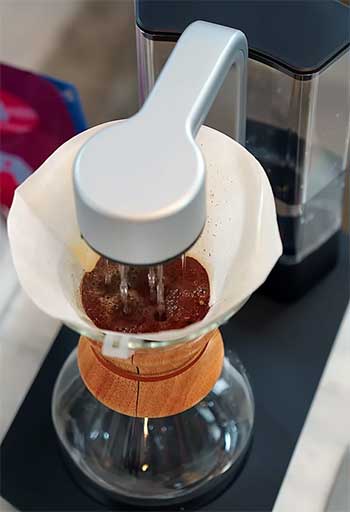
The standard V60-02 comfortably handles 1–4 cups (up to about 600ml) with excellent consistency.
Push beyond that, and the bed gets too deep, risking uneven extraction or overflow.
The Chemex was designed for larger batches—6-cup, 8-cup, and even 10-cup models brew 800ml to 1.5L beautifully without quality loss.
When I’m making coffee just for myself, the V60 feels perfectly proportioned.
When friends or family are over, the Chemex shines; I can brew a full carafe that stays hot and tastes uniform from the first cup to the last.
Trying to make a big batch in the V60 requires multiple brews or a larger (less common) V60-03, which never feels as optimized.
- Heat management
The Chemex’s thick borosilicate glass retains heat exceptionally well. Water temperature drops only a few degrees over the entire 5-minute brew, promoting even extraction. The V60’s performance depends heavily on material: plastic loses heat fastest, ceramic and glass do better, and metal heats up quickly but cools rapidly once pouring stops. In winter or cold kitchens, I always preheat my V60 thoroughly and prefer ceramic or glass versions.
The Chemex needs less preheating because the carafe itself holds temperature so effectively. This difference matters most with temperature-sensitive light roasts—stable heat in the Chemex extracts sweetness reliably, while any cooling in the V60 can leave the cup slightly under-extracted.
- Aesthetics and countertop presence
The Chemex is undeniably a design icon—its sleek hourglass shape, polished wood collar, and leather tie make it look like modern sculpture. It lives permanently on my counter because it’s beautiful even empty. Guests always notice and compliment it.
The V60 is minimalist and functional: a simple cone that disappears into a drawer when not in use. Ceramic or glass V60s have understated elegance, but they don’t command attention like the Chemex.
If your kitchen is styled mid-century or you enjoy displaying tools, the Chemex feels like an intentional choice. If you prefer clean counters and no-fuss storage, the V60 blends in effortlessly.
- Cost of ownership
Upfront, both are reasonably priced—the plastic V60 is cheapest (~$20–25), while Chemex carafes run $40–60. Over time, filters make the bigger difference: generic V60 filters are inexpensive and widely available, often $5–8 for 100.
Chemex bonded filters cost roughly double and must be authentic for proper fit and flow. If you brew daily, that adds up—I spend noticeably less on V60 supplies. Replacement parts also favor the V60; a cracked dripper is cheap to replace, while a broken Chemex means buying a whole new carafe.
- Portability and durability
The plastic V60 is nearly indestructible and weighs almost nothing—perfect for travel, camping, or office desks. I’ve tossed mine in carry-on luggage countless times without worry. Metal versions are even tougher.
The Chemex is fragile glass; while borosilicate resists thermal shock, dropping it means game over. It’s strictly a home brewer—I’d never risk taking it on trips. If you want a pour-over method you can use anywhere, the V60 wins decisively.
Key Features of The Hario V60
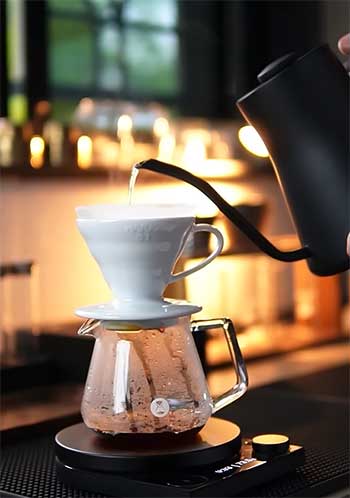
- 60-degree cone angle with spiral ribs The steep cone and raised ribs keep the filter from sticking to the walls, creating air channels that let water flow freely. This gives me precise control over extraction speed.
- Single large hole at the bottom Unlike drippers with multiple small holes, the V60 has one big opening. The brew speed depends almost entirely on grind size and pour technique—perfect for experimentation.
- Multiple material choices Plastic is lightweight and unbreakable (great for travel). Ceramic and glass retain heat better. Metal versions are nearly indestructible and conduct heat quickly.
- Compact size It fits easily on most mugs or small servers and stores without taking much space.
- Wide range of accessories Hario makes dedicated servers, kettles, filters, and even scales designed around the V60 ecosystem.
Pros of The Hario V60
- Exceptional flavor clarity The thin filters and fast flow extract bright acidity and delicate floral or fruity notes that thicker filters often mute. When I use a light-roast Ethiopian bean, the V60 reveals lemon, jasmine, and bergamot notes I rarely taste as clearly in other methods.
- Total control over the brew Small changes in pour speed or pattern immediately affect extraction. That responsiveness rewards practice and lets me dial in recipes quickly.
- Fast brew time A typical 300–400ml brew finishes in under three minutes, which fits busy mornings perfectly.
- Affordable entry point A plastic V60 costs around $20–25. Even ceramic or glass versions rarely exceed $40–50.
- Easy cleanup Knock out the filter and grounds in one motion, rinse the dripper, and you’re done in seconds.
- Highly portable The plastic version weighs almost nothing and survives being tossed in a backpack.
- Huge community and recipes Countless YouTube videos, blog posts, and world brewers’ championship recipes exist specifically for the V60.
Cons of The Hario V60
- Steeper learning curve Because flow is so sensitive, early attempts often produce channeled or under-extracted cups. It took me weeks to pour consistently.
- Less forgiving A rushed or uneven pour can lead to bitter or sour results more easily than with slower methods.
- Limited batch size The standard V60-02 comfortably handles 1–4 cups. Larger brews risk overflow or uneven extraction.
- Heat loss in plastic versions Plastic cools faster than ceramic or glass, which can slightly lower extraction in colder kitchens.
- Requires precise gear A good gooseneck kettle and burr grinder are almost mandatory for consistent results.
Also Read: Differences Between AeroPress And Clever Dripper.
Key Features of The Chemex
- All-in-one glass carafe The brewer and server are the same vessel—borosilicate glass with a wooden collar and leather tie.
- Thick, bonded paper filters Chemex filters are 20–30% thicker than standard pour-over filters and are pre-folded and bonded for perfect fit.
- Wide, shallow bed geometry The hourglass shape creates a large, relatively flat coffee bed that encourages even saturation.
- Non-porous glass construction Glass doesn’t absorb odors or oils, and the thick walls retain heat extremely well.
- Iconic mid-century design It’s displayed in museums (MoMA) and has appeared in films and magazines for decades.
Pros of The Chemex
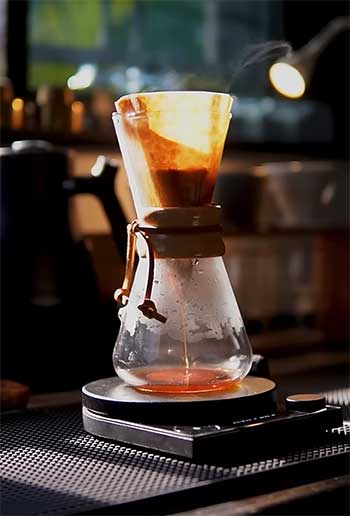
- Exceptionally clean and smooth cup The thick filters remove nearly all oils and sediment, producing a tea-like body with rounded sweetness. Darker roasts taste especially balanced and chocolatey.
- Excellent heat retention Thick glass keeps water temperature stable throughout the longer brew, leading to even extraction.
- Perfect for larger batches 6-cup and 8-cup models easily serve 4–8 people with consistent quality.
- Visually stunning It looks like modern art on the counter. Guests always comment on it.
- Simple, forgiving technique The slower flow and wide bed make channeling less likely, so even a less-practiced pour yields good results.
- No separate server needed Brew directly into the carafe you’ll serve from.
- Long-lasting With reasonable care, the glass lasts decades.
Cons of The Chemex
- Longer brew time 4–6 minutes for a full pot can feel slow when I’m in a hurry.
- Proprietary filters are expensive Chemex-branded filters cost roughly twice as much as generic V60 filters.
- Fragile glass Though borosilicate is strong, dropping it means replacement.
- More cleanup effort Rinsing the wide carafe and disposing of the heavy wet filter takes longer than the V60.
- Less flavor nuance in light roasts The thick filter can mute some delicate high notes that the V60 highlights.
- Harder to brew small single cups The large carafe geometry isn’t ideal for 200–300ml brews; extraction can suffer.
My Daily Experience With Both Brewers
Mornings when I’m alone and want maximum flavor exploration, I reach for the V60. I grind medium-fine, bloom for 30–40 seconds, then pour in controlled circles. The result is a vibrant, aromatic cup that evolves as it cools.
When friends visit or I want coffee to last an hour, I use the Chemex. I grind medium-coarse, pour steadily, and let the thick filter do its magic. The coffee stays hot longer and tastes consistently smooth from first to last sip.
Over years of side-by-side brewing with the same beans, I’ve noticed the V60 emphasizes origin character while the Chemex emphasizes balance and sweetness. Neither is objectively “better”—they simply highlight different aspects of the same coffee.
Also Read: Is Kettl Matcha Worth It?
Frequently Asked Questions (FAQ)
Chemex needs medium-coarse (like coarse sea salt) to avoid slow drainage. V60 works best with medium-fine (table salt) for optimal 2:30–3:30 brew time.
It depends. V60 gives cleaner, brighter coffee with no sediment. French press (cafetière) offers fuller body and more oils. I prefer V60 for light roasts, French press for darker ones.
Yes, most people find the Chemex’s elegant hourglass design and wooden collar more beautiful and iconic than the functional V60.
Yes, the Hario V60 is one of the most popular manual pour-over coffee drippers available.
Final Thoughts
After years of brewing with both, I still keep my V60 on the counter for daily solo cups and my Chemex ready for weekends and guests. If you love experimenting, chasing bright acidity, and brewing quickly, start with the V60—you won’t regret the learning journey.
If you value smooth, consistent coffee for multiple people and appreciate beautiful design, the Chemex will feel like the right choice.
Whichever you pick, you’re joining a community of coffee lovers who believe great mornings start with intentional brewing. Enjoy the process, adjust to your taste, and savor every cup.