
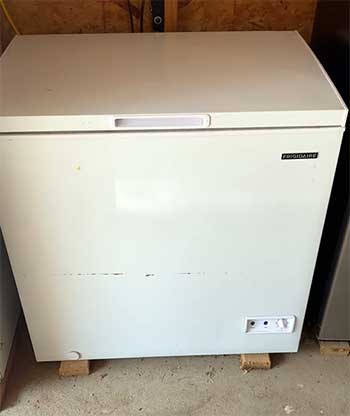
If you are tired of playing Tetris with your kitchen fridge every time you come home from a bulk grocery run, stop what you’re doing and buy a Frigidaire chest freezer right now. Seriously.
Whether you are a hunter needing space for game, a gardener preserving the harvest, or just a family trying to save money by buying in bulk, this appliance is the unsung hero of home economics. It’s reliable, consistent, and surprisingly affordable.
Don’t overthink it—this is the investment that pays for itself in saved food and fewer grocery trips.
My Experience With The Frigidaire Chest Freezer
I remember the exact moment I realized I needed a dedicated freezer.
It wasn’t a calculated financial decision; it was a moment of sheer frustration.
I was standing in my kitchen, holding a family-pack of chicken breasts, trying to jam them into a freezer drawer that was already overflowing with half-eaten ice cream tubs and bags of frozen peas.
The drawer wouldn’t close. Frost was building up. I was done.
Buying the Frigidaire chest freezer felt like a grown-up milestone I didn’t know I needed. I opted for the 7 cubic foot model, thinking it would be “just enough” overflow space. What I didn’t expect was how it would completely change the way I shop and cook.
The first thing I noticed after unboxing it in the garage was the simplicity. There are no touchscreens, no WiFi connectivity, and no unnecessary bells and whistles. It’s a white metal box that gets cold and stays cold. I plugged it in, adjusted the temperature dial to the recommended setting, and waited. Within hours, it was ready.
Living with it has been a revelation. The interior space is cavernous compared to an upright. I can toss in weirdly shaped items—like a whole turkey or awkward racks of ribs—without a second thought. The “Store-More” removable basket is a small but mighty feature.
It slides across the top, holding the small stuff like butter sticks or frozen berries that would otherwise get lost in the icy abyss below.
I was initially worried about noise. My garage is right next to my home office, and I dreaded the idea of a constant compressor hum in the background. But honestly, I barely hear it. It has a low, steady purr when it kicks on, but it’s remarkably quiet.
Temperature consistency has been another win. I’ve put thermometers in different corners just to test it out (yes, I’m that person), and the Frigidaire holds steady. I haven’t seen any of that dreaded partial thaw that leads to freezer burn.
Even during a brief power outage last summer, everything stayed rock hard for nearly two days because the insulation is surprisingly thick.
It’s not just an appliance; it’s peace of mind. Knowing I have weeks of food stored away safely takes a massive mental load off my shoulders. It feels less like a purchase and more like a safety net.
The Pros of Owning a Frigidaire Chest Freezer
When you look at the market, it’s easy to get distracted by flashy features, but the Frigidaire shines because it masters the basics. Let’s break down exactly why this machine stands out.
- Exceptional Temperature Retention
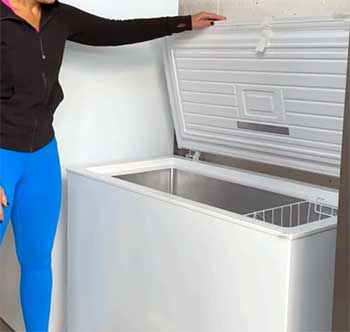
The primary job of a freezer is to freeze, and this unit excels at it. The insulation technology Frigidaire uses is dense.
This isn’t just about keeping the cold in; it’s about keeping the heat out.
If you live in an area with frequent storms or power instability, this is a massive pro.
The tight seal on the lid creates a vacuum-like closure that locks in the cold air.
You can literally feel the resistance when you open it, which is a good sign. It means the gasket is doing its job.
- Space Efficiency and Layout
You might think 7 or 10 cubic feet doesn’t sound like much, but in a chest configuration, it is massive. Unlike upright freezers where shelves dictate the height of your items, a chest freezer is an open canvas.
You can stack lasagna trays, bags of vegetables, and boxes of meat in whatever configuration makes sense for you. The lack of shelves means you utilize 100% of the internal volume. There is no wasted space between racks or around fans.
- Energy Efficiency
We all worry about the electric bill, especially with an appliance running 24/7. Frigidaire has optimized these units to be incredibly energy-efficient. Because cold air is heavier than warm air, it sits in the bottom of the chest. When you open the lid, the cold air doesn’t spill out onto your feet like it does with an upright freezer.
It stays right there in the bucket. This means the compressor doesn’t have to work overtime to bring the temperature back down every time you grab a frozen pizza. Over a year, this design difference saves a significant amount of electricity compared to upright models.
- Durability and Build Quality
These things are built like tanks. The exterior finish is resistant to scratches and dents, which is crucial if you keep it in a high-traffic area like a garage or basement.
The hinges are heavy-duty, designed to hold the lid open at various angles so you don’t have to prop it up with your shoulder while you dig for that bag of shrimp at the bottom. The internal liner is also easy to wipe down and resists staining, which is a huge plus if you ever have a minor spill.
Also Read: Is Insignia Upright Freezer Any Good?
Maintenance Tips For Longevity of Frigidaire Chest Freezer
Taking care of a chest freezer isn’t difficult, but a little proactive maintenance goes a long way in ensuring it lasts for decades.
- Defrosting Strategy
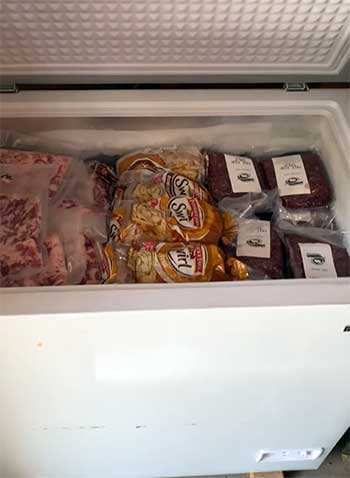
One of the realities of a manual defrost chest freezer is that ice will build up over time.
You should plan to defrost it once or twice a year, or whenever the frost layer gets about a quarter-inch thick.
Don’t wait until the ice is encroaching on your food space.
The most efficient way to do this is to plan a “eat down the freezer” month.
Once empty, unplug it and let the ice melt naturally.
Never, and I mean never, use a sharp object like a knife to chip away the ice.
One slip and you puncture the cooling coils, turning your freezer into a giant paperweight. Use a plastic scraper or a spatula if you must speed up the process.
- Gasket Care
The rubber seal around the lid is the most critical component for efficiency. If that seal fails, warm air gets in, frost builds up rapidly, and your energy bill spikes. Every few months, take a warm, soapy cloth and wipe down the gasket.
Food crumbs, sticky spills, or dust can compromise the seal. A good trick to test the seal is the “dollar bill test.” Close the lid on a dollar bill. If you can pull it out easily without resistance, your seal is loose and might need replacing or re-magnetizing.
- Coil Cleaning
The condenser coils are where the heat is released. On many modern chest freezers, these are embedded in the walls, but if you have a model with accessible coils or a vent panel, keep them clean. Dust and pet hair love to congregate there.
If the coils are coated in dust, the freezer can’t release heat efficiently, causing the compressor to run hotter and longer. A quick vacuum with a brush attachment once a year is usually sufficient.
- Placement Matters
Where you put the freezer is a form of maintenance in itself. Ensure there is adequate airflow around the unit. Don’t push it flush against the wall; leave a few inches of breathing room.
Also, if you are keeping it in a garage that gets extremely hot or cold, make sure the model is “garage ready.” Frigidaire models are generally excellent at handling ambient temperature fluctuations, but extreme heat can make the compressor work harder, shortening its lifespan.
Cons of Frigidaire Chest Freezer
No product is perfect, and you need to know the potential downsides before you swipe your card.
- Organization Can Be a Nightmare
The “bottomless pit” effect is real. While the open space is great for large items, it is terrible for small ones. If you are not disciplined, the food at the bottom can sit there for years, forgotten and freezer-burned.
You end up buying things you already have because you can’t see them buried under five layers of frozen spinach. You almost certainly need to buy aftermarket bins or crates to create your own organization system, which is an extra cost and hassle.
- Manual Defrosting is a Chore
Unlike your kitchen fridge which likely has an auto-defrost cycle, most Frigidaire chest freezers require manual defrosting. This is a messy, time-consuming process.
You have to unload everything, find coolers to keep the food cold, drain the water as the ice melts (which can be a lot of water), and then dry it out completely before restarting. It’s a project that takes half a day, and nobody looks forward to it.
- The Footprint
A chest freezer takes up significant floor space. Unlike an upright that uses vertical space, a chest freezer demands square footage. If you have a small apartment or a crowded garage, finding a spot for a 5-foot long white box can be difficult.
You also can’t store anything heavy on top of the lid because you need to open it frequently, so that space above the freezer is essentially “dead” space unless you install shelves on the wall above it.
Comparison of Frigidaire Chest Freezer With Other Brands
- Frigidaire Vs. Hotpoint Chest Freezer
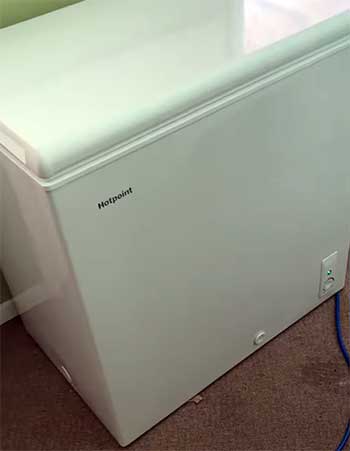
Hotpoint is a name you probably recognize from your grandmother’s kitchen or a rental apartment.
They are known for being the ultimate “no-frills” appliance.
When you compare a Hotpoint directly to a Frigidaire, the first thing you notice is the finish and the feel of the lid.
Hotpoint freezers are functional workhorses, but they often lack the refinement of the Frigidaire.
If you open a Hotpoint, the lid often feels significantly lighter.
While this makes it easy to lift, it also gives you the impression that there is less insulation packed into that door.
In my experience, Frigidaire lids feel denser and create a more reassuring “whoosh” sound when they seal shut, indicating a tighter vacuum. That seal is everything when it comes to preventing frost buildup.
Hotpoint models are generally stripped of any extras. You likely won’t find an interior light or a “power on” indicator light on the entry-level Hotpoint models, whereas Frigidaire often includes a power indicator light even on their smaller units.
This seems like a small detail until a breaker trips in your garage and you don’t realize your freezer is off for two days. With the Frigidaire, a quick glance tells you everything is okay. If budget is your only concern, Hotpoint works, but Frigidaire feels like a machine built to last longer.
- Frigidaire Vs. Whirlpool
This is the battle of the titans. Whirlpool is a massive parent company that actually owns several other brands, but their branded chest freezers are positioned as premium offerings. When you pit a Frigidaire against a Whirlpool, you are looking at two very high-quality appliances, but the difference often comes down to price-per-cubic-foot and lid design.
Whirlpool chest freezers are excellent, but they often carry a slightly higher price tag for features that you might not strictly need. For example, some Whirlpool models come with slightly more ergonomic handles or a different basket configuration.
However, from a performance standpoint, Frigidaire holds its own. I have found that Frigidaire compressors are just as quiet and reliable as Whirlpool’s.
One area where Frigidaire often wins is the “garage ready” tolerability. While both brands claim to handle extreme temperatures, Frigidaire has built a massive reputation specifically on their freezer’s ability to run efficiently in scorching hot or freezing cold garages without voiding the warranty or burning out the compressor.
Whirlpool is great, but you are often paying a premium for the brand name. If you want the same freezing performance for a bit less cash, Frigidaire is usually the smarter buy.
- Frigidaire Vs. Vissani Chest Freezer
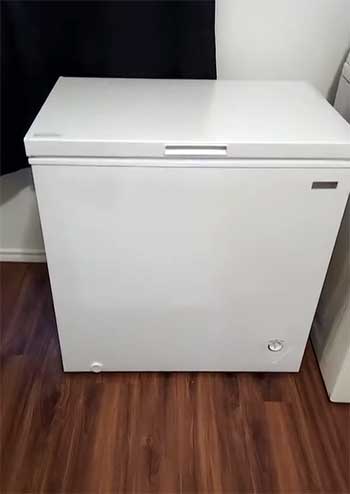
You will see Vissani at places like Home Depot, usually sitting right in the center aisle with a tempting “on sale” sticker.
It is an entry-level, budget-friendly brand.
The price difference between a Vissani and a Frigidaire can be tempting, sometimes saving you $50 to $100.
But this is a classic case of getting what you pay for.
The Vissani is lighter, the metal feels thinner, and the insulation is not as robust.
If you keep your freezer inside a climate-controlled pantry, a Vissani might do just fine.
But if you plan to put this in a garage where temperatures fluctuate, the Vissani will struggle.
Its compressor has to work much harder to maintain zero degrees because the insulation just isn’t trapping the cold as effectively as the Frigidaire.
Over time, that extra work translates to a shorter lifespan. A Frigidaire is an investment for the next 10 to 15 years. A Vissani is a solution for right now. Additionally, the noise level on budget brands like Vissani tends to be higher.
You will hear the hum and the click of the relay much more clearly than you will with the purring Frigidaire. If you want an appliance you can buy and forget about, skip the Vissani and spend the extra money on the Frigidaire.
Frequently Asked Questions (FAQ)
Yes, they are widely considered one of the top brands for reliability, energy efficiency, and temperature consistency at a reasonable price point.
Frigidaire and GE generally top the lists for reliability, with Frigidaire often citing fewer compressor failures in long-term consumer reports.
They are very comparable, but Frigidaire often wins on value (price-to-performance ratio), while GE may offer slightly better premium features on high-end models.
The most common issues are frost buildup (due to poor seal or infrequent defrosting), a failing thermostat, or a start relay failure on the compressor.
Final Thoughts
If you have the floor space, buying a Frigidaire chest freezer is a decision you won’t regret. It transforms how you manage your household food supply, offering a buffer against rising prices and busy schedules.
The minor inconvenience of manual defrosting is a small price to pay for the efficiency, reliability, and massive storage capacity you gain. It is a workhorse appliance that does exactly what it promises: keeps your food frozen, safe, and ready when you are.
Go get one.