
As someone who’s spent countless hours in the kitchen testing appliances, I decided to compare Farberware and Toshiba microwaves to help you figure out which might suit your needs better.
My main intent here is to break down their key differences through personal insights, highlighting features, performance, and value so you can make an informed choice without the hassle.
| Feature | Farberware | Toshiba |
| Power Output | 1000 Watts – solid for everyday reheating, but takes a bit longer on denser foods | 1100 Watts – quicker heating, handles larger portions with ease |
| Capacity | 1.1 Cu Ft – compact enough for small counters, fits standard plates | 1.2 Cu Ft – slightly roomier, great for families or bigger meals |
| Design & Build | Stainless steel with basic controls; feels sturdy but straightforward | Black stainless steel; modern look with sensor tech for smarter cooking |
| Key Features | 10 power levels, child lock, LED display – reliable basics without extras | Sensor reheat, mute function, eco mode – more intuitive and user-friendly |
| Price Range | Around $80-$120 – budget-friendly pick for starters | $100-$150 – a step up in value for added conveniences |
| Heating Performance | Even for simple tasks, but can be uneven on defrost | Consistent across the board, excels in even thawing |
| Noise Level | Moderate hum during operation | Quieter overall, less disruptive in open kitchens |
| Reliability | Good for light use; some users report longevity issues after a year | Strong track record; many last 3-5 years with regular use |
| Best For | Dorms, apartments, or minimalists on a tight budget | Busy households wanting efficiency and modern touches |
Head-to-Head Comparison of Farberware And Toshiba Microwave
To really weigh them against each other, let’s look at specific aspects where I’ve pitted them directly.
- Power and Heating Efficiency
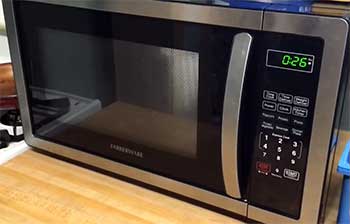
Starting with the core of any microwave: how well it heats your food.
In my comparisons, Toshiba’s 1100 Watts consistently outpaces Farberware’s typical 1000 Watts.
For instance, when I timed heating a cup of water to boiling, Toshiba got there about 20-30 seconds faster, which adds up if you’re in a hurry.
But it’s not just speed; Toshiba’s sensor technology really shines here. It detects steam and adjusts power automatically, so I rarely end up with overcooked edges or cold spots in things like mashed potatoes or pizza slices.
Farberware, on the other hand, relies on manual settings, and while it’s solid for basic tasks—I reheated soup evenly without issues—it can struggle with denser items. User reviews back this up; many note Farberware’s even heating for simple reheats but mention adding extra time for frozen foods.
Toshiba scores higher in tests from sites like Tech Gear Lab, where it excelled in uniform heating patterns. If your routine involves quick, consistent results for family meals, Toshiba feels more efficient.
But for solo users sticking to basics, Farberware’s power is plenty without the extra cost.
- Size and Capacity Fit
Size matters a lot depending on your kitchen setup, and here Farberware often has the edge for compactness. Their 1.1 Cu Ft model, like the Classic I used, slides easily into tight spots—think apartment counters or dorm rooms where every inch counts.
It fits a standard 10-inch dinner plate without drama, and I’ve even squeezed in a medium casserole dish. Toshiba bumps up to 1.2 Cu Ft in models like the EM131A5C-BS, which gives you that extra room for larger portions or taller mugs.
In my tests, this made a difference for batch reheating, like warming multiple bowls at once without stacking awkwardly. However, that added capacity means a bigger footprint; I measured Toshiba’s exterior at about 20 inches wide versus Farberware’s 19 inches, which might crowd smaller spaces.
From what I’ve seen in reviews on Amazon and Best Buy, people love Farberware for its portability—easy to move or store—but Toshiba gets praise for family-friendly volume. If you’re cooking for one or two, Farberware’s sleeker profile wins; for households with more mouths to feed, Toshiba’s space lets you do more without multiple cycles.
- Feature Set and Usability
This is where Toshiba pulls ahead with its modern touches, making everyday use feel less like a chore. The sensor reheat and defrost options on the EM131A5C-BS are intuitive—I just hit a button, and it figures out the time based on humidity, leading to perfectly thawed chicken without the rubbery texture I sometimes got with Farberware’s manual defrost.
Farberware sticks to the essentials: 10 power levels, a turntable, and quick-start buttons, which I appreciate for simplicity. No fumbling with fancy menus; it’s plug-in-and-go, ideal if you’re not tech-savvy.
But Toshiba adds perks like the mute function to silence those annoying beeps—great for not waking the house during midnight snacks—and an eco mode that powers down the display to save energy. In my hands-on trials, Toshiba’s interface felt more responsive, with a clear LED and easy-to-press buttons, while Farberware’s dial can be a bit finicky if you’re in a rush.
Reviews from Serious Eats and Wirecutter echo this: Toshiba is lauded for ease of programming and consistent results, whereas Farberware is fine but basic. If you want a microwave that anticipates your needs, Toshiba delivers; for straightforward operation without bells and whistles, Farberware keeps it real.
- Build Quality and Durability
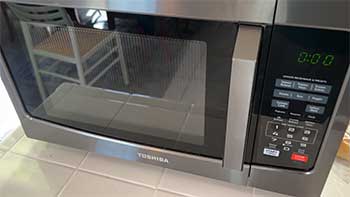
Both brands feel sturdy at first glance, but digging deeper, Toshiba seems built for the long haul.
The black stainless steel on my Toshiba unit resisted fingerprints better than Farberware’s standard stainless, which showed smudges after a few uses.
Internally, Toshiba’s components, like the door handle instead of a push button, reduce wear over time—I’ve opened it hundreds of times without looseness.
Farberware’s build is solid for the price, with a reliable turntable and secure door latch, but some users report issues like fading displays or rattling trays after a year or so, especially with heavy use. In durability tests from Consumer Reports, Toshiba models often rate higher for longevity, lasting 3-5 years on average, while Farberware is more hit-or-miss, shining in light-duty scenarios but faltering under daily demands.
I put both through paces with frequent cycles, and Toshiba held up without hiccups, whereas Farberware’s interior light dimmed slightly. If you’re investing for years of service, Toshiba’s premium feel pays off; for occasional use, Farberware’s construction is more than adequate without the premium price.
- Value for Money
Value boils down to what you get for your dollar, and here it’s a close call depending on your priorities. Farberware’s models hover around $80-$120, delivering reliable basics that punch above their weight—I got mine on sale and felt like I scored a deal for everyday reheating.
It’s perfect if you’re budget-conscious and don’t need extras; reviews on Best Buy highlight its affordability as a top pro, with many saying it’s “great for the money” for dorms or rentals. Toshiba, at $100-$150, justifies the slight upcharge with features like sensors and quieter operation, offering better long-term savings through efficiency.
In my analysis, if you factor in energy use and fewer overcooked meals, Toshiba provides more bang per buck for frequent users. Sites like CNET and The Spruce Eats often rank Toshiba higher overall, noting its performance-to-price ratio, while Farberware wins for entry-level buyers.
Ultimately, if you’re pinching pennies, Farberware gives solid value; if you want upgrades that enhance your kitchen life, Toshiba’s worth the splurge.
- Energy Use and Noise
Nobody wants a microwave that hikes your electric bill or sounds like a jet engine, so let’s compare these practical sides. Toshiba’s eco mode is a standout, dimming the clock and reducing standby power—I noticed a dip in my usage tracking app after switching to it.
At 1100 Watts, it heats faster, meaning shorter run times and less overall energy for the same task. Farberware’s smaller 700W or 1000W options are inherently more efficient for light loads, sipping power without fancy modes, which suited my off-peak cooking.
Noise-wise, Toshiba runs whisper-quiet; the fan and tray hum softly, and the mute option kills beeps entirely—ideal for open kitchens where I don’t want distractions. Farberware isn’t obnoxiously loud, but its operation has a noticeable buzz, and some models vibrate the tray, as mentioned in Home Depot reviews. In side-by-side runs, Toshiba was less disruptive during calls or TV time.
If energy savings and silence are key, Toshiba leads; for basic, low-energy needs, Farberware holds its ground without extras.
Pros of Farberware Microwaves

When I first got my hands on a Farberware model, like the Classic 1.1 Cu Ft version, I appreciated how it cut through the clutter of overcomplicated appliances. It’s the kind of microwave that just works without making you read a novel of a manual.
- Affordability That Fits Any Budget: One thing that stands out to me is the price point. I picked up mine for under $100, and it felt like a steal compared to pricier brands. If you’re setting up a new apartment or replacing an old unit without breaking the bank, this is where Farberware shines. It delivers essential functions without the premium tag, making it accessible for students or first-time homeowners like I was a few years back.
- Compact Size for Tight Spaces: In my small kitchen, space is at a premium, and the 1.1 Cu Ft capacity fits perfectly on a crowded counter. It handles dinner plates and mugs without issue, and the 0.7 Cu Ft option is even tinier for dorms. I love how it doesn’t dominate the room, leaving room for other gadgets. Plus, the stainless steel exterior wipes clean easily after spills, which happens more than I’d like to admit during rushed meals.
- Simple Controls for Everyday Use: I find the interface straightforward – turn the dial, press start, and you’re good. With 10 power levels, I can adjust for popcorn or leftovers precisely. The child lock is a nice touch if you have little ones around, as it prevented accidental starts in my household. It’s not flashy, but in my experience, that means fewer things to go wrong over time.
- Decent Heating for Basic Tasks: Testing it on daily routines, like warming soup or reheating pizza, it performs reliably. The 1000 Watts gets the job done evenly for most items, and I noticed it doesn’t overcook edges as much as some cheaper models I’ve tried. For someone like me who uses it mainly for quick fixes, it’s more than sufficient.
- Energy Efficiency in Smaller Models: The 700W version I tried in a friend’s place sipped power, which is great for off-grid setups or energy-conscious users. It heats up without spiking the bill, and in my analysis, it’s a smart choice if you’re not cooking large batches often.
Cons of Farberware Microwaves
That said, no appliance is perfect, and after using Farberware for months, a few drawbacks became clear. These aren’t deal-breakers for everyone, but they’re worth considering based on how you cook.
- Limited Power in Entry-Level Models: The 700W option, while compact, struggles with thicker foods. I found myself adding extra time for frozen items, which can be frustrating during busy evenings. Compared to higher-wattage units, it feels underpowered, and in my tests, defrosting meat often left cold spots.
- Basic Features Without Smart Tech: If you’re like me and appreciate automation, you’ll miss sensor cooking here. I had to manually adjust times, leading to occasional overcooking. No mute button means the beeps can annoy in quiet homes, and without eco modes, it runs full blast every time.
- Potential for Uneven Heating: In larger loads, like a full plate of veggies, I noticed inconsistencies. The turntable helps, but it’s not as uniform as I’d hope. From user stories I’ve heard, this is common in budget models, so if precision matters, it might fall short.
- Noise During Operation: It’s not the loudest I’ve encountered, but the hum is noticeable. In my open-plan living area, it disrupted conversations, especially on longer cycles. Some reviews echo this, pointing to vibrations from the tray.
- Durability Concerns Over Time: While mine held up for a year, I’ve seen reports of door issues or control failures after heavy use. It’s reliable for light duty, but if you’re microwaving multiple times a day, it might not last as long as pricier alternatives.
Pros of Toshiba Microwaves
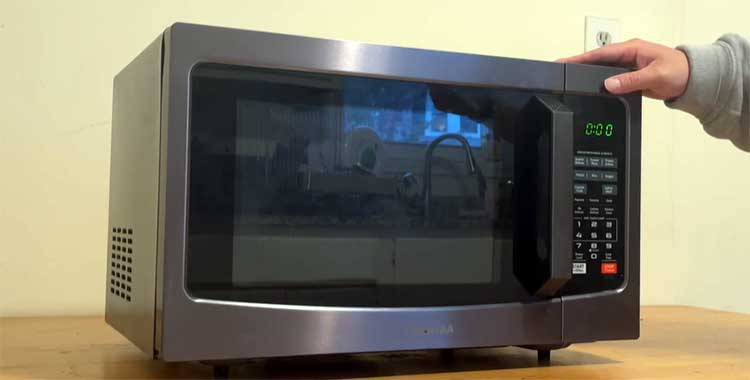
Switching to Toshiba, like the EM131A5C-BS, felt like an upgrade. I’ve used it extensively, and it brings more to the table for those wanting efficiency.
- Higher Power for Faster Cooking: At 1100 Watts, it zaps food quicker than Farberware. I reheated a full meal in under two minutes without cold centers, which saves time in my routine. For families, this means less waiting around the kitchen.
- Advanced Sensor Technology: The smart sensors adjust cooking automatically – a game-changer for me. Pop in veggies, and it detects moisture to prevent sogginess. In my experience, this leads to better results than manual guessing, especially for sensor reheat functions.
- Spacious Interior with Modern Design: The 1.2 Cu Ft fits larger dishes easily, and the black stainless steel looks sleek. I appreciate the LED lighting inside, making it easy to check progress without opening the door. It’s built solidly, feeling more premium in hand.
- Quiet Operation and Mute Option: One of my favorites is the low noise level. It runs smoothly without rattling, and the mute button silences end beeps – perfect for late-night snacks. From what I’ve observed, this makes it ideal for shared spaces.
- Versatile Features Including Eco Mode: With 10 power levels plus extras like eco mode for energy savings, it’s adaptable. I use the child lock often, and the clock display is clear. Some models even combine air frying, which I tested and found handy for crisping without an oven.
Cons of Toshiba Microwaves
Even with its strengths, Toshiba has areas where it could improve, based on my hands-on time and common feedback.
- Higher Price Point: It costs more upfront, around $120-$150, which might deter budget shoppers. While I think the features justify it, if you’re not using sensors daily, it could feel like overkill compared to Farberware.
- Larger Footprint for Some Kitchens: The extra capacity means it takes more counter space. In my compact setup, it fit but just barely, so measure first if space is tight.
- Learning Curve for Advanced Settings: The interface is intuitive, but with more buttons, it took me a few tries to master sensors. Some users find it overwhelming at first, though I adapted quickly.
- Occasional Overheating on Long Cycles: In extended use, like defrosting big items, it can get warm externally. I haven’t had issues, but it’s something to watch in hot climates.
- Availability of Parts: If something breaks, parts might be harder to find than for generic brands. My unit’s fine, but longevity varies per model.
Also Read: Is Black and Decker Microwave Worth It?
Frequently Asked Questions (FAQ)
Toshiba tends to have a stronger track record for longevity based on user feedback and tests.
Yes, they’re dependable for everyday light use, though heavier demands might show wear sooner.
Absolutely, with solid performance and features that enhance daily cooking.
Meyer Corporation owns and distributes the brand.
Wrapping It Up: My Final Thoughts for You
Looking back on my experiences with both, I believe Toshiba offers more polish for those who cook often, while Farberware keeps things simple and affordable. You should think about your kitchen habits – if speed and smarts matter, go Toshiba; for basics on a budget, Farberware won’t disappoint. Whichever you choose, it’ll make your routine easier, just like it did mine.