
I’ve spent years working with dogs of all shapes, sizes, and temperaments, and if there is one thing I’ve learned, it’s that the right tools make or break your relationship with your pet.
When you’re looking to bridge the communication gap, you’ll inevitably find yourself choosing between two heavy hitters: Educator and Dogtra. Both are elite, but they offer very different experiences.
In this guide, I’ll help you decide which of these powerhouses belongs in your training kit so you can achieve that off-leash freedom you’ve been dreaming of.
| Feature | Educator (E-Collar Technologies) | Dogtra |
| Stimulation Type | Wide Pulse (Medical Grade) | Standard DC Stimulation |
| Levels | 1-100 (Fine-tuned) | 1-127 (Precise) |
| Remote Shape | Round “Stopwatch” Style | Slim “Walkie-Talkie” Vertical |
| Vibration | Intense/Adjustable | High-Performance (HPP) |
| Boost Function | Highly Customizable | Integrated / Preset |
| Durability | High (Shock resistant) | Rugged (Military grade feel) |
| Range | 1/2 Mile to 1 Mile (Standard) | 1/2 Mile to 1 Mile (Standard) |
Key Differences Between Educator And Dogtra
- Remote Shape and Tactile Interface
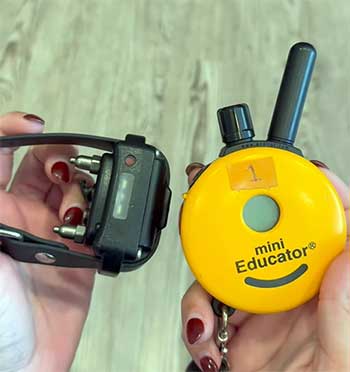
The Educator “Stopwatch” design is meant for one-handed, hidden operation in the palm with buttons positioned for index and middle finger use.
In contrast, Dogtra follows a more traditional “Transmitter” style with a side-mounted dial, making it easier for those who prefer thumb-controlled adjustments while the remote is clipped to a belt or held vertically.
Additionally, Educator remotes often float, which is a massive safety bonus for water work, while Dogtra remotes are ruggedly waterproof (IPX9K) but typically lack buoyancy.
- Stimulation Quality and Feel
Educator uses “Wide Pulse” technology, a proprietary medical-grade stimulation that is broader and feels more like a physical tap than a sharp sting. Dogtra uses a standard DC stimulation which is faster and perceived as “crisper” by many professional handlers.
Trainers often find that Dogtra “runs hotter,” meaning a low level on a Dogtra feels more intense than the equivalent number on an Educator. Educator focuses on bluntness to avoid the head-jerking reaction sometimes seen with older tech, while Dogtra focuses on consistency across long distances and high-interference environments.
- Safety and Management Features
Educator features a “Lock and Set” mechanism that physically prevents the dial from turning once you’ve found your dog’s working level, which is perfect for preventing accidental over-stimulation.
Most Dogtra units lack a hard lock, though their dials are often designed with more resistance to stay in place. Educator also includes a “Boost” button that allows you to jump a pre-set number of levels instantly for emergency situations, whereas Dogtra often requires manual dialing or uses separate buttons for different types of correction.
- Expansion and Multi-Dog Functionality
Educator systems are easily expandable to two dogs, but the interface requires toggling between collars, which can cause a split-second delay. Dogtra’s multi-dog systems are often built specifically for that purpose with dedicated switches or buttons for each dog, which reduces the risk of correcting the wrong pet during a chaotic moment.
For those handling three or more dogs, specialized models from both brands offer bar-style remotes, but Dogtra’s physical toggle switches are generally considered faster for pack management.
- Visual and Low-Light Utility
Educator comes standard with a high-intensity tracking light on the collar that can be turned on or off via the remote, making it the superior choice for night visibility and late-evening walks. Dogtra units rarely have integrated collar lights and instead focus on high-visibility LCD screens on the remote for daytime and twilight use.
While the Dogtra screen is easier to read in direct sunlight, the Educator’s ability to light up the dog’s path is a massive benefit for safety in dark suburban or wooded areas.
Why Educator Stands Out In The Backyard And Beyond?
The first thing you’ll notice about an Educator remote—specifically the famous Mini Educator ET-300—is the shape. It looks like a yellow stopwatch. This isn’t just for aesthetics; it’s designed to be used “blind.” You can palm it, and your fingers naturally find the buttons without you having to look down.
When you’re out on a hike and your dog starts chasing a squirrel, you don’t want to be looking at a screen; you want to be looking at your dog.
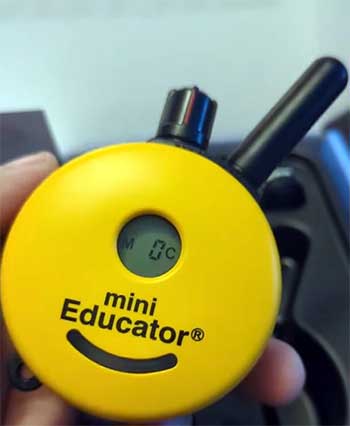
- The “Lock and Set” Feature: One of my favorite things about Educator is the ability to lock your level. If you know your dog responds perfectly at a level 12, you can lock it there. This prevents you from accidentally bumping the dial and giving a level 50 correction when you only meant to give a 12. For a beginner, this is a lifesaver.
- The Pavlovian Tone: Educator uses a specific tone that can be used as a “bridge.” You can teach the dog that the beep means a reward is coming, or use it as a warning before stimulation. It’s a versatile tool that adds another layer to your training.
- Night Lighting: If you’ve ever lost your black dog in a dark park, you’ll appreciate the remote-controlled tracking light on the collar receiver. You can set it to blink or stay solid, making it easy to spot your dog from a distance.
Key Features of Educator E-Collars
- 100 Levels of Stimulation: Educator provides 100 distinct levels of medical-grade stimulation, allowing you to find the exact “working level” for your dog. The transition between levels is smooth, ensuring there are no sudden, jarring jumps in intensity that might scare a sensitive pet.
- TENS-Style Blunt Pulse: Unlike traditional e-collars that can feel like a sharp sting, Educator uses a wide-pulse wave. This technology mimics a physical therapist’s TENS unit, providing a “blunt” sensation that feels more like a muscle contraction or a firm tap, making it highly effective but less stressful for the dog.
- Remote-Controlled Collar Light: Each receiver comes equipped with a powerful LED light that you can activate from your handheld remote. You can choose between a solid light or a blinking strobe, which is indispensable for tracking your dog in the backyard or at a dark park.
- Floating Remote Design: The stopwatch-style transmitter is completely waterproof and, more importantly, it floats. If you accidentally drop your remote in a lake or a stream during a training session, it won’t sink to the bottom, saving you from a costly loss.
- Programmable Boost Mode: Educator allows you to set a secondary “boost” level. If your dog is distracted or in a high-adrenaline situation, you can tap a dedicated button to instantly deliver a higher, pre-set intensity without having to manually turn the dial.
Pros of Educator
- The round remote is incredibly comfortable and easy to hide.
- The stimulation is the most “human-friendly” feeling on the market.
- The tracking light on the collar is a game-changer for night walks.
- Incredible customer service based in the USA.
- Features like the “Lock and Set” prevent accidental over-stimulation.
Cons of Educator
- The menu system to change settings (like light patterns) can be a bit confusing at first.
- The stopwatch shape isn’t for everyone; some find it “gimmicky.”
- The lanyard is okay, but the remote can be awkward to clip to a belt without an aftermarket holster.
The Dogtra Approach: Professional Grade Precision
Dogtra feels like a tool built for the field. If Educator is the sleek consumer tech, Dogtra is the rugged tactical gear. Their remotes are usually long and slim with an antenna that screams “range.”
Many professional sporting and working dog trainers swear by Dogtra because the rheostat dial is incredibly smooth.
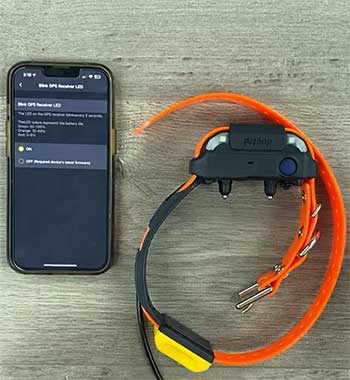
- The Rheostat Dial: Unlike buttons that click through levels, Dogtra uses a dial that moves fluidly from 0 to 127. This allows for the most “surgical” application of stimulation I’ve ever seen. If 10 isn’t enough but 11 is too much, you can find that perfect 10.5 sweet spot.
- High-Performance Vibration (HPP): Dogtra’s vibration is often cited as being more “crisp” than Educator’s. For dogs that are sensitive to stimulation, a well-timed vibration (Pager mode) is often all you need to get their attention. Dogtra has mastered the haptic feedback in their collars.
- Ergonomics for Constant Movement: The vertical layout of a Dogtra remote, like the 1900S, fits perfectly against the side of your leg or in a holster. It’s built for people who are moving through brush, water, and heavy terrain.
Key Features of Dogtra E-Collars
- 127 Levels of Precision Stimulation: Dogtra offers a wider range of 127 levels, giving you even more granularity than the standard 100. This is particularly useful at the very low end of the spectrum for “soft” dogs who only need a whisper of communication.
- Precise Rheostat Dial: The hallmark of Dogtra is its smooth, non-clicking dial. This allows for surgical precision in adjusting levels. You can slide the dial fluidly to increase or decrease pressure in a single motion, which is favored by professional competition trainers.
- High-Performance Pager (Vibration): Dogtra’s “Pager” mode provides a powerful, clear vibration that is often more distinct than other brands. Many users find that they can train their dogs using only the pager mode, reserving the static stimulation for emergency recalls only.
- IPX9K Waterproof Certification: Dogtra collars are built to the IPX9K standard, the highest rating for water resistance. This means the gear can withstand high-pressure water jets and extreme temperatures, making it the most durable choice for waterfowl hunters and mud-loving dogs.
- Ergonomic Contoured Receivers: The receiver boxes on many Dogtra models, like the ARC or 1900S, are shaped to follow the natural curve of a dog’s neck. This “low profile” design makes the collar less bulky and ensures better contact with the skin without looking like a massive “box” on the dog.
Pros of Dogtra
- Built like a tank; these units can take serious abuse in the field.
- The rheostat dial is the smoothest in the industry for level adjustment.
- Very intuitive layout; you don’t really need a manual to figure out how to use it.
- Excellent vibration mode that is effective even on stubborn dogs.
- Slim receiver designs (like on the 1900S) fit the curvature of the dog’s neck better.
Cons of Dogtra
- The remotes are larger and harder to hide in your hand.
- No “Lock” feature on the dial for many models, meaning you can accidentally turn it up in your pocket.
- The stimulation can feel a bit “sharper” to some dogs compared to the Educator pulse.
Which One Should You Buy?
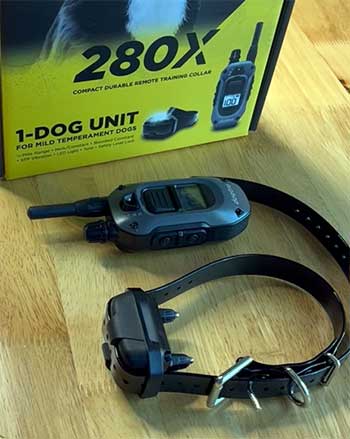
If you are a pet owner looking for a reliable, “kind” tool for neighborhood walks and off-leash hiking, I almost always point people toward the Educator ET-300.
The combination of the blunt pulse, the safety lock, and the small remote size makes it the ultimate “consumer” e-collar.
It’s approachable and less intimidating for someone new to the world of K9 electronics.
However, if you are a professional, a hunter, or someone working with a “high-drive” dog (like a Belgian Malinois or a stubborn GSP) in high-intensity environments, Dogtra is usually the winner.
The tactile feel of the dial and the ruggedness of the build are designed for work. When your hands are sweaty or you’re wearing gloves, the Dogtra dial is much easier to manipulate than the Educator’s buttons.
Ultimately, you have to ask yourself: Do I want a precision instrument for the field, or a high-tech communication device for the park?
Also Read: Is FurMe Better Than Neabot?
Frequently Asked Questions (FAQ)
It is widely considered the best all-around collar for pet owners due to its medical-grade stimulation and ease of use.
Cesar Millan typically uses slip leads or “training collars” (choke chains), but when using e-collars, he emphasizes the importance of timing over the specific brand.
Yes, Dogtra is one of the top two brands in the world, favored by professional trainers for its durability and smooth stimulation dial.
Dogtra is better for behavior shaping and obedience, while Garmin is generally superior for long-range GPS tracking and hunting.
Wrapping Up
In the battle of Educator vs. Dogtra, there truly is no “loser.” You are choosing between a Ferrari and a Jeep. Both will get you where you need to go, but the ride feels different. Educator offers that refined, user-friendly experience that takes the fear out of e-collar training.
Dogtra offers the raw, dependable power that pros have relied on for decades. Think about your dog’s temperament and your own hand comfort—once you find the right fit, the world opens up for you and your four-legged best friend.