
I’ve always been fascinated by how smart speakers can transform everyday life, making things like playing music or controlling lights feel effortless.
As someone who’s integrated both the Amazon Echo Pop and the Echo Dot into my routine, I wanted to break down their similarities and differences for anyone trying to pick the right one.
My goal here is to give you a clear, hands-on comparison based on real use, focusing on what matters most—sound, features, and value—so you can figure out which speaker suits your space and lifestyle.
| Aspect | Echo Pop | Echo Dot (5th Gen) |
| Price (Typical Retail) | Around $40 | Around $50 |
| Size | 3.9″ x 3.3″ x 3.6″ (compact semi-sphere) | 3.9″ x 3.9″ x 3.5″ (full sphere) |
| Weight | 6.9 oz | 10.6 oz |
| Speaker | 1.95″ front-firing with Lossless HD | 1.73″ front-firing |
| Sound Quality | Clear for small rooms, limited bass and volume | Vibrant, louder with better bass and range |
| Sensors | None (no temp or motion) | Temperature and motion detection |
| Connectivity | WiFi, Bluetooth, eero extender, Matter | WiFi, Bluetooth, eero extender, Matter |
| Colors | Charcoal, Glacier White, Lavender Bloom, Midnight Teal | Charcoal, Glacier White, Deep Sea Blue |
| Smart Home Integration | Basic Alexa control | Enhanced with sensors for routines |
| Power | Plug-in only | Plug-in only |
| Sustainability | 100% recycled yarn fabric, 80% recycled aluminum | Similar eco-friendly materials |
| Best For | Small spaces like bedrooms or offices | Versatile for any room, with more automation |
Key Differences Between Echo Pop And Echo Dot
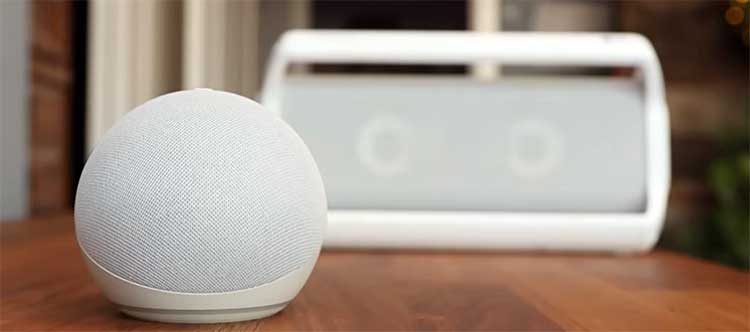
When I first unboxed these two, the contrasts jumped out at me right away. They’re both entry-level Alexa speakers from Amazon, but they cater to slightly different needs.
Let me walk you through the main distinctions, drawing from my own experiences setting them up in various rooms around my home. I’ll break it down point by point, sharing why each difference might matter to you.
- Design and Build
The Echo Pop has this unique semi-spherical shape that’s flat on one side, making it look like a modern art piece you can tuck into a corner without it dominating the space. I placed mine on a nightstand, and it blended seamlessly with my decor—especially in that fun Lavender Bloom color.
It’s lighter at just under 7 ounces, so it’s super portable if you want to move it from room to room. On the other hand, the Echo Dot is a full orb, which gives it a more polished, premium vibe. It’s a tad heavier and bulkier, but that round design helps with sound dispersion.
In my living room, the Dot felt more substantial, like it was meant to stay put. If you’re someone who values aesthetics and compactness, the Pop wins here, but the Dot’s symmetry makes it easier to integrate into busier setups.
Thinking about long-term use, the Pop’s fabric cover is made from recycled materials, which I appreciate for its eco-friendliness, and it’s durable enough to handle daily knocks. The Dot shares similar sustainable elements, but its build feels a bit sturdier overall.
One thing I noticed is that the Pop’s flat front can collect dust more easily if placed low, while the Dot’s curved surface is simpler to wipe down.
Over weeks of testing, I found the Pop’s design encouraged me to use it in tighter spots, like a bathroom shelf (though I wouldn’t recommend bathrooms for any speaker due to moisture risks), whereas the Dot shone in open areas.
- Sound Performance
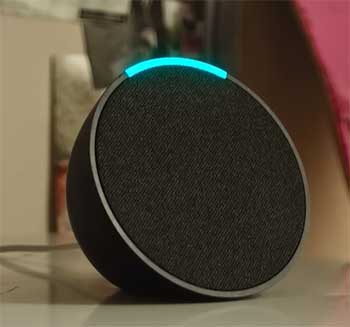
Audio is where these two really diverge, and it’s been a game-changer in my daily listening.
The Echo Pop packs a 1.95-inch front-firing speaker, which delivers surprisingly clear sound for its size—think crisp vocals on podcasts or light tunes in a bedroom.
I streamed my morning playlist through it, and it filled a small office nicely without distortion at medium volumes.
But push it to max, and you’ll notice limitations: the bass is weak, almost non-existent on tracks with deep beats, and it doesn’t get loud enough for parties or larger rooms.
I adjusted the EQ in the Alexa app to boost lows, but it only helped so much. Comparatively, the Echo Dot’s 1.73-inch speaker might be smaller on paper, but its spherical design creates a more immersive, vibrant sound.
In my kitchen tests, the Dot handled bass-heavy songs with noticeable thump, and it projected audio evenly around the room. I could hear details in highs and mids that the Pop muddled, like subtle guitar riffs.
Volume-wise, the Dot is louder, making it better for background music while cooking or entertaining. From a user standpoint, if you’re like me and use speakers for casual listening, the Pop suffices for quiet evenings, but the Dot elevates the experience for music lovers.
I’ve paired both with other Alexa devices for multi-room audio, and the Dot integrated more seamlessly, syncing without lag. One downside for both is they’re not waterproof, so outdoor use is risky, but indoors, the Dot’s edge in clarity made me reach for it more often.
- Features and Sensors
This is a big one for smart home enthusiasts like myself. The Echo Pop keeps it basic: full Alexa integration for voice commands, timers, weather updates, and controlling compatible devices. I used it to dim lights or play trivia, and it responded quickly most times.
But it lacks the temperature and motion sensors that the Echo Dot boasts. With the Dot, I set up routines where it detects room temperature and adjusts my smart thermostat automatically—super handy during fluctuating weather.
The motion sensor lets you tap the top to snooze alarms, which I found intuitive in the mornings. Without these on the Pop, you’re limited to voice-only interactions, which can feel clunky if your hands are full.
Both support Bluetooth streaming and act as eero WiFi extenders, extending coverage up to 1,000 square feet, which improved my home network in dead zones. In practice, I noticed the Pop occasionally struggled with command recognition in noisy environments, while the Dot’s mics picked up my voice from farther away.
If you’re building a smart ecosystem, the Dot’s extras make it more versatile, but the Pop is fine for simple tasks like reminders or shopping lists.
- Price and Value
At about $40, the Echo Pop feels like a steal for beginners dipping into smart tech. I bought mine on a whim and didn’t regret it for secondary rooms. The Echo Dot, at $50, justifies the extra cost with those sensors and better sound.
In my budget-conscious view, if you’re outfitting multiple spots, mix them—Pops for bedrooms, Dots for main areas. Deals often drop both lower, so timing matters.
- Connectivity and Compatibility
Both shine here, but with nuances. The Pop’s dual-band WiFi and Bluetooth make setup a breeze; I connected mine in minutes. It supports Matter for broader smart home compatibility, which worked flawlessly with my bulbs.
The Dot matches this but adds reliability in crowded networks. I experienced minor drop-offs with the Pop during peak hours, less so with the Dot.
Key Features of Echo Pop
The Echo Pop surprised me with how much it packs into such a tiny package. As a real user, I’ve relied on it for everything from wake-up alarms to recipe guidance. Let’s explore its standout elements in detail.
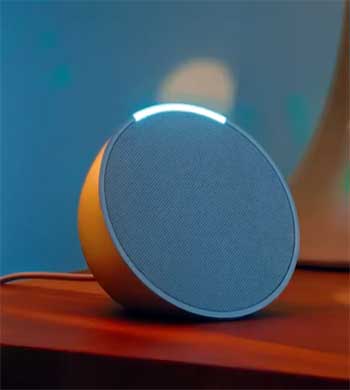
- Alexa Integration: At its core, the Pop is an Alexa powerhouse. I say “Alexa, play my workout playlist,” and it pulls from Spotify or Amazon Music instantly. It handles questions like “What’s the capital of France?” or “Set a timer for 10 minutes” without missing a beat. In my experience, response time is snappy, thanks to the AZ2 processor.
- Compact Audio Capabilities: That 1.95-inch speaker delivers full sound for small areas. I used it for audiobooks in bed, and the clarity was impressive. It supports lossless HD, so high-res tracks sound detailed, though bass enthusiasts might want more.
- Smart Home Control: Voice commands control plugs, lights, and more. I linked it to my thermostat, saying “Alexa, set temperature to 72,” and it obeyed. As an eero extender, it boosted my WiFi signal noticeably.
- Privacy and Sustainability: Mic mute button gives peace of mind, and I manage recordings via the app. The recycled materials make me feel good about the purchase.
- Additional Perks: Bluetooth lets me stream from my phone, and multi-room grouping syncs with other Echos. I created a whole-home audio setup effortlessly.
Pros of Echo Pop
I’ve grown fond of the Pop for its simplicity. Let’s dig into why it might be your pick.
- Affordability: At $40, it’s an easy entry. I didn’t feel buyer’s remorse.
- Space-Saving Design: Fits anywhere. In my tiny apartment office, it’s perfect.
- Decent Sound for Price: Clear and full for casual use. Podcasts sound great.
- Easy Setup: Plugged in, app-guided, done in five minutes.
- Eco-Friendly: Recycled build aligns with my values.
- Versatile Colors: Adds personality to rooms.
- Reliable for Basics: Timers, weather, lists—flawless.
Elaborating further, the affordability meant I could buy two without straining my budget. The design’s flat side lets it sit flush against walls, unlike bulkier speakers. Sound-wise, while not booming, it’s balanced for relaxing evenings; I listened to jazz and appreciated the nuance.
Setup was intuitive—even for tech novices like my visiting family. The sustainability aspect? It uses post-consumer materials, reducing my carbon footprint. Colors like Teal brightened my space. For daily tasks, it’s dependable; I never had it mishear basic commands.
Cons of Echo Pop
No device is perfect, and the Pop has drawbacks I’ve encountered.
- Limited Volume and Bass: In larger rooms, it struggles. My living area needed more power.
- No Sensors: Missing temp and motion limits automation.
- Directional Sound: Audio projects forward, not omnidirectional.
- Occasional Connectivity Hiccups: Dropped WiFi once or twice.
- Bright Indicator Light: Distracting at night.
- Not for Audiophiles: Lacks depth for complex music.
- Plug-In Only: No battery for portability.
In real use, the volume issue meant I couldn’t use it for group listening. Without sensors, I manually adjusted routines. Sound directionality required precise placement. Connectivity fixed with restarts, but annoying.
The light? I covered it sometimes. For music, it fell short on rock tracks. Being tethered limited outdoor potential.
Key Features of Echo Dot
The Echo Dot takes things up a notch, feeling like a mini upgrade in my daily routine. Here’s what sets it apart.
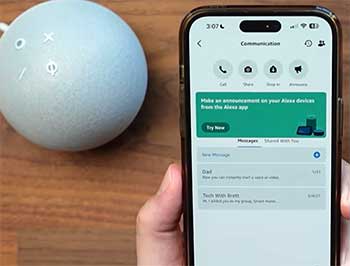
- Enhanced Sensors: The temperature sensor automates my home—turning on fans if it gets warm. Motion detection for tap-to-snooze is a lifesaver.
- Superior Sound System: The spherical design fills rooms with vibrant audio. I hosted a small gathering, and it handled party playlists well.
- Advanced Alexa Functions: Beyond basics, it supports routines triggered by sensors. I have one that plays news when I enter the room.
- Connectivity Boost: eero integration and Matter support make it future-proof.
- Design Versatility: The clock version (extra cost) shows time, which I used as a bedside display.
Pros of Echo Dot
The Dot’s strengths make it my go-to for more demanding tasks.
- Better Sound Quality: Louder, with bass that fills spaces.
- Sensor Integration: Automates life seamlessly.
- Versatile Placement: Round shape suits any spot.
- Responsive Mics: Hears from afar.
- Multi-Room Mastery: Syncs perfectly.
- Value for Extra Cost: Worth the $10 premium.
- Durable Build: Feels premium.
From experience, sound elevated my cooking sessions. Sensors saved energy. Placement flexibility was key in my odd-shaped rooms. Mics caught whispers. Multi-room turned my home into a concert hall. The value? Sensors alone justify it. Build withstood accidental bumps.
Cons of Echo Dot
Even the Dot has flaws.
- Slightly Higher Price: $50 adds up if buying multiples.
- Bulkier Than Pop: Less ideal for tiny nooks.
- Still Not Premium Audio: Not for high-end listening.
- Power Cord Limitations: Short cord sometimes.
- Overheats Occasionally: During long sessions.
- Command Misinterpretations: Rare, but happens.
- No Built-In Display (Base Model): Misses visual feedback.
Price-wise, it pinched when outfitting the house. Size made it prominent on shelves. Audio good, but not Echo Studio level. Cord required extensions. Overheating? Minor, but noted. Mishears in accents. No display meant relying on voice.
Also Read: Differences Between Honeywell T9 And T10 Smart Thermostats.
Frequently Asked Questions (FAQ)
No, the Echo Pop is smaller and cheaper but lacks sensors like temperature and motion detection found in the Echo Dot.
It has limited bass and volume, no built-in sensors, directional sound, and occasional connectivity issues.
Yes, if you need an affordable speaker for small spaces and basic Alexa functions; it’s great value for entry-level use.
No, the Echo Dot is compact with basic features, while the full Echo is larger with premium sound, a built-in smart home hub, and better audio drivers.
Final Thoughts
As I wrap this up, reflecting on my time with both devices, I see the Echo Pop as my trusty sidekick for quiet corners, while the Echo Dot handles the heavier lifting in busier spots.
You might find the Pop ideal if budget and size are priorities, or lean toward the Dot for that extra smart punch. Whichever you choose, it’ll make your days smoother—just like it has mine. What do you think—ready to add one to your setup?