
As someone who has relied on air purifiers to manage dust, pollen, and everyday indoor pollutants in my home for years, I’ve tested both the Dyson TP07 and TP10 extensively.
My goal here is to give you a clear, honest breakdown of how these two models stack up—highlighting their features, performance differences, strengths, and weaknesses—so you can decide which one truly suits your space, budget, and lifestyle.
| Feature | Dyson TP07 | Dyson TP10 |
| Smart Connectivity | WiFi, app control, voice control (Alexa, Google, Siri) | None |
| Airflow Modes | Forward cooling + backward diffused (purify without cooling) | Forward cooling only |
| Oscillation | Up to 350 degrees | Up to 350 degrees |
| Speed Settings | 10 | 10 |
| Display | LCD with detailed air quality, temperature, humidity | Basic LCD with real-time air quality |
| Filtration | Fully sealed HEPA H13 + activated carbon | Fully sealed HEPA H13 + activated carbon |
| Remote Control | Yes, magnetized | Yes, magnetized |
| Night Mode | Yes, quieter operation with dimmed display | Yes |
| Weight | Around 11 lbs | Around 10.4 lbs |
| Noise Level | Generally quieter, especially in diffused mode | Slightly louder at higher speeds |
| Extra Sensors | Temperature and humidity monitoring | Air quality sensors only |
Key Differences Between The TP07 And TP10
Here’s where the two models really separate themselves. I noticed these distinctions most during daily use across multiple rooms.
- Smart connectivity and remote control options
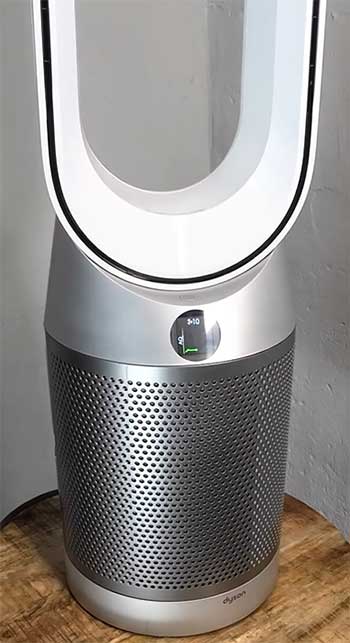
This is the biggest divider for me.
The TP07 connects to WiFi and integrates seamlessly with the Dyson app.
I can monitor air quality from my phone while at work, set detailed schedules (like ramping up purification before I get home from the gym), or check filter status without walking over to the unit.
Voice control is a game-changer too—telling Alexa to turn it on or adjust speed while my hands are covered in dough is surprisingly convenient.
The TP10 skips all of that. It’s strictly remote or base-button control.
If you’re not into smart home ecosystems or prefer keeping things simple, this isn’t a loss.
But once I got used to the TP07’s app insights, going back to the TP10 felt like losing a helpful dashboard.
- Backward diffused airflow mode
Exclusive to the TP07, this mode changed how I use the purifier year-round. In forward mode, both units cool you directly with strong airflow. But flip the TP07 to diffused, and it pushes purified air out the back, cleaning the room without blowing cold air on you.
During winter, when I didn’t want extra chill but still needed to tackle dry air dust or lingering odors, this was invaluable. The TP10 only has forward airflow. It’s great for summer cooling, but in colder months, I either dealt with the breeze or turned it off entirely. If you live in a four-season climate, this single feature makes the TP07 far more versatile.
- Sensor suite and air quality monitoring depth
Both detect pollutants and react in auto mode, but the TP07 goes much further. It tracks PM2.5, PM10, VOCs (from cleaning products or cooking), NO2, plus temperature and humidity. The LCD screen gives a full breakdown, and the app graphs trends over time—helping me pinpoint issues like high VOCs after painting a room.
The TP10’s sensors focus primarily on particulates, with a simpler air quality index display. It still auto-adjusts effectively for dust or pollen, but lacks the granular data. For someone obsessive about understanding indoor air (like me during wildfire smoke seasons), the TP07’s extra sensors provide peace of mind the TP10 can’t match.
- Noise levels and quiet operation
Dyson claims the TP07 is quieter overall, and my experience backs that up. In diffused mode or night mode, the TP07 runs almost silently—I can have it bedside without disturbance. Even at higher speeds, the sound is smoother.
The TP10 performs well but gets noticeably louder at mid-to-high settings, especially in forward airflow. Some users report occasional motor whine on both, but in my units, the TP07 stayed consistently quieter. If noise sensitivity matters (sleeping, working from home, or movie nights), the TP07 edges ahead.
- Display and information feedback
The TP07’s LCD is more informative, cycling through detailed pollutant levels, temperature, humidity, and filter life percentage. It feels like having a mini air quality station. The TP10’s screen is simpler—showing current AQI and basic particle readings.
It’s straightforward and easy to glance at, but lacks the deeper insights. I found myself checking the TP07’s display more often because it told a fuller story about what was happening in the room.
- Automation and scheduling capabilities
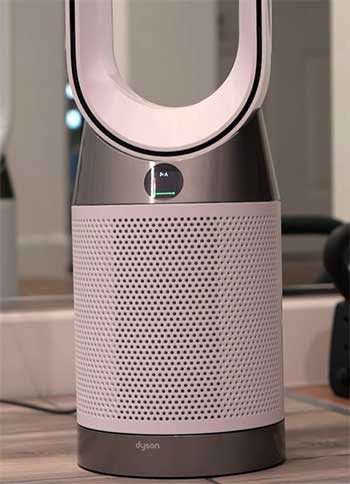
Tied to the app, the TP07 lets me create custom schedules, set auto mode to react more intelligently based on multiple sensors, and get push notifications for filter changes.
The TP10 has a solid auto mode that kicks in when it detects particulates, plus night mode, but no scheduling beyond manual timers on the remote.
For set-it-and-forget-it convenience, the TP07 wins hands down.
The TP10 requires more hands-on interaction, which isn’t bad if you prefer direct control.
- Weight, portability, and minor design tweaks
The TP10 is slightly lighter (about 10.4 pounds versus the TP07’s 11 pounds), making it easier to carry upstairs or reposition frequently. Both have the magnetized remote that snaps on top (a small but brilliant touch), identical 350-degree oscillation, and 10 speed settings.
Visually, they’re nearly twins—sleek towers that blend into any decor. The differences here are subtle, but the TP10’s lighter build gave it a slight edge for frequent movers like me.
- Price-to-feature ratio and long-term value
The TP10 typically costs less, making it feel like better value if you don’t need smart features or diffused mode. Both use the same high-quality sealed HEPA H13 filtration, so purification performance is virtually identical in real-world tests.
Filter replacement costs are similar too. If your priorities are core cleaning and cooling without extras, the TP10 delivers 95% of the experience for less money. The TP07’s premium price only makes sense if you’ll actually use the connectivity and year-round modes.
- Real-world auto mode responsiveness
Because of its broader sensors, the TP07 reacts faster to a wider range of pollutants—like ramping up immediately when I start frying onions (VOCs spike).
The TP10 excels at particle detection (great for pet dander or dust) but sometimes lags on gaseous pollutants until they affect particulates indirectly. In side-by-side tests during cooking sessions, the TP07 cleared odors a bit quicker.
- Filter life tracking and maintenance reminders
The TP07 notifies you proactively via app and display with precise countdowns. The TP10 shows a filter indicator light when it’s time, but you have to check manually. Not a huge deal, but the TP07’s system helps avoid forgetting replacements.
Also Read: Comparison of AirDoctor And Molekule Air Purifiers.
Getting To Know The Dyson TP07
I first brought the TP07 into my living room during a particularly bad pollen season, and it quickly became a staple. This model feels like the more sophisticated sibling in Dyson’s lineup.
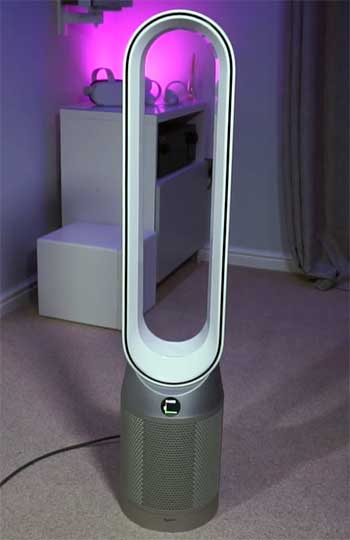
- Smart connectivity that actually makes life easier Being able to connect it to my phone via the Dyson app changed how I use it. I can check air quality from another room, set schedules so it turns on before I get home, or adjust settings without getting off the couch. Voice control works flawlessly with my Alexa setup—I often say “turn on the purifier” when cooking something smoky.
- Backward diffused airflow mode This is one feature I use constantly in winter. It pushes purified air out the back so the room gets cleaned without that direct cool breeze hitting me. Perfect when I want purification but not the chill.
- Detailed real-time monitoring The LCD screen shows particulate matter (PM2.5 and PM10), VOCs, NO2, temperature, and humidity. Seeing those numbers drop after vacuuming or opening a window gives a satisfying sense of control.
- 350-degree oscillation with smooth movement It covers large areas evenly. In my open-plan living area, one unit placed centrally keeps air circulating without dead zones.
- Night mode that doesn’t disturb sleep The fan quiets down significantly, and the display dims completely. I keep one in the bedroom and barely notice it’s running.
- Fully sealed HEPA H13 filtration It captures 99.97% of particles down to 0.3 microns and handles gases with the carbon layer. After a month of use in a dusty apartment, the filter was doing its job but still had life left.
- Build quality and design The sleek tower look fits modern decor, and the magnetized remote snaps neatly on top so I never lose it.
Pros of The Dyson TP07
I’ve grown to appreciate these strengths after months of daily use.
- Seamless smart home integration that saves time and effort
- Year-round usability thanks to diffused mode
- Comprehensive air quality reporting including temperature and humidity
- Exceptionally quiet operation across most settings
- Precise control with 10 fan speeds and full oscillation options
- Automatic adjustments based on real-time sensor data
- Voice command compatibility for hands-free operation
- Sleek design with magnetized remote storage
- Proven filtration performance in challenging environments
- Night mode that truly supports undisturbed sleep
Cons of The Dyson TP07
Nothing is perfect, and these drawbacks stood out to me.
- Higher price point compared to the simpler TP10
- Requires stable WiFi for full functionality
- Slightly heavier, making it less portable
- App occasionally needs updates or reconnection
- More features mean a slightly steeper learning curve initially
- Replacement filters carry the premium price tag
- Display can feel information-overloaded if you prefer minimalism
Also Read: Comparison of AirDoctor And Blueair Air Purifiers.
Exploring The Dyson TP10
The TP10 came into my home as a secondary unit for the guest bedroom. It’s essentially the stripped-down version—same core performance but without the bells and whistles.

- Straightforward remote-only control No app, no voice commands—just the included remote or buttons on the base. For a bedroom or office where I don’t need constant tweaking, this simplicity feels refreshing.
- Powerful forward airflow for cooling It moves a surprising amount of air on higher settings. During summer heatwaves, it kept a medium-sized room comfortably cool while purifying.
- Basic but effective LCD display It shows current air quality index and particle levels in real time. Enough information to know it’s working, without overwhelming details like temperature or humidity.
- Same 350-degree oscillation Identical coverage to the TP07. I placed it in a corner and it still reached every part of the room.
- Identical filtration system Fully sealed HEPA H13 with activated carbon. Performance in cleaning the air felt virtually the same as the TP07 in side-by-side tests.
- Lighter and slightly more compact Easier to move between rooms. At just over 10 pounds, I can carry it upstairs without effort.
- Night mode for quiet operation It dims the display and lowers fan speed automatically on the dedicated setting. Works well for light sleepers.
- No-frills approach that saves money You get Dyson’s signature bladeless design and reliable purification without paying for features you might never use.
Pros of The Dyson TP10
This model surprised me with how much value it delivers at its level.
- Significantly more affordable while retaining core Dyson quality
- Simpler operation—no app frustration or connectivity issues
- Excellent cooling power in forward mode
- Lighter weight for easy room-to-room movement
- Reliable remote control with all essential functions
- Same high-standard HEPA filtration as the pricier model
- Minimalist display that’s easy to read at a glance
- Solid build that feels durable over long-term use
- Lower energy consumption on average settings
- Great choice for secondary rooms or guest spaces
Cons of The Dyson TP10
The trade-offs became clear over time.
- No diffused mode limits winter usability
- Lacks app or voice control for modern convenience
- Fewer sensors mean less detailed environmental feedback
- Slightly louder at higher fan speeds
- No scheduling beyond manual activation
- Basic auto mode reacts slower without advanced monitoring
- Misses temperature and humidity readouts
- Remote is the only control option beyond base buttons
How They Perform in Real-Life Scenarios?
In my living room (about 400 sq ft), both units handled cooking odors and pet dander well, but the TP07 cleared smoke faster thanks to smarter auto adjustments. In the bedroom, the TP07’s quieter diffused mode won for winter nights, while the TP10’s straightforward cooling excelled in summer.
For allergy sufferers like me, both reduced sneezing noticeably, but the TP07’s detailed reports helped me correlate symptoms with specific pollutants. Moving them around, the TP10’s lighter weight made repositioning effortless.
Filter life seemed comparable—around 12 months with moderate use in urban settings.
Which One Should You Choose?
If you already have smart home devices and want maximum control and year-round flexibility, the TP07 justifies its cost. If you simply need reliable purification and cooling without complexity—especially in bedrooms or smaller spaces—the TP10 delivers nearly identical air cleaning at a friendlier price.
I keep both running in different rooms because they serve slightly different needs.
Also Read: Comparison of Dyson HP10 And HP07 Air Purifiers.
Frequently Asked Questions (FAQ)
The TP07 includes WiFi connectivity, app/voice control, backward diffused airflow mode, and extra sensors for temperature/humidity. The TP10 is a simpler version without these smart features.
Yes—excellent purification, strong cooling, and reliable performance make it a solid choice for anyone who doesn’t need smart controls.
Absolutely if you value app integration, diffused mode, and detailed monitoring. Otherwise, the TP10 offers similar core benefits for less.
With regular filter replacements and proper care, expect 8–12 years of reliable service. The motor and build quality are built to last.
Final Thoughts: Finding The Right Fit For Your Home
I’ve come to appreciate both the TP07 and TP10 for what they bring to my daily life—cleaner air, cooler rooms, and fewer allergy symptoms. You might find, like I did, that your choice depends on how much convenience you want versus straightforward performance.
Whichever you pick, you’re getting Dyson’s signature engineering that actually improves indoor comfort. Take a moment to consider your space and habits, and you’ll end up with a purifier that feels just right for you.