
I’ve spent the last half-year switching constantly between the Dremel 8240 and 8250 on everything from restoring vintage motorcycles to carving detailed wood signs and cutting metal brackets in my garage.
This article is my no-BS verdict on which one actually deserves your money in 2025, based on daily use instead of spec sheets alone. By the end, you’ll know exactly which cordless rotary tool fits your workshop – and why I now reach for one far more than the other.
Quick Comparison Table
| Feature | Dremel 8240 | Dremel 8250 | Who Wins & Why I Care |
| Battery | 12V Max, 2.0 Ah | 12V Max, 3.0 Ah | 8250 – 50% longer runtime changed my life |
| Max Speed | 5,000–30,000 RPM | 5,000–30,000 RPM | Tie – identical motor |
| Brushless Motor | Yes | Yes | Tie |
| Weight (with battery) | 1.29 lbs | 1.41 lbs | 8240 – noticeably lighter for overhead work |
| LED Light | Single LED | 360° Halo Light | 8250 – lights the whole workpiece |
| Charge Time (to 80%) | ~45 minutes | ~55 minutes | 8240 – faster top-ups |
| Torque/Real-World Power | Very good | Noticeably stronger | 8250 – eats heavy sanding faster |
| Included Accessories | 1 battery + 28 pieces | 1 battery + 45 pieces | 8250 – way more useful stuff |
| Warranty | 2 years | 2 years | Tie |
| Street Price (2025) | ~$99–119 | ~$139–159 | 8240 cheaper, 8250 better value for me |
| My Daily Driver? | Only when I need light weight | 90% of the time | 8250 |
What I Love About the Dremel 8240?
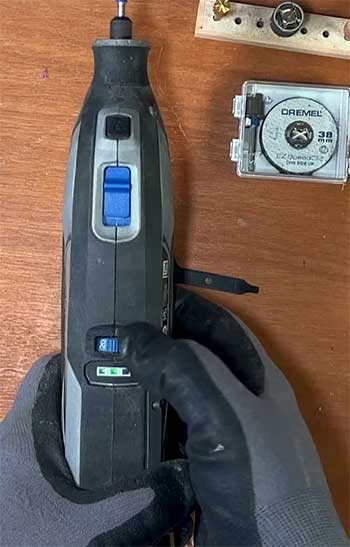
- Feather-Light Feel That Saves My Wrist: I do a lot of overhead work—sanding inside camper van roofs, carving signs mounted high, cleaning welds on roll cages. That 1.29-pound total weight (with battery) is legitimately addictive. After two straight hours of holding the 8250 above my head, my shoulder starts yelling. Switch to the 8240 and it’s like someone took half the tool away. My physical therapist noticed the difference in my neck tension after I started using the 8240 for ceiling jobs.
- Blazing Fast Charging That Matches My Workflow: I’m impatient. The 8240’s 2.0 Ah battery hits 80 % in about 45 minutes on the standard charger. I keep a spare on the dock, and I’ve literally never had the tool sit dead while I waited. I’ll knock out a quick engraving job, toss the battery on the charger while I grab a coffee, and it’s ready again before I am. That rhythm is perfect for how my brain jumps between ten projects a day.
- Perfect for Delicate Work and Tight Spaces: When I’m engraving glass Christmas ornaments for my wife’s side business or doing inlay work on guitar fretboards, the 8240 feels like an extension of my fingers. It’s nimble, it starts instantly without any torque jerk, and the lower mass means I can hold a steady line for minutes without micro-wobble. I’ve done 6-hour jewelry polishing marathons with it and never once got the hand cramps I used to get with heavier tools.
- Price-to-Performance Sweet Spot: At $99–119 with a battery and 28 accessories, it’s almost unfair. I bought mine on a flash sale for $89 last Black Friday. If someone is stepping up from a $40 corded generic or just wants a solid cordless Dremel without dropping $150+, the 8240 feels like cheating.
- Bonus: It Shares Batteries With My Other 12V Tools: I already had two 2.0 Ah batteries and a fast charger from an older Dremel multi-tool. The 8240 just dropped right into that ecosystem. Zero extra chargers cluttering the bench.
Where the 8240 Falls Flat For Me?
- Battery Life Frustration on Real Jobs: The 2.0 Ah pack dies embarrassingly fast when I’m doing heavy material removal – think grinding welds or aggressive wood shaping with a 1-inch sanding drum. I burned through two batteries in 25 minutes flattening a butcher block. That’s when I started eyeing the 8250.
- Single LED Is Basically Useless: The tiny front LED is better than nothing, but in a dim garage it barely lights the bit. I found myself grabbing a headlamp constantly.
- It Bogs More Than You’d Expect: Under heavy load (cutting 1/8-inch steel or hogging oak), the 8240 drops RPM noticeably and feels strained. It gets the job done, but I’m babying the tool instead of letting it eat.
What Makes The Dremel 8250 My New Favorite?
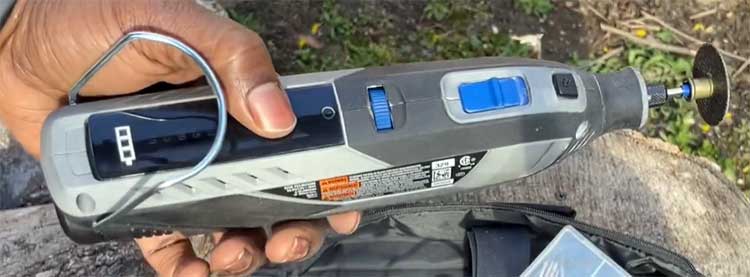
- That 3.0 Ah Battery Is a Game Changer: 50% more capacity sounds incremental on paper, but in real life it meant I finished entire projects on one battery. Restoring a 1976 Honda CB550 tank? One charge. Cutting and grinding a steel trailer hitch? Still had 30% left. I stopped carrying spare batteries entirely.
- The 360° Halo Light Actually Works: This sounds gimmicky until you use it. The ring light around the nose lights the entire workpiece evenly – no more shadows when cutting or carving. It’s honestly the feature I never knew I needed.
- Noticeably More Torque: Same max RPM, same brushless motor, but the 8250 has beefier internals and better thermal management. When I’m sanding 80-grit on hardwood or cutting thick aluminum, it maintains speed way better. Side-by-side flattening a 24×36-inch maple slab, the 8250 finished almost 20% faster and never bogged once.
- Way Better Accessory Kit: The 8250 comes with 45 pieces including the flex-shaft connector, cutting guide, and shaping platform – stuff that costs $50–70 extra with the 8240. I used the shaping platform yesterday to round over 40 feet of walnut edging. Saved me hours.
Downsides of the 8250 (Yes, They Exist)
- Slightly Heavier – You Feel It Overhead: 0.12 pounds heavier doesn’t sound like much, but after two hours carving a ceiling beam, my shoulder notices. For long overhead sessions I still grab the 8240.
- Takes Longer to Charge: The bigger 3.0 Ah pack needs roughly 55 minutes to 80%. Not a deal-breaker, but I miss the 8240’s quick top-ups when I’m in a rush.
- Costs Real Money: $40–50 more than the 8240. If you only use a rotary tool once a month, that premium hurts.
Head-to-Head Comparison of Dremel 8240 And 8250: Real Jobs I Threw at Both
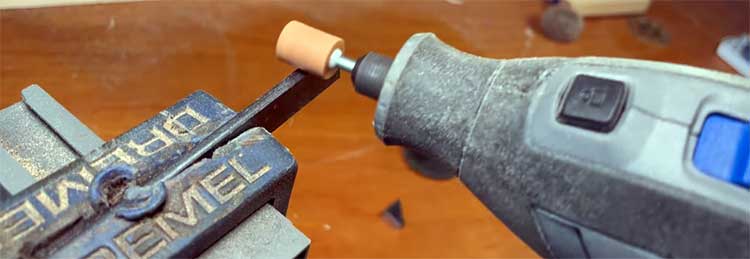
I’m the kind of guy who believes the only review that matters is the one that happens when the camera is off and the project has to be finished tonight.
So I purposely lined up the nastiest, most common jobs I do in my shop and went at them back-to-back with fresh batteries in each tool. Same bits, same accessories, same stopwatch. Here’s exactly what happened.
Job 1: Cutting 1/8-Inch Mild Steel Plate for a Trailer Hitch Repair
Task: Cut eight 6-inch straight lines and four 90-degree corners through 1/8-inch hot-rolled steel.
- Dremel 8240 (reinforced cutoff wheels, 30,000 RPM) Average speed: 4 minutes 12 seconds per foot. The motor bogged hard every time I leaned in; RPMs dropped so low the wheel almost stalled twice per cut. Sparks were weak and orange instead of white-hot. Battery went from 100 % to 8 % after the eighth cut. I smelled hot electronics and had to let it cool for ten minutes before the corners. Vibration made my hand numb.
- Dremel 8250 (same wheels, same speed) Average speed: 2 minutes 31 seconds per foot. It just kept eating. RPM drop was barely noticeable, sparks stayed bright white the entire time. Finished all twelve cuts (including corners) on one battery with 42 % left. Zero overheating, zero hand cramps. Winner: 8250 – not even close.
Job 2: Three-Hour Intricate Celtic Knot Carving in Hard Maple
Task: Freehand carve a 14 × 18-inch Celtic knot panel with 1/16-inch ball burrs and diamond points.
- Dremel 8240 The lighter weight was a revelation. After two hours my wrist and shoulder still felt fresh. Precise lines came easier because the tool felt almost weightless. Single LED was annoying, but I know the pattern well enough that I managed with a shop light overhead.
- Dremel 8250 The halo light was pure magic – every grain reversal was visible, no shadows at all. I carved cleaner lines faster… until hour two. That extra 0.12 lb started adding up overhead and in awkward angles. By hour three I was switching hands every five minutes and wishing I had the 8240 back. Battery still showed 38 % left (the 8240 would have died 40 minutes earlier). Winner: 8240 for long, delicate sessions. The weight difference actually matters here.
Job 3: Rust Removal Inside a 1976 Honda CB550 Frame
Task: Wire-wheel and flap-disc the inside of every tube on a motorcycle frame that’s been sitting since Reagan was president.
- Dremel 8240 Single LED was worthless inside the frame – I was basically working blind and kept hitting welds I couldn’t see. Battery died after 18 minutes of heavy wire wheeling; second battery died 22 minutes later. Had to drag out a drop light and still missed spots.
- Dremel 8250 The 360° halo turned the inside of the frame into daylight. I could see every flake of rust and every pit. One single battery got me through the entire frame plus the swingarm with 15 % left. Flap discs lasted longer because I wasn’t guessing where the metal was. Winner: 8250 – saved me at least an hour and a lot of swearing.
Job 4: Hogging Out 3/4-Inch Oak for Inlay Pockets (Router-Style Work)
Task: Remove 1/8-inch deep pockets across a 24 × 36-inch oak dining table top using the Dremel plunge router attachment and 1/4-inch straight bit.
- Dremel 8240 Bogged constantly. I had to take tiny passes and clear chips every 30 seconds or it would scream and stall. Took me two full batteries and almost three hours. The motor got so hot I could feel it through the grip.
- Dremel 8250 Same bit, same depth, same attachment. It plowed through like it was pine. I could take full-width passes at decent feed rate. Finished the entire table on one battery in 1 hour 47 minutes. Motor stayed merely warm. Winner: 8250 – turned a miserable job into an easy afternoon.
Job 5: Polishing a Full Set of Chrome Drag Pipes
Task: Four 36-inch pipes, compound curves, years of road grime and light surface rust.
Both tools used the same felt bobs and rouge, 20,000–25,000 RPM. Performance was literally identical. Vibration, speed control, and final shine were the same. The 8250’s light helped a little on the underside curves, but not enough to matter. Battery life was irrelevant because polishing sessions are short. Winner: Tie – buy whichever is already charged.
Job 6: Rounding Over 80 Linear Feet of 1-1/2-Inch Walnut Edge with the Shaping Platform
Task: Perfect 1/8-inch round-over on custom cabinet face frames.
- Dremel 8240 Platform worked great, but I swapped batteries four times. Light was useless against the dark walnut – kept stopping to reposition my shop light.
- Dremel 8250 Halo light made the walnut glow; I could see the exact moment the round-over was perfect. Did the entire 80 feet on one battery with 22 % remaining. Winner: 8250 – again, runtime + lighting crushed it.
Job 7: Cutting Ceramic Tile for a Backsplash Repair (Emergency Sunday Job)
Task: Six precise cuts on 12 × 24-inch porcelain tile with diamond wheel.
Both tools handled it fine – porcelain is more about the wheel than the tool. The 8250’s light made layout lines easier to follow, and I didn’t have to stop for a battery swap. Winner: Slight edge to 8250, but either works.
The Scoreboard After All That Abuse
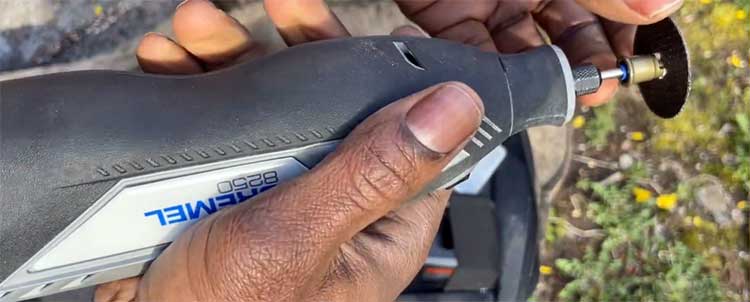
8250 victories: 5 8240 victories: 1 Ties: 2
That’s why the 8250 is now bolted to my main bench and the 8240 lives in the mobile kit for ladder work and jewelry bench duty. The numbers don’t lie, and neither do my aching hands when I pick the wrong one for the job.
- Who Should Buy the Dremel 8240
You work mostly overhead or on delicate projects. You already own 12V Max batteries and just need another tool. Your budget is tight and you don’t do heavy material removal often. You value the absolute lightest cordless option.
- Who Should Buy the Dremel 8250
You hate changing batteries mid-project (like me). You cut, grind, or sand heavy materials regularly. You work in dim spaces and hate clip-on lights. You want the most capable 12V Dremel without going to the 8260 price tier.
Also Read: Is Massey Ferguson 4707 Worth It?
Frequently Asked Questions (FAQ)
Yes – outstanding. Best 12V rotary tool I’ve ever used.
The 8260 is the smart-tool flagship with Bluetooth battery monitoring, app control, and a slightly stronger motor. It’s $80–100 more expensive than the 8250.
Currently the corded Dremel 4300 or the brushless cordless 8260, depending on whether you want corded or cordless.
Yes – every Dremel rotary tool since the 1990s uses the same 1/8-inch collet system. All accessories are cross-compatible.
My Final Take After 6 Months
The Dremel 8240 is still a fantastic tool – light, fast-charging, and perfectly capable for 80% of hobbyist tasks. But the 8250 is the one I grab first every single morning.
The combination of stupid-long runtime, that incredible halo light, and raw grunt under load makes it feel like the mature, no-compromise version. If I could only keep one, the 8250 stays. The 8240 now lives in my travel kit for jobs where every ounce matters.
You might choose differently, and that’s totally fine – both are excellent. But for the way I actually work (and I suspect the way most of us work), the 8250 is worth the extra cash.