
If you’ve spent any time tossing and turning at 3 AM, staring at the ceiling and wondering if your mattress is plotting against you, you’re not alone.
I’ve been there, and I know that choosing between a luxury hybrid like DreamCloud and a high-tech smart bed like Sleep Number isn’t just about specs—it’s about how you want to feel every morning.
In this comparison, I’m breaking down everything from the “cloud-like” foam layers to the adjustable air chambers to help you decide which one actually delivers on the promise of better sleep.
| Feature | DreamCloud (Premier Hybrid) | Sleep Number (Performance Series / c2-i8) |
| Type | Luxury Hybrid (Memory Foam + Coils) | Adjustable Air Smart Bed |
| Firmness | Medium-Firm (6.5/10) | Adjustable (0-100 Setting) |
| Trial Period | 365 Nights | 100 Nights |
| Warranty | Lifetime Warranty | 15-Year Limited Warranty |
| Height | 14 Inches | 8 to 13 Inches (Model Dependent) |
| Construction | Cashmere blend cover, gel memory foam, pocketed coils | Air chambers, foam comfort layers (varies), smart sensors |
| Smart Tech | None (Traditional Comfort) | SleepIQ® Technology & App Control |
| Price Point | Budget-Luxury | Premium/High-End |
| Best For | Value seekers, hybrid lovers, back/stomach sleepers | Couples with different needs, tech enthusiasts, pain sufferers |
The Core Philosophy
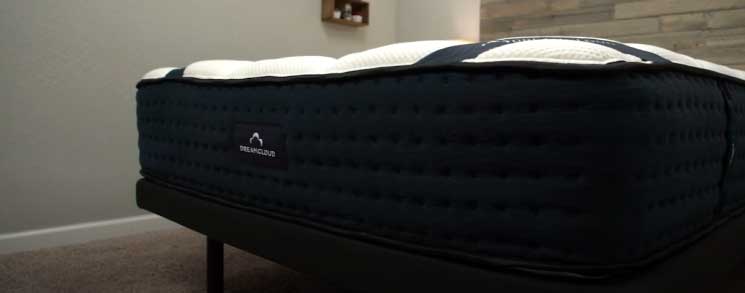
The fundamental difference between these two brands lies in their approach to solving the sleep problem. When I tested the DreamCloud, it felt like a traditional, high-end hotel bed—substantial, heavy, and reassuringly consistent.
It relies on a “set it and forget it” philosophy. You buy it because you want a specific feel (medium-firm) that works for most people, most of the time. It doesn’t ask you to tinker with an app or find a setting; it just asks you to lie down.
Sleep Number is the polar opposite. It treats sleep as an equation to be solved. During my time with Sleep Number beds, I found myself constantly aware of the technology underneath me. It’s an active experience.
You aren’t just buying a mattress; you are buying a machine that adjusts to you. If your back hurts on Tuesday, you change the setting. If your partner snores, you raise their head (on compatible bases).
This is a distinct philosophical split: do you want a bed that is consistently great (DreamCloud) or a bed that can change as you change (Sleep Number)?
Also Read: Is Kiwi Organic Mattress Worth It?
Key Differences Between DreamCloud And Sleep Number
- Construction and Materials
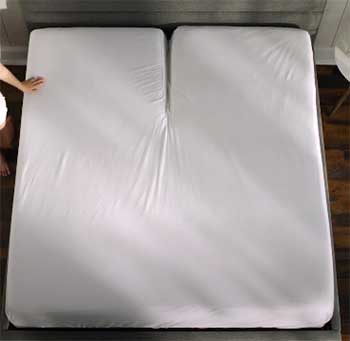
The DreamCloud is a textbook hybrid.
It combines the pressure relief of memory foam with the supportive bounce of individually wrapped coils.
When you sit on the edge, you feel that familiar pushback of springs.
Sleep Number uses vulcanized rubber air chambers as the support core. There are no coils.
The “comfort” comes from foam layers stacked on top of these air bladders.
This means DreamCloud has more “bounce,” while Sleep Number has very little motion transfer but can feel stiffer if the air pressure is high.
- Customization vs. Universality
DreamCloud bets the farm on a “Universal Comfort” feel. They aim for that sweet spot between 6 and 7 on the firmness scale. In my experience, this is excellent for back sleepers and solid for stomach sleepers, but lightweight side sleepers might find it a bit unyielding.
Sleep Number eliminates this risk entirely. If you want a soft bed (setting 35), you have it. If you want a rock-hard surface (setting 100), you have that too. The difference is that DreamCloud’s feel is engineered by foam density, while Sleep Number’s feel is engineered by air pressure.
- The Couples Factor
This is where the battle lines are drawn sharpest. DreamCloud is great for couples because the foams dampen motion, but you both have to agree on the firmness. If one of you loves a soft cloud and the other needs a brick, one of you will compromise.
Sleep Number’s DualAir technology (available in Queen sizes and up) solves this by giving each person their own remote and air chamber. I’ve seen this save marriages—no exaggeration. You can sleep on a cloud while your partner sleeps on a slab, on the same mattress.
- Maintenance and Longevity
A DreamCloud mattress is a static object. Once unboxed, it just sits there. There are no pumps to fail, no hoses to check, and no remotes to lose. It is low maintenance. Sleep Number beds are appliances. They have pumps, hoses, WiFi connections, and sensors.
While they are built well, there are simply more points of potential failure. I have found that owning a Sleep Number requires a bit more engagement; you might need to reset the pump or reconnect the WiFi occasionally.
Also Read: Is Awara Natural Hybrid Mattress Worth It?
Key Features: DreamCloud
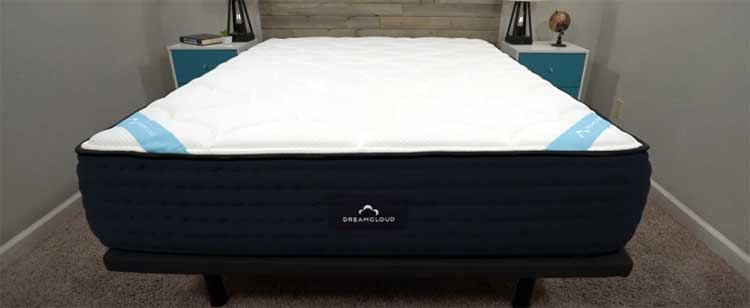
- Cashmere Blend Cover: The first thing I noticed when touching the DreamCloud was the cover. It’s quilted with a cashmere blend that feels incredibly soft and breathable. It isn’t just a sheet protector; it has a bit of foam stitched right into it, creating a Euro-top feel that gives you immediate pressure relief before you even hit the main memory foam layers.
- Gel Memory Foam Layers: Heat retention is the enemy of memory foam, but DreamCloud uses gel-infused foam to combat this. I found that it doesn’t trap heat the way older memory foam beds did. It contours to the hips and shoulders nicely, providing that “hug” sensation without making you feel like you are stuck in quicksand.
- Individually Wrapped Coils: Beneath the foam lies a system of pocketed coils. These are crucial for airflow and isolation. Because they move independently, if I jump on one side of the bed, a glass of wine on the other side might wobble, but it won’t launch into the air. This layer provides the “active support” that pushes back against your body weight, preventing that hammock effect.
- The Forever Warranty: This is a massive selling point. Most mattress warranties are 10 years. DreamCloud offers a lifetime warranty. If the mattress develops a body impression greater than 1.5 inches (which is the industry standard for “sagging”), they replace it. This signals a huge amount of confidence in their construction durability.
DreamCloud Pros

- Incredible Value for Money: When I look at what you get—a thick, 14-inch hybrid with cashmere and premium coils—the price is shockingly low compared to retail store brands. You are getting a luxury hotel feel for a fraction of the cost of a Sleep Number setup.
- Simplicity of Use: There is zero learning curve. You don’t need to download an app, pair a remote, or understand what a “SleepIQ” is. You just lie down and sleep. For people who want their bedroom to be a tech-free sanctuary, this is a major advantage.
- Superior Trial Period: 365 nights is an absurdly long time to test a mattress, and that’s a good thing. You can try the DreamCloud through all four seasons. If you find it sleeps hot in July, you can return it. Sleep Number’s 100-night trial feels stingy by comparison.
- Robust Edge Support: Because of the coil perimeter, the edge support on the DreamCloud is excellent. I could sit on the edge to tie my shoes without feeling like I was going to slide off. Sleep Number beds, relying on air chambers, can sometimes feel a bit “rolly” at the very edge if not fully inflated.
DreamCloud Cons
- One Firmness Fits Most (But Not All): If you are a featherweight side sleeper (under 130 lbs), you might find the DreamCloud too firm. The coils push back quite a bit. Conversely, if you love a super-soft, sinking memory foam feel, this isn’t it. It’s a medium-firm, and you can’t change it.
- Heavy and Difficult to Move: This mattress is a beast. Once it expands, moving it to another room is a two-person job, minimum. Unlike Sleep Number, which can be disassembled into parts, the DreamCloud is a solid slab of heavy materials.
- Motion Transfer (Compared to Air): While the coils are individually wrapped, they still transfer more motion than an air chamber. If your partner is a restless thrasher, you will feel more movement on a DreamCloud than you would on a dual-chamber Sleep Number.
Also Read: Is Puffy Lux Hybrid Mattress Worth It?
Key Features: Sleep Number
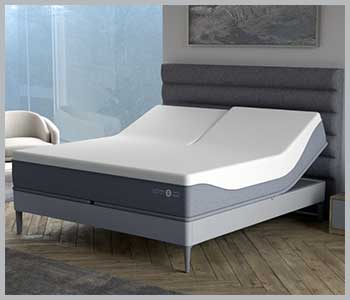
- DualAir Technology: This is the crown jewel. The ability to adjust each side of the bed independently is what justifies the price tag for most buyers. I found the adjustment process smooth, though not instant. You can feel the bed gently inflating or deflating beneath you. It allows for micro-adjustments that static mattresses simply cannot match.
- SleepIQ Technology: Integrated into the bed are biometric sensors that track your heart rate, breathing, and movement. Each morning, the accompanying app gives you a “SleepIQ Score.” I found this fascinating, though sometimes it felt like gamifying my rest. If you are a data nerd who wears a smartwatch to bed, having your mattress confirm your sleep quality is a powerful feature.
- Responsive Air: On the higher-end models (like the i8 or i10), the bed doesn’t just sit there; it reacts. If you roll onto your side, the sensors detect the pressure change and automatically adjust the air pressure to cushion your shoulder and hip. I noticed this most when switching from back to side sleeping—the bed seemed to “catch” me and soften up slightly.
- Partner Snore Technology: If you purchase the adjustable base (FlexFit), Sleep Number offers a feature that allows you to gently raise your partner’s head if they start snoring. You don’t have to wake them up; you just press a button on your phone, and their side of the bed tilts up, often stopping the snoring by opening the airway. For many, this feature alone is worth the investment.
Sleep Number Pros
- Ultimate Customization: There is simply no substitute for being able to change the feel of your bed instantly. If you pull a muscle and need a firm surface, you have it. If you’re sunburnt and need softness, you have it. This flexibility is the “killer app” of the mattress world.
- Data-Driven Sleep Insights: The SleepIQ data is genuinely useful for spotting patterns. I realized that my sleep quality dropped on days I exercised late at night, solely because the app pointed out my elevated heart rate and restlessness. It turns your bed into a health monitor.
- Solution for Disparate Couples: I cannot overstate this: if you and your partner have different body types or sleep preferences, Sleep Number is often the only viable solution that doesn’t involve pushing two Twin XL beds together.
- Longevity via Part Replacement: If a pump fails in year 7, you replace the pump. If the foam top wears out, you can unzip the cover and replace just the foam layer. You can theoretically keep the core of a Sleep Number bed for decades by just swapping out components.
Sleep Number Cons
- The “Trench” Effect: Because the dual-chamber beds are essentially two air bladders side-by-side, there can be a slight dip or “trench” in the middle where they meet. If you like to cuddle in the center of the bed, you might find yourself rolling into this valley or feeling the divider.
- Noise and Mechanical Feel: The pumps are quiet, but they aren’t silent. You will hear a hum when adjusting. Furthermore, sleeping on air feels different than sleeping on springs. Some people, myself included, describe it as feeling a bit like a camping mattress—less “deep” support and more “buoyant” support.
- Price and Complexity: To get the best experience (cooling, pressure relief), you have to go for the expensive models like the i8 or i10. The entry-level c2 is basically an air mattress with thin padding. Plus, setting it up requires WiFi, apps, and power outlets. If the power goes out, you can’t adjust your bed.
Also Read: Is Helix Midnight Elite Mattress Worth It?
Frequently Asked Questions (FAQ)
Yes, absolutely. In my analysis, the materials used—specifically the cashmere blend cover, high-density gel memory foam, and heavy-gauge pocketed coils—punch far above their price point. They feel substantial and durable, which is reinforced by their lifetime warranty. You aren’t getting cheap foam that bottoms out in a year; you’re getting a hotel-grade build.
“Better” is subjective, but if you dislike air suspension, then yes. If you prefer the deep, contouring sink of pure memory foam, a Tempur-Pedic is better. If you want a traditional luxury spring feel without the mechanical parts, a Saatva or DreamCloud is better. Sleep Number is only the “best” if your primary need is adjustability and biometric data.
For value-conscious luxury shoppers, it is a top contender. It hits a “sweet spot” of firmness that works for about 80% of sleepers. However, it is likely not the best for lightweight side sleepers who need ultra-plush softness, or for those who want a strictly natural/organic latex bed. It is a jack-of-all-trades, master of value.
In the specific niche of “smart beds” with air adjustability, their main competitors are ReST and Eight Sleep (though Eight Sleep focuses more on temperature than air support). In the general premium market, their biggest rivals are Tempur-Pedic and Saatva, as these brands compete for the same high-budget demographic looking for pain relief and luxury.
Final Thoughts
Choosing between these two comes down to one question: Do you want consistency or control?
If you want a “set it and forget it” luxury feel that saves you money, buy the DreamCloud. It is less fussy, significantly cheaper, and offers a premium hotel feel that just works.
However, if you are a data geek, have a partner with opposite preferences, or need to change your firmness daily to manage pain, Sleep Number is the only logical choice.
DreamCloud wins on value and simplicity; Sleep Number wins on customization. Choose the one that solves your specific sleep struggle.