
As someone who spends hours at a desk every day, I’ve tried several walking pads to stay active without leaving my workspace. In this article, I compare DeerRun and UREVO—two popular, affordable brands for under-desk treadmills—head-to-head.
I’ll break down their features, performance, and real-world use to help you decide which fits your needs, budget, and lifestyle best.
| Feature | DeerRun | UREVO |
| Price Range | $170–$400 | $200–$500 |
| Max Speed | 3.8–7.5 mph | 3.8–8 mph (up to 10 mph in some) |
| Weight Capacity | 300–350 lbs | 265–300 lbs |
| Incline Options | Manual or auto up to 10–15% in select models | Auto incline up to 14% in premium models |
| Motor Power | 2.5–3.0 HP | 2.5 HP brushless (quieter) |
| Noise Level | Quiet (around 45–50 dB) | Very quiet (35–40 dB) |
| App Integration | Yes (PitPat app for tracking) | Limited or none in basic; better in premium |
| Portability | Wheels, lightweight, easy to move | Wheels and handle, upright storage |
| Deck Size | Compact, sometimes narrower belt | Wider in some, cushioned |
| Warranty | 1–2 years | 1 year |
Key Differences Between DeerRun And UREVO
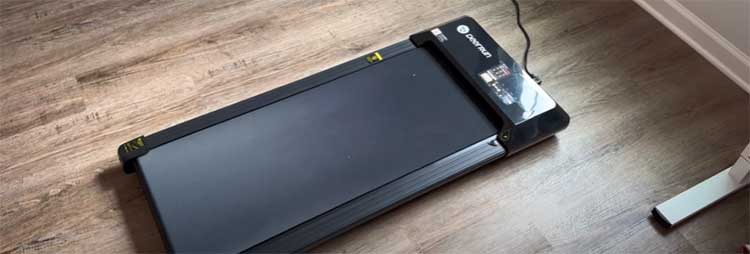
After months of using models from both brands side-by-side, the distinctions became clear in daily routines. Here’s a detailed breakdown of what sets them apart, based on real performance, specs from their latest 2026 models, and user feedback patterns.
- Incline Options UREVO pulls ahead with automatic incline, reaching up to 14% (or 9% fully auto in models like the CyberPad and SpaceWalk 3S). This lets me ramp up intensity without stopping to adjust manually—perfect for simulating hills and burning extra calories during longer sessions. DeerRun offers incline too (6–12% in newer A1 Pro or smart models), but it’s often manual or limited to fewer levels. If you want seamless variety without fiddling, UREVO feels more premium here.
- Noise Levels UREVO’s brushless motors are noticeably quieter, often hovering around 35–40 dB even under load. I’ve walked on the CyberPad during late-night sessions or calls without anyone noticing. DeerRun is quiet enough for most (45–50 dB), but you’ll hear a subtle hum or occasional rattle over time, especially in budget models. If you share space or work in quiet environments, UREVO wins hands-down.
- App Integration and Tracking DeerRun’s PitPat app is a standout—I love the leaderboards, races, and gamified challenges that keep me hitting step goals. It syncs reliably, tracks progress, and even offers virtual routes. UREVO’s apps (like SmartCoach) provide basic tracking and some guided workouts, but they’re inconsistent—glitches, limited features in base models, or weaker community aspects. If motivation through competition matters to you, DeerRun engages more.
- Weight Capacity and Build Sturdiness DeerRun typically supports 300–350 lbs (up to 350 in the A1 Pro series), feeling rock-solid for heavier users or intense sessions. The steel frames hold up well daily. UREVO ranges from 265–400 lbs depending on the model (CyberPad hits higher marks), but many cap around 300 lbs. Frames are sturdy, yet some users report flexing under max load. DeerRun edges out for inclusivity and perceived durability.
- Deck Size and Comfort UREVO often provides wider, longer belts—CyberPad’s “full-track” design gives 30% more running area with multi-layer cushioning and advanced shock absorption. My strides feel natural, and joints stay happier after hours. DeerRun decks are compact and cushioned, but narrower belts can cramp longer strides or side-to-side movement. It’s functional for walking, but UREVO feels roomier and more forgiving.
- Portability and Storage Both have transport wheels and slim profiles, sliding easily under furniture. UREVO shines with upright vertical storage in many models (like Strol series), freeing floor space completely in small apartments. DeerRun is lightweight and wheeled too, but usually stores flat. If vertical space-saving is key, UREVO’s design is smarter.
- Speed Range and Motor Performance UREVO accelerates smoothly with brushless motors, hitting 7–8 mph (or higher in 2-in-1 models) without jerking. It handles intervals effortlessly. DeerRun reaches similar speeds (up to 10 mph in premium), but acceleration can feel less refined, with occasional hesitation. UREVO’s motor tech delivers a polished experience.
- Shock Absorption and Joint Protection UREVO incorporates multi-point systems (8–14 points in higher models) plus silicone cushions, making long walks gentler on knees and ankles—I notice less fatigue. DeerRun has decent cushioning, but it’s simpler. If you have joint concerns or log high mileage, UREVO’s setup protects better.
- Price-to-Feature Ratio DeerRun delivers strong basics at lower prices—great app, solid capacity, and reliability without paying for extras. It’s the budget champion for beginners. UREVO charges more for innovations like auto-incline and larger decks, but the upgrades justify the cost if you want advanced workouts.
- Durability and Long-Term Reliability Both get mixed feedback: DeerRun faces complaints about motors failing after months or poor support. Mine held up fine, but I’ve seen patterns. UREVO reports occasional overheating or belt issues, though premium motors seem longer-lasting. Neither is bulletproof—warranty matters, and real use varies.
- Extra Features and User Motivation DeerRun adds fun extras like RGB lighting in some, strong social features via PitPat, and simple remotes. UREVO includes tablet holders, anti-slip designs, and app challenges (though less robust). It focuses more on workout variety than gamification.
Also Read: Is YAGUD Walking Pad Any Good?
Key Features of DeerRun Walking Pads
DeerRun focuses on simple, user-friendly designs that get the job done without overwhelming extras.
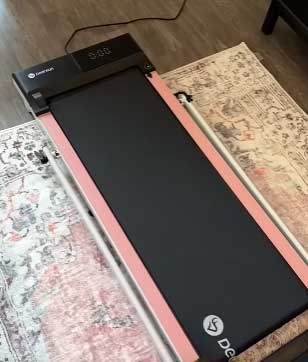
- Compact and portable build — Most models weigh under 70 pounds with built-in wheels. I slide mine under the sofa when not in use, and the slim profile fits tight spaces perfectly.
- Decent weight capacity — Up to 350 pounds on higher-end models, which feels sturdy even for taller or heavier users. The steel frame absorbs impact well.
- Remote and app control — The PitPat app tracks steps, calories, and speed. I compete on leaderboards, which keeps me motivated on slow days.
- Quiet motor operation — Around 45–50 decibels, like white noise. I use it during Zoom calls without muting issues.
- Cushioned deck — Reduces joint strain with shock absorption. My knees feel better after hours compared to hard floors.
- Speed range flexibility — Starts low for slow walks and ramps up for brisk sessions. Some models include handrails for stability.
- LED display — Shows essentials clearly, though it’s basic—no fancy graphics.
These features make DeerRun reliable for everyday use without complications.
Pros of DeerRun Walking Pads
I’ve owned a couple of DeerRun models over the past year, and certain strengths keep me coming back, especially when I want something straightforward without spending too much.
- Affordability that doesn’t compromise basics DeerRun consistently offers some of the lowest prices for reliable walking pads—often under $200–300 for solid models like the Q1 Pro or A5 series. This makes it perfect for first-timers testing if a walking pad fits their routine. I got mine on sale and felt like I scored a capable machine without buyer’s remorse.
- High weight capacity for inclusivity Many models support 300–350 lbs (some newer ones push 400 lbs), which feels reassuringly sturdy. The steel frame doesn’t flex or wobble, even during brisker walks or for taller/heavier users. I’ve recommended it to friends who worried cheaper pads wouldn’t hold up.
- Excellent portability and storage Lightweight (around 50–70 lbs) with smooth-rolling wheels, I move it effortlessly from desk to closet or under the bed. The slim profile slides into tight spaces—no need to rearrange furniture daily.
- Motivating app integration with PitPat The PitPat app gamifies everything: leaderboards, virtual races, step challenges, and calorie tracking. On lazy days, competing with strangers pushes me to hit 10,000 steps. Syncing is reliable, and progress visuals keep the habit fun.
- Decent shock absorption and joint protection The cushioned deck with multi-layer design reduces impact noticeably. After hours of walking, my knees and back feel far better than on hardwood floors or cheaper pads without padding.
- Quiet enough for shared or office spaces At 45–50 dB, it’s like background hum—I’ve used it during calls without complaints. The motor runs smoothly for walking speeds.
- Easy setup and user-friendly controls It arrives mostly assembled; I was walking within minutes. The remote is intuitive, and LED displays show essentials clearly.
- Improving features in newer models Recent 2026 releases add things like limited auto-incline (5–10%) and smarter screens, closing the gap with pricier brands while staying budget-friendly.
Cons of DeerRun Walking Pads
- Annoying beeps → Alerts for speed changes get old fast—no easy mute option.
- Narrower belt on some → Feels cramped for wider strides or running.
- Limited incline → Mostly manual or absent, lacking hill simulation.
- Basic display → Hard to read from standing desk height sometimes.
- App can glitch → Occasional disconnects frustrate tracking.
- Not ideal for serious running → Belt length limits faster paces.
- Heavy ad presence → TikTok hype sets unrealistic expectations for some.
Overall, DeerRun delivers great basics, but premium features cost extra.
Also Read: Is Denise Austin Walking Pad Any Good?
Key Features of UREVO Walking Pads
UREVO leans toward innovation, especially in higher models like the CyberPad.
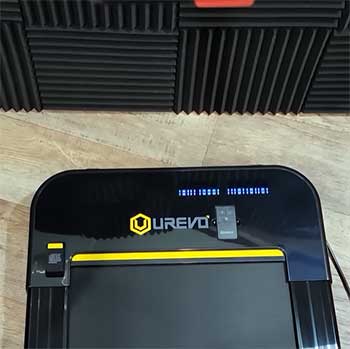
- Auto-incline capability → Up to 14% adjusts automatically, simulating hills for better calorie burn.
- Brushless motor → Powerful yet ultra-quiet at 35 decibels—barely noticeable.
- Shock absorption system → Multiple cushions and silicone pads make it joint-friendly.
- Wider deck options → Provides natural strides and stability.
- Transport wheels and handle → Stands upright for minimal storage space.
- Speed versatility → Smooth acceleration across ranges, great for interval walks.
- Anti-slip belt → Adds safety, especially with incline.
- Some smart integrations → Premium models connect for guided workouts.
UREVO feels more advanced for active users.
Pros of UREVO Walking Pads
Switching to UREVO (especially CyberPad or Strol series) felt like an upgrade in performance and comfort—here’s why it shines for more varied workouts.
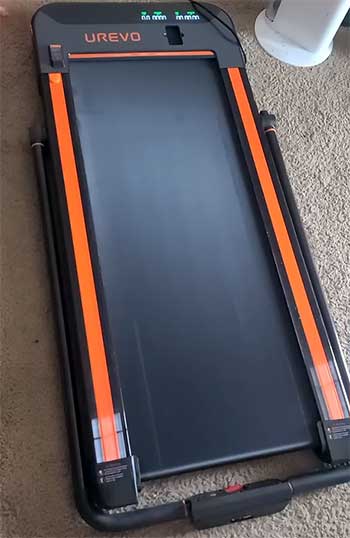
- Exceptionally quiet brushless motor At 35–40 dB, it’s nearly silent. I walk during late-night TV or calls without raising volume or disturbing anyone— a game-changer in shared homes.
- Automatic incline for workout variety Up to 9–14% auto-incline in models like CyberPad or Strol 2S Pro simulates hills effortlessly. It ramps calorie burn and targets different muscles without pausing to adjust manually.
- Superior shock absorption system Multi-point (8–14 points) cushioning plus silicone pads makes long sessions gentle on joints. I log 4–5 hours some days with minimal fatigue—noticeably better than simpler decks.
- Wider and more comfortable deck Many models offer spacious belts for natural strides. No cramped feeling, even when speeding up or shifting weight.
- Smooth and powerful motor performance The 2.5 HP brushless motor accelerates seamlessly up to 7–8 mph (higher in 2-in-1). Interval walks feel polished and responsive.
- Smart storage solutions Wheels plus upright folding in several models save floor space completely. In small apartments, this vertical storage is brilliant.
- Great value in feature-packed models You get auto-incline, app tracking, and quietness for prices rivaling basic competitors. Premium feel without premium cost.
- Stable and anti-slip design The belt grips well, even on incline—no slipping worries. Tablet holders in some keep entertainment handy.
- Low maintenance and longevity potential Brushless motors run cooler and wear less. With proper care, it feels built to last longer than budget alternatives.
Cons of UREVO Walking Pads
- Inconsistent app quality → Basic models lack one; others have bugs or limited functions.
- Lower weight capacity → Caps at 265–300 pounds, less inclusive.
- Slightly higher price for top features → Incline models cost more.
- Occasional durability issues → Some report wear after heavy use.
- Basic remote on entry models → Lacks advanced controls.
- Setup can take longer → More parts in foldable designs.
- Fewer gamification options → Less motivating without strong app support.
UREVO excels in performance, but basics feel stripped down.
My Experience With DeerRun With UREVO
I started with a DeerRun Q1 Pro model. Setup took minutes, and I loved wheeling it under my desk. Slow walks at 2 mph during emails felt natural, and the cushioning spared my knees. The app’s challenges kept me consistent—I hit 10,000 steps most days.
For light jogging, it held up, though the belt felt narrow. Beeps annoyed me at first, but I adapted. It’s tough and reliable for daily basics.
I switched to a UREVO CyberPad for its incline. The quietness amazed me—I walked during podcasts without volume hikes. Auto-incline burned more calories, varying workouts effectively. The deck felt spacious, and shock absorption eased long sessions.
App issues frustrated me occasionally, but the motor’s smoothness impressed. It’s ideal for intense desk workouts.
Also Read: Is KingSmith WalkingPad MX16 Any Good?
Frequently Asked Questions (FAQ)
Yes, it’s a solid budget-to-midrange choice with quiet motors and innovative features like auto-incline, though app support varies.
Ratings shift, but WalkingPad models (like A1 Pro) and UREVO CyberPad often top 2026 lists for build and features.
Yes, UREVO is headquartered and manufactured in China.
No, while it markets heavily in North America with a USA store, it’s not an American-founded or based company.
Final Thoughts
If you want simple, affordable, and motivating with good app support, go DeerRun—great for beginners. If quietness, auto-incline, and comfort matter more, choose UREVO, especially premium models. Both boost daily movement affordably.
I switch based on mood: DeerRun for easy days, UREVO for challenges.
You deserve a walking pad that fits your life seamlessly. Whether DeerRun’s reliability or UREVO’s innovation, picking one will increase your steps and energy. I’m glad I tried both—it transformed my sedentary habits.
Which calls to you?