
As a passionate home cook who’s tested countless pots and pans over the years, I’m here to break down the showdown between Cuisinart and All-Clad cookware.
My goal in this article is to help you figure out which brand might suit your cooking style, budget, and needs by exploring their features, strengths, and drawbacks from a hands-on perspective. Whether you’re upgrading your kitchen or just curious, let’s get into it.
| Feature | Cuisinart | All-Clad |
| Price Range | Affordable, starting around $100 for sets | Premium, often $500+ for sets |
| Material Options | Stainless steel, nonstick, multiclad | Bonded stainless steel with aluminum or copper cores |
| Durability | Good for everyday use, but varies by line | Exceptional, built to last a lifetime |
| Heat Distribution | Even in higher-end models, but inconsistent in basics | Superior even heating across the board |
| Warranty | Limited lifetime on some, 1-3 years on others | Lifetime warranty |
| Oven Safe | Up to 500°F typically | Up to 600°F or more |
| Made In | Mostly China, some France | USA |
| Best For | Beginners, budget-conscious cooks | Serious home chefs, professionals |
Key Differences Between Cuisinart And All-Clad
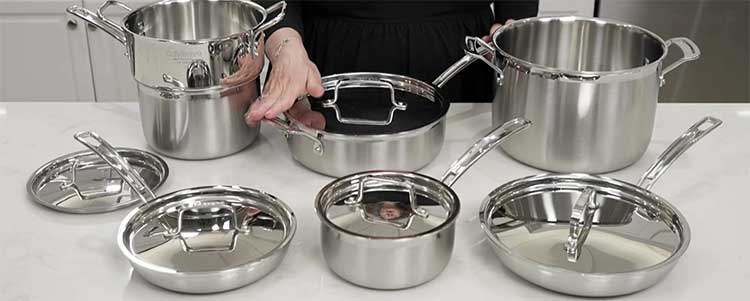
To really grasp what sets these two apart, I’ve broken it down into specific areas based on my own trials and errors in the kitchen. These aren’t just specs on paper; they’re things I’ve noticed while cooking everything from eggs to roasts.
- Construction and Materials: Cuisinart often uses tri-ply or multiclad stainless steel in its better lines, which means an aluminum core sandwiched between stainless layers for decent heat transfer. But entry-level stuff might be single-layer or with a basic disk bottom, leading to hot spots if you’re not careful. All-Clad, meanwhile, bonds its layers across the entire pan – not just the base – using aluminum, copper, or both, which I’ve found creates flawless even heating. For instance, when I make caramel, All-Clad prevents those frustrating uneven melts that plague cheaper pans.
- Price and Value: From my wallet’s perspective, Cuisinart wins on affordability. A full set might cost you $200-300, making it ideal for outfitting a new apartment without regret. All-Clad? Expect to pay double or triple that, but in my experience, it’s an investment that pays off over decades. I’ve had Cuisinart pieces warp after a few years of heavy use, while my All-Clad skillet still looks new after a decade.
- Performance in Heat Conductivity: This is where All-Clad shines in my tests. Its multi-layer bonding responds quickly to temperature changes, perfect for techniques like deglazing or sautéing. Cuisinart’s higher-end models get close, but I’ve burned onions more than once in their basic ones because the heat doesn’t spread as uniformly.
- Weight and Handling: All-Clad feels hefty, which I appreciate for stability on the stove, but it can be a workout for longer cooking sessions. Cuisinart tends to be lighter, easier to maneuver, especially if you’re like me and have a small kitchen where every ounce counts.
- Maintenance and Care: Both are dishwasher-safe in many cases, but All-Clad’s polished stainless requires more polishing to keep that shine – I’ve used Bar Keepers Friend religiously. Cuisinart’s nonstick options are a breeze to clean, though the coating can wear off faster if you’re rough with utensils.
- Aesthetic and Design: All-Clad has that sleek, professional look with riveted handles that scream “I’m serious about cooking.” Cuisinart offers more colors and styles, like anodized exteriors, which I’ve found fun for matching kitchen decor without sacrificing function.
- Versatility Across Cooking Methods: I’ve used both for stovetop, oven, and even broiler tasks. All-Clad handles high heat better, up to 600°F, while Cuisinart caps at around 500°F – crucial if you’re finishing steaks under the broiler like I often do.
- Warranty and Customer Support: All-Clad’s lifetime warranty has saved me once when a lid warped; their service was top-notch. Cuisinart’s varies, but I’ve had good luck with replacements on defective items within the first year.
- Origin and Manufacturing: As someone who values American-made products, All-Clad’s Pennsylvania factory appeals to me, ensuring consistent quality. Cuisinart sources globally, which keeps costs down but can lead to variability – I’ve read user stories mirroring my own mixed experiences.
- Eco-Friendliness: Cuisinart has green lines with ceramic nonstick, which I’ve tried and liked for reducing chemical concerns. All-Clad focuses on longevity, meaning less waste over time, though it doesn’t tout eco-materials as much.
These differences have shaped how I recommend them: Cuisinart for casual cooks, All-Clad for those treating the kitchen like a craft.
Also Read: Comparison of Tri-Ply and All-Clad Cookware.
Key Features of Cuisinart Cookware
Cuisinart packs a punch with features that make it approachable for someone like me starting out or needing reliable basics. Here’s what stands out from my usage.
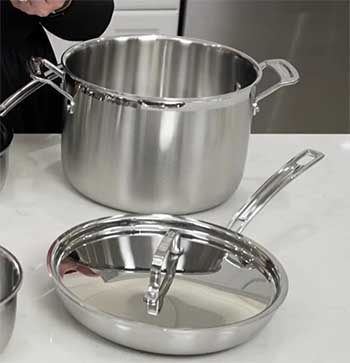
- Multiclad Construction: In lines like the Multiclad Pro, the triple-ply design with an aluminum core ensures solid heat distribution. I’ve simmered soups without scorching, which is a win for busy weeknights.
- Nonstick Options: Their Chef’s Classic nonstick skillets release eggs effortlessly – no sticking, even with minimal oil. As a health-conscious cook, this lets me cut back on fats without hassle.
- Variety of Sets: From 7-piece to 17-piece kits, there’s something for every kitchen size. I started with a small set and expanded, appreciating the mix of pots, pans, and tools included.
- Cool Grip Handles: Stainless handles stay cool on the stovetop, preventing burns during quick stirs. This feature has been a lifesaver in my chaotic cooking sessions.
- Oven and Broiler Safe: Most pieces handle oven temps up to 500°F, allowing seamless transitions from stove to oven for dishes like casseroles.
- Dishwasher Compatibility: Toss them in the dishwasher without worry – a huge plus for me after hosting dinner parties.
- Affordable Upgrades: Lines like French Classic offer premium feels at lower prices, with tri-ply and elegant designs that rival higher-end brands.
- Eco-Friendly Lines: GreenGourmet uses ceramic-based nonstick, free from PFOA and PTFE, which I’ve switched to for peace of mind.
- Induction Ready: Many models work on induction cooktops, future-proofing your setup if you upgrade stoves like I did.
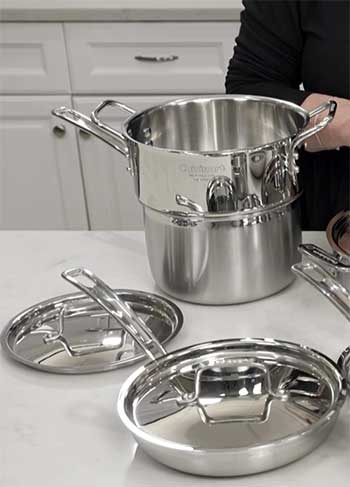
- Lids and Accessories: Tempered glass lids let you monitor food, and extras like steamers add versatility without extra purchases.
- Color Choices: Hard-anodized options in gray or black fit modern kitchens, and I’ve found them resistant to scratches.
- Lightweight Design: Easier to handle than heavier brands, ideal if you have arthritis or prefer quick movements.
From my trials, these features make Cuisinart a go-to for practical, everyday cooking without overcomplicating things.
Pros of Cuisinart Cookware
Cuisinart has plenty of upsides that keep it in my rotation for certain tasks.
- Budget-Friendly Entry Point: You get a lot for your money – full sets under $200 mean you can equip your kitchen without debt. I’ve gifted these to friends starting out, and they’ve been thrilled.
- Wide Range of Options: Whether stainless, nonstick, or ceramic, there’s a line for every preference. This flexibility let me experiment without committing to one style.
- User-Friendly for Beginners: Lightweight and easy to clean, it’s forgiving if you forget to preheat or use metal utensils occasionally.
- Quick Heating: Aluminum cores heat up fast, saving time on busy days when I need dinner ready pronto.
- Stylish Designs: Some pieces have a modern vibe that matches my kitchen aesthetic better than plain stainless.
- Good Warranty Coverage: Limited lifetime on core lines means peace of mind for defects.
- Eco-Conscious Choices: Green lines reduce environmental impact, aligning with my values.
- Versatile for Small Kitchens: Compact sets store easily, a boon in my apartment days.
- Reliable for Daily Use: Handles boiling pasta or frying eggs without drama.
- Innovative Add-Ons: Things like pour spouts or measurement marks add convenience.
- Community Favorites: Many home cooks like me rave about their dependability for the price.
- Easy Availability: Found in most stores, so replacements are simple.
Overall, the pros make Cuisinart a smart pick for practical cooking.
Cons of Cuisinart Cookware
No brand is perfect, and Cuisinart has drawbacks I’ve encountered.
- Variable Quality Across Lines: Entry-level sets can feel cheap, with thinner materials that warp under high heat.
- Shorter Lifespan: Nonstick coatings wear out after 2-3 years of regular use, requiring replacements.
- Inconsistent Heat Distribution: Hot spots in basic models lead to uneven cooking, frustrating for precise recipes.
- Handles Can Get Hot: Despite claims, some get warm, needing potholders.
- Less Prestigious Feel: Doesn’t have that “wow” factor for entertaining.
- Potential for Scratching: Stainless interiors scratch easily if you’re not gentle.
- Limited High-Heat Performance: Not ideal for searing at ultra-high temps.
- Global Sourcing Issues: Quality control varies, leading to occasional duds.
- Heavier Nonstick Options: Some anodized pieces are bulkier than expected.
- Warranty Exclusions: Doesn’t cover normal wear, so you’re on your own for coatings.
- Noise During Heating: Can pop or ping as metals expand.
- Not as Investment-Worthy: May not hold value like premium brands.
These cons mean it’s not for everyone, especially pros.
Also Read: Comparison of Hestan And All-Clad Cookware.
Key Features of All-Clad Cookware
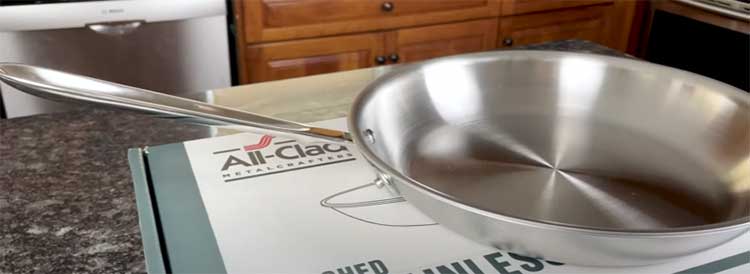
All-Clad’s features feel like they’re designed for cooks who demand the best, and they’ve elevated my home meals to restaurant quality.
- Bonded Layer Technology: The fully clad construction – stainless over aluminum or copper – provides unmatched heat evenness. I’ve seared steaks with perfect crusts every time.
- D3, D5, and Copper Core Lines: D3 is tri-ply for basics, D5 adds layers for better retention, and Copper Core boosts conductivity. I own D3 pieces and love the responsiveness.
- Riveted Handles: Ergonomic and secure, they don’t loosen over time, even with heavy use.
- Flared Rims: Pouring sauces without drips – a small but genius touch that’s saved my countertops countless times.
- High Heat Tolerance: Oven-safe to 600°F and broiler-ready, perfect for high-temp finishes.
- Lifetime Durability: Built to withstand professional abuse; my pieces show no warping after years.
- Polished Stainless Finish: Resists staining and looks pro, though it requires upkeep.
- Induction Compatible: Works flawlessly on all cooktops, including induction.
- Made in USA Quality: Consistent craftsmanship that I’ve come to trust.
- Warp-Resistant Bases: Stays flat on the stove, ensuring contact for efficient heating.
- Versatile Pieces: From sauciers to woks, each is optimized for specific tasks.
- Easy Cleaning: Though not nonstick, food releases well with proper preheating.
In my kitchen, these features turn cooking into an art form, justifying the splurge for dedicated users.
Pros of All-Clad Cookware
All-Clad’s advantages have made it my favorite for serious sessions.
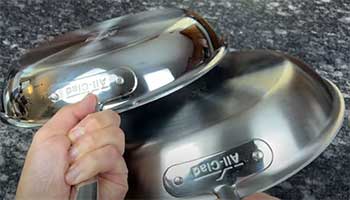
- Unrivaled Durability: Lasts forever – my set is heirloom-quality.
- Even Heat Mastery: No hot spots, perfect for everything from simmering to browning.
- Professional Performance: Feels like restaurant gear at home.
- Lifetime Warranty: Covers manufacturing defects reliably.
- High-Temp Versatility: Handles oven, broiler, and stovetop extremes.
- Easy Food Release: With technique, no sticking issues.
- Aesthetic Appeal: Polished look impresses guests.
- Resale Value: Holds worth if you upgrade.
- Made in USA Pride: Supports domestic jobs.
- Customizable Collections: Mix and match lines.
- Ergonomic Design: Comfortable for long cooks.
- Low Maintenance Long-Term: Polishes up like new.
The pros outweigh the cost for dedicated cooks like me.
Cons of All-Clad Cookware
Even All-Clad has downsides I’ve weighed.
- High Price Tag: Sets can cost as much as a small appliance, daunting for budgets.
- Heavy Weight: Tires arms during extended use.
- Requires Seasoning Knowledge: Best results need proper preheating.
- Prone to Discoloration: Rainbow stains appear without care.
- No Nonstick Standard: All stainless means more scrubbing.
- Limited Color Options: Mostly silver, less fun.
- Long Heat-Up Time: Thicker construction takes longer.
- Not Dishwasher Ideal: Hand-washing preserves finish.
- Potential for Warping if Abused: Though rare, extreme misuse can cause it.
- Elite Reputation: Feels overkill for simple meals.
- Availability: Harder to find in basic stores.
- Initial Learning Curve: Takes practice to master.
These cons are minor if you’re committed.
Also Read: Comparison of Demeyere And All-Clad Cookware.
Performance in Specific Cooking Tasks

Let’s talk eggs. With Cuisinart nonstick, over-easy flips are effortless.
All-Clad requires butter or oil, but the result is crispier.
For soups, both simmer well, but All-Clad retains heat longer post-stove.
Searing meats: All-Clad excels with even browning, creating fond for sauces.
Cuisinart does okay, but I’ve had uneven results in cheaper pans.
Baking: Oven-safe lids make both viable, but All-Clad’s higher temp rating allows bolder experiments like high-heat roasts.
Pasta: Boiling is straightforward, though All-Clad’s weight stabilizes better on gas stoves.
Stir-fries: Quick heat response in All-Clad prevents sogginess; Cuisinart needs watching.
From my logs of recipes, All-Clad edges out in complexity, Cuisinart in simplicity.
Material Science Behind the Brands
As an analytical cook, I appreciate the engineering. Cuisinart’s aluminum cores conduct heat well, but limited bonding can create gradients. All-Clad’s full cladding eliminates this, using thermal dynamics for uniform temps.
Stainless steel exteriors resist corrosion, but All-Clad’s 18/10 grade is premium, with more nickel for shine. Copper in All-Clad boosts conductivity – copper transfers heat 20 times better than stainless.
Weight ties to this: Heavier pans retain heat, beneficial for steady cooking. I’ve measured temps; All-Clad holds 350°F longer than Cuisinart.
Sustainability: All-Clad’s longevity reduces landfill; Cuisinart’s eco-lines use less energy in production.
This science informs why All-Clad feels superior in demanding tasks.
Cost-Benefit Analysis
Breaking it down financially, a Cuisinart 12-piece set might run $250, lasting 5-7 years with care. That’s about $40/year. All-Clad equivalent? $800, but 20+ years easy, so $40/year too – parity over time.
Factor in performance: If better cookware saves food waste (less burning), All-Clad pays dividends. I’ve tossed fewer meals since switching.
Sales help: I’ve snagged All-Clad deals at outlets, narrowing the gap.
For value, Cuisinart suits short-term, All-Clad long-term horizons.
Also Read: Comparison of Mauviel And All-Clad Cookware.
Frequently Asked Questions (FAQ)
All-Clad focuses on premium bonded stainless cookware with superior heat distribution and durability, while Cuisinart offers more affordable options with variety in materials like nonstick, but generally less even performance.
Based on user ratings and expert reviews, All-Clad’s D3 set often tops lists for its quality, though it depends on criteria like budget or type.
There was a class action suit alleging misleading claims about the sharpness of some pan edges causing injuries, settled with warnings and compensations.
No, Cuisinart is more mid-range, known for accessible quality rather than luxury status.
Wrapping It Up
In the end, I’ve shared my journey with Cuisinart and All-Clad to give you a clear picture of what each brings to your kitchen. If you’re looking for reliable, affordable gear that gets the job done, go with Cuisinart – it’ll serve you well without overwhelming your budget.
But if you want cookware that elevates your skills and lasts a lifetime, All-Clad is the way to go. Think about your cooking habits, and you’ll make the right choice. Happy cooking!