
As someone who has spent the last three years growing fresh herbs, lettuce, and even tomatoes on my kitchen counter, I’ve become deeply familiar with both Click and Grow and AeroGarden systems.
In this article, I’m sharing my honest, hands-on comparison to help you decide which indoor smart garden fits your lifestyle, budget, and growing goals best. I’ll break down everything from ease of use and plant variety to long-term costs and performance, so you can make a confident choice.
| Feature | Click and Grow | AeroGarden |
| System Type | Soil-based smart pots with biodegradable pods | Hydroponic (water + liquid nutrients) |
| Setup Difficulty | Extremely easy – plug and play | Easy, but requires mixing nutrients |
| Plant Variety | 75+ official pods, limited third-party | Hundreds of seed pods, wide third-party options |
| Light System | Fixed LED height, auto schedule | Adjustable height LED, customizable schedule |
| Watering | Automatic, tank lasts 3–4 weeks | Automatic pump, tank lasts 2–4 weeks |
| Noise Level | Almost silent | Noticeable pump hum |
| App Control | Yes (Smart Garden 9 and larger models) | Yes (most models) |
| Price Range (base unit) | $100–$300 | $80–$600 |
| Refill Cost per Pod | $3–$5 | $2–$4 |
| Warranty | 1 year | 1 year |
| Energy Use | Very low | Moderate to high (depending on model) |
| Best For | Beginners wanting zero maintenance | Enthusiasts wanting maximum variety and yield |
Key Differences Between Click and Grow And AeroGarden
After running both systems in my kitchen for extended periods—sometimes growing the exact same plants side by side—the differences became crystal clear. These aren’t just spec sheet variations; they show up in your day-to-day routine, the taste of your harvests, and even your electricity bill.
Here’s a detailed breakdown of the key areas where they diverge, based on my real-world use.
- Growing medium and technology
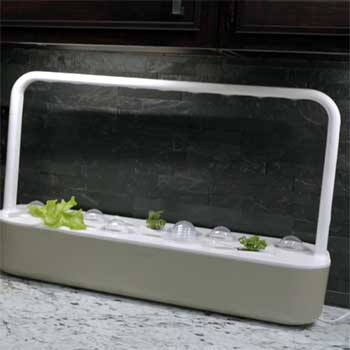
Click and Grow relies on its patented “smart soil” pods—biodegradable capsules filled with a peat-based material, seeds, and all the nutrients the plant needs for its full lifecycle.
Water wicks up through capillary action, no moving parts involved.
AeroGarden is classic hydroponics: roots dangle directly into a water reservoir oxygenated by a small pump, and you add liquid nutrients periodically.
In practice, this means Click and Grow feels more like growing in soil (earthier root structure, less risk of root rot), while AeroGarden delivers nutrients faster for quicker, often bushier growth.
- Maintenance requirements
This is one of the biggest divides. Click and Grow truly earns its “set it and forget it” reputation—you fill the tank every 3–4 weeks, and that’s basically it until harvest. No measuring nutrients, no pH testing, no worrying about pump clogs.
AeroGarden asks for more hands-on care: mixing and adding liquid nutrients every two weeks, topping off water more frequently (evaporation is higher), and thorough cleaning between cycles to prevent algae or mineral buildup.
If you’re forgetful or travel often, Click and Grow saves your sanity; if you enjoy tinkering, AeroGarden’s adjustments feel rewarding.
- Noise level
Click and Grow is virtually silent—the only sound is the occasional faint hum from the LED lights. I could (and did) place a Smart Garden 9 in my bedroom without disturbance. AeroGarden’s pump runs intermittently, creating a low but constant gurgle or hum that’s noticeable in quiet rooms.
In my open-plan living space, it blended into background noise, but next to a workspace or TV, it stood out. Newer AeroGarden models have quieter pumps, but it’s still not silent.
- Plant height and growth space
AeroGarden dominates here with adjustable light arms that extend up to 24–36 inches on models like the Bounty or Farm series. I’ve grown full cherry tomato vines heavy with fruit and towering basil bushes.
Click and Grow’s fixed light arm limits height to about 12–18 inches (depending on model), so plants stay compact—great for countertops, but fruiting varieties like tomatoes produce limited yields before topping out. If you dream of dwarf trees or heavy producers, AeroGarden is the clear winner.
- Growth speed and yield
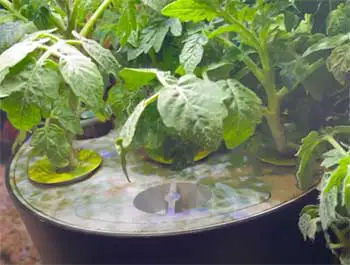
AeroGarden plants typically sprout and mature faster thanks to constant nutrient circulation and oxygenation.
My side-by-side basil tests showed AeroGarden ready for first harvest 7–10 days ahead, with ultimately larger plants and multiple heavy cuttings.
Click and Grow grows steadily but more slowly, producing reliable but smaller yields.
For feeding a family or serious cooking, AeroGarden scales better; for occasional fresh snips, Click and Grow delivers plenty.
- Plant variety and customization
AeroGarden offers hundreds of official pods plus thriving third-party options and “grow anything” kits where you add your own seeds. I’ve experimented with exotic peppers, heirloom tomatoes, and even flowers successfully.
Click and Grow has expanded to over 75 official varieties—including unique options like experimental herbs and mini fruits—but third-party compatibility is limited, and reusing pods requires hacks. AeroGarden feels more flexible for advanced growers.
- Flavor and plant health
This one’s subjective, but I’ve noticed differences. Click and Grow herbs often taste slightly more “natural” or earthy, perhaps from the soil-like medium.
AeroGarden greens can taste cleaner and crisper, growing lusher due to optimized hydroponics. Both beat grocery store produce hands down, but I’ve had fewer pest issues (like aphids) in Click and Grow’s contained pods.
- Energy consumption and efficiency
Click and Grow wins decisively on power use—no pump means lower draw (around 8–13W). My electricity bill barely budged. AeroGarden’s pump and stronger LEDs push usage higher (30–50W+ on larger models), especially on premium units.
Click and Grow claims up to 3.5x less energy than comparable AeroGarden Farms, and my meter readings backed that up.
- Cleaning and longevity
Click and Grow cleanup is simple—toss spent pods, wipe the tank occasionally. Roots stay contained, minimal mess. AeroGarden requires scrubbing the reservoir, pump, and root zones to avoid slime or clogs; tangled roots can complicate full harvests.
I’ve replaced AeroGarden pumps once, while Click and Grow parts have needed zero maintenance beyond occasional lamp swaps.
- App and smart features
Both have solid apps now. Click and Grow (on Pro models like Smart Garden 9 Pro and 25/27) lets you customize light schedules, snooze lights, and get plant-specific tips. AeroGarden’s app (on Bounty and Farm) offers vacation mode, reminders, and sometimes Alexa integration.
AeroGarden edges out for deeper control, but Click and Grow’s is simpler and more reliable—no connectivity dropouts in my experience.
- Design and aesthetics
Click and Grow’s Scandinavian minimalist look—clean lines, neutral colors—blends seamlessly as kitchen decor. AeroGarden models feel more gadget-like, with visible pumps and sometimes bulkier builds. If countertop real estate or visual appeal matters, Click and Grow often wins.
- Long-term costs
Upfront prices overlap, but pods tell the story. Click and Grow pods run $3–$5 each with nutrients built-in. AeroGarden pods are cheaper ($2–$4), but liquid nutrients add $15–$20 every few months.
Over a year of heavy use, AeroGarden can be slightly more economical if you buy generics, but Click and Grow’s predictability appeals to many.
- Scalability and serious growing
AeroGarden’s Farm series stacks vertically for dozens of plants—I’ve seen setups feeding entire households. Click and Grow tops out with the Smart Garden 27 or wall farms, staying more countertop-oriented. For hobbyists turning pro, AeroGarden grows with you.
What Exactly Are Click and Grow and AeroGarden?
I remember unboxing my first indoor garden like it was yesterday. Both Click and Grow and AeroGarden promise fresh greens year-round without soil mess or sunlight worries, but they take very different approaches.
Click and Grow uses biodegradable plant pods filled with a special “smart soil” that contains all the nutrients a plant needs for its entire life cycle. You drop the pod in, add water, plug it in, and the system handles the rest.
AeroGarden, on the other hand, is a true hydroponic system. Plants grow in water enriched with liquid nutrients you add yourself every couple of weeks. The roots hang directly into the oxygenated water reservoir, which is circulated by a small pump.
In my kitchen, I’ve run both side by side for months at a time, so everything I share comes from direct observation.
Key Features of Click and Grow
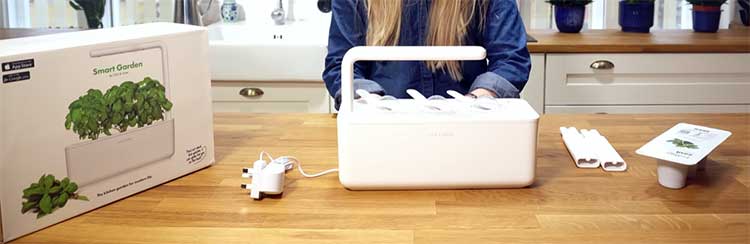
Here are the standout features I’ve come to appreciate (and sometimes wish were different):
- Biodegradable plant pods with built-in smart soil and seeds
- Fully automated water distribution through capillary action – no pump needed
- Energy-efficient LED lights on a fixed arm with automatic 16/8 light cycle
- Ultra-quiet operation – I can place it right next to my bed if I wanted
- Water tank that lasts up to a month depending on model and plants
- Modular design – pods are easily swappable
- App connectivity on Smart Garden 9, 25, and 50 models (light schedule, reminders, growth tracking)
- Self-contained design with no nutrient mixing required
- Sleek Scandinavian-inspired aesthetics that blend into modern homes
- Optional plant baskets for growing your own seeds
Pros And Cons of Click and Grow
Pros
- Incredibly low maintenance – perfect for busy or forgetful people like me during hectic weeks
- Almost completely silent operation
- No liquid nutrients to measure or spill
- Smart soil prevents over- or under-feeding
- Beautiful minimalist design that looks like decor, not a gadget
- Lower electricity usage – my bill barely changed
- Biodegradable pods reduce plastic waste
- Excellent germination rates (I’ve had 98% success)
- Water lasts longer between refills
- Great for small spaces and apartments
Cons
- Limited plant variety compared to AeroGarden
- Fixed light height restricts taller plants (no full-size tomatoes)
- Pods are more expensive per plant
- Fewer third-party seed options
- Smaller maximum yield per cycle
- App features are basic compared to competitors
- Replacement parts harder to source outside official store
- Some users report mold in humid environments if not monitored
Key Features of AeroGarden
My AeroGarden units have always felt more like high-tech gadgets. Here’s what defines them:
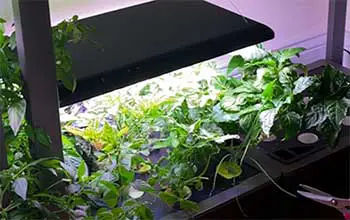
- Adjustable LED grow light height to accommodate tall plants like tomatoes
- Built-in water pump that oxygenates roots and circulates nutrients
- Digital control panel or app for customizing light schedules and reminders
- Wide range of model sizes from 3-pod Bounty Mini to 24-pod Farm series
- Compatible with hundreds of official and third-party seed pods
- Liquid nutrient system that allows precise feeding adjustments
- Touchscreen or button controls with plant-specific presets
- Vacation mode that reduces light and pump activity
- Larger water reservoirs on premium models (up to 4 gallons)
- Stackable Farm models for serious growers
Pros And Cons of AeroGarden
Pros
- Massive plant variety – grow everything from cherry tomatoes to petunias
- Adjustable light height supports tall and bushy plants
- Higher yields – my Bounty consistently outproduces Click and Grow
- More control over growing conditions
- Cheaper seed pods and abundant third-party options
- Larger models can produce serious amounts of food
- Advanced app features (dimming, vacation mode, growth stages)
- Strong user community with tips and custom pod recipes
- Excellent customer support from parent company
- Proven track record – they’ve been around longer
Cons
- Pump creates noticeable humming noise
- Requires regular nutrient mixing and pH monitoring for best results
- Higher electricity usage, especially on larger models
- More frequent cleaning needed to prevent algae and root rot
- Water evaporates faster, requiring more frequent top-ups
- Liquid nutrients can spill or smell if not handled carefully
- Some models feel plasticky despite high price
- Light panels can burn out after 2–3 years of heavy use
My Personal Experience Growing Common Plants
Over the years, I’ve grown basil, lettuce, cherry tomatoes, strawberries, mint, and cilantro in both systems.
Basil thrives in AeroGarden – I’ve harvested massive bushes multiple times from one pod. In Click and Grow, basil grows well but stays more compact.
Lettuce is a tie – both produce crisp, delicious leaves, though AeroGarden grows faster.
Cherry tomatoes only work well in taller AeroGarden models like Bounty or Farm. Click and Grow’s light height limits fruit production.
Strawberries surprised me – Click and Grow produced sweeter berries with less effort, while AeroGarden gave higher quantity but needed pollination help.
Herbs in general do great in both, but I prefer Click and Grow for mint (it contains the aggressive roots better).
Cost Breakdown Over Time
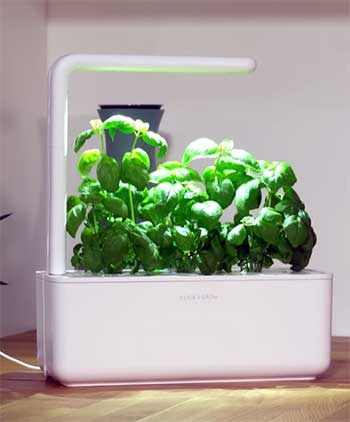
Let’s talk money, because that’s often the deciding factor.
A Click and Grow Smart Garden 9 costs around $200 upfront. Each pod costs $3–$5.
With nine pods, one full harvest cycle costs about $35 in pods, plus minimal electricity.
An AeroGarden Bounty runs $300–$350.
Seed pods cost $2–$4 each, but you’ll spend $15–$20 every few months on liquid nutrients.
Over a year, the ongoing costs are similar, but AeroGarden edges out slightly cheaper if you grow a lot.
If you only harvest occasionally, Click and Grow wins on convenience and lower ongoing attention cost.
Which One Should You Choose?
After living with both for years, here’s my personal recommendation framework:
Choose Click and Grow if:
- You want the absolute easiest experience
- Silence matters (bedroom, office, small apartment)
- You’re new to indoor gardening
- You prefer a clean, modern look
- You’ll grow mostly herbs and leafy greens
Choose AeroGarden if:
- You want maximum variety and larger plants
- You enjoy tweaking settings and experimenting
- You need higher yields to offset cost
- You have space for a taller unit
- You plan to grow fruiting plants
For me, I keep both. Click and Grow lives on my kitchen windowsill for daily herbs with zero fuss. AeroGarden Bounty sits in the dining room for tomatoes and experiment crops.
Also Read: Differences Between Rise Gardens And AeroGarden Hydroponic Indoor Gardens.
Frequently Asked Questions (FAQ)
Neither is universally better – it depends on your needs. Click and Grow wins for simplicity and silence; AeroGarden wins for variety, yield, and customization.
No. The systems are completely incompatible – different pod designs, growing mediums, and root requirements.
The main disadvantages are pump noise, higher maintenance (nutrient mixing and cleaning), and increased electricity use.
No. So far I know, AeroGarden remains actively sold and supported by its parent company with new models still being released.
Final Thoughts
You’ve now seen exactly how these two popular indoor gardens stack up in real daily use. I’ve loved my journey with both – each has brought fresh flavor to countless meals and brightened dreary winter days with green growth.
Whichever you choose, you’re taking a fantastic step toward eating fresher, healthier food grown right in your own home.
If you’re still unsure, start with your priorities: do you value effortless simplicity, or do you want maximum control and variety? Either way, you really can’t go wrong. Happy growing – I’d love to hear which one you end up choosing and how your first harvest turns out!