
As someone who’s spent a lot of time researching furniture options for my own home, I decided to look closely at Burrow, a brand that’s gained attention for its modular designs and direct-to-consumer model.
I’ve read through countless user stories and reviews to understand what’s really going on behind the sleek marketing. The main point of this article is to break down the common complaints about Burrow furniture from a user’s viewpoint, helping you figure out if it’s worth your money or if you should look elsewhere.
I’ll share what I’ve learned in a straightforward way, focusing on real experiences while highlighting features like their customizable sections, built-in USB ports, and stain-resistant fabrics that sound great on paper but don’t always hold up in practice.
Complaints Against Burrow Furniture
Right after that intro, here’s a brief list of the main problems that keep coming up:
- Delivery delays and shipping errors
- Poor customer service response times
- Quality and durability shortcomings
- Assembly frustrations
- Comfort and design limitations
- Return and refund hurdles
- Fabric and material inconsistencies
Delivery Delays and Shipping Errors
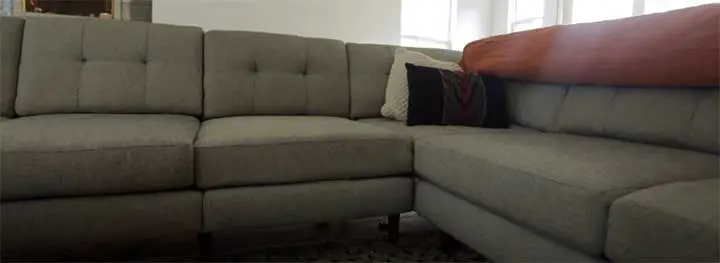
I remember when I first considered buying a Burrow sofa, the promise of quick shipping was a big draw— their site often mentions estimates like two to five days for some items or a few weeks for others. But from what I’ve gathered, that’s not always the reality.
Many people report waiting months instead of weeks, with orders stretched out due to backlogs or inventory issues. For instance, one user ordered a couch expecting it in seven to nine weeks, only to face repeated delays blamed on staff shortages or supply problems.
It’s frustrating because you pay upfront, and then you’re left checking your email every day for updates that never come.
Shipping errors add to the mess. Packages arrive incomplete, like a sectional without the arms or an ottoman missing its legs. I’ve seen accounts where FedEx drops heavy boxes at the wrong spot, such as a mail room instead of your door, forcing you to haul them yourself.
And if something’s wrong, like the wrong color fabric showing up—say, blue instead of gray— you’re back to square one, contacting support for fixes that take even more time. These modular pieces, which are a key feature allowing you to rearrange your setup easily, become a headache when parts don’t match or arrive damaged.
In my analysis, this seems tied to their supply chain, where global manufacturing partners sometimes lead to mix-ups. If you’re in a rush to furnish a new place, this could turn a simple purchase into a drawn-out ordeal.
Poor Customer Service Response Times
One thing that stands out about Burrow is how they position themselves as user-friendly, with features like easy-to-clean fabrics and no-tool assembly. But when things go wrong, getting help feels anything but easy.
There’s no phone number to call, which I find odd for a company selling big-ticket items. Everything’s done through email or chat, and responses can take days—sometimes two to five, or even longer during busy periods. I came across a story where someone waited over a week for a reply on a damaged chair, with the item just sitting there unusable.
Escalating issues doesn’t always help either. Users mention reaching out to managers or even the president’s office via LinkedIn, only to get partial fixes like a small credit instead of a full resolution.
For example, if you get the wrong legs for your sofa—brass instead of black—promises to send replacements drag on for months, with excuses about backorders. This lack of immediate support clashes with their modular appeal, where you might need quick advice on configuring pieces or fixing a loose connection.
From an analytical standpoint, it seems their lean operation prioritizes online efficiency over personal touch, but that leaves customers feeling ignored. If you’re someone who values responsive service, this could be a deal-breaker.
Quality and Durability Shortcomings
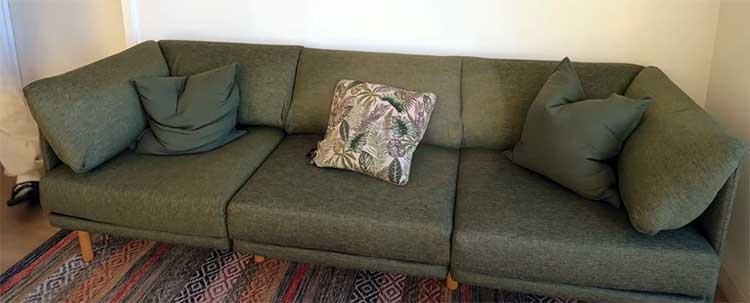
Burrow highlights their furniture’s durability, especially with pet-friendly fabrics that resist stains and odors, and frames made from sustainable wood. On the surface, that sounds solid for everyday use. However, digging into user feedback, quality issues pop up frequently.
Cushions sag after just a year or two, letting you feel the frame underneath, which defeats the purpose of their multi-layer foam design meant for long-term comfort. I’ve noted complaints about hardware failing, like couch legs shearing off due to weak welds or bolts not holding up.
Materials get called out too—particle board and plastic components feel cheap for the price, which often runs over a thousand dollars. One person described their sectional creaking and needing multiple replacements, yet still not lasting.
The ratchet system for adjusting arms kinks easily, and misaligned screws make everything wobbly. Analytically, this points to inconsistencies in manufacturing, even though they claim careful vetting of partners.
If you have kids or pets jumping around, the promised resilience—like those tightly woven fabrics—might not hold up as advertised, leading to repairs or regrets sooner than expected.
Assembly Frustrations
Assembly is marketed as a breeze with Burrow, thanks to their no-tool requirement and modular setup that lets you expand or reconfigure without hassle. They even ship in boxes that fit through tight spaces, which is handy for apartments.
But in practice, it’s not always that simple. Many users say it takes hours, not minutes, with heavy pieces that are tough to maneuver alone. Instructions can be unclear, and parts often don’t align properly—think screws that are off-kilter or brackets that won’t slot in.
I found a review where putting together a media console dragged on for several hours, with damaged parts from repeated attempts. For sofas, connecting sections requires precise handling, and if hardware is askew from the factory, you’re stuck forcing it or waiting for replacements.
This contradicts their user-focused design, where features like built-in chargers should make life easier, not add stress. From my perspective, if you’re not handy or live alone, this could turn excitement into exhaustion, especially when the end result feels unstable.
Comfort and Design Limitations
Comfort is subjective, but Burrow’s sofas are often described as firm, which might appeal if you like structured seating, but not if you want to sink in after a long day.
Their key feature here is the customizable firmness with optional softer cushions, yet many say it’s still not squishy enough for lounging. Back cushions are too soft in contrast, leading to poor support over time.
Design-wise, the modular aspect is great for flexibility—you can add chaises or ottomans as needed—but limitations show up in mismatched colors from swatches or fabrics that look different in person, like grayer than expected.
USB ports are a nice touch for charging devices while relaxing, but if the overall feel is more for show than daily use, it falls short. Analytically, this suggests their focus on aesthetics and modularity overshadows ergonomics, making it better for occasional sitting than all-day family hangs.
Also Read: Comparison of Home Reserve And Burrow Couches.
Return and Refund Hurdles

Returns should be straightforward, especially with Burrow’s 30-day policy, but users run into roadblocks.
There’s often a 10% restocking fee, and you might pay for shipping back, which adds up on heavy items.
One account mentioned disputing charges because refunds are tied to the original payment method, even if that account is closed.
If items arrive damaged, initiating a return involves photos and emails, but responses are slow, and they might push for keeping the product with a partial credit instead. This rigidity clashes with their customer-friendly image, where features like easy disassembly should make returns simpler.
In my view, if you’re unsure about fit or color, the hassle could outweigh the benefits, turning a trial into a commitment.
Fabric and Material Inconsistencies
Burrow touts their fabrics as performance-oriented—stain-resistant, scratch-proof for pets, and chemical-free. That’s a selling point for households with animals or spills. However, inconsistencies abound: fabrics fray quickly without pets, or they snag easily despite claims.
Colors don’t match samples, and some feel low-quality, like cheap upholstery that pills or tears.
One user repaired a rip on a back cushion after light use. Analytically, this variance might stem from different batches or suppliers, undermining trust in their vetting process. If durability is why you’re choosing them, these mismatches could lead to disappointment.
Alternatives To Burrow Furniture
If these issues make you pause, here are four alternatives I’ve looked into, each with a bit of explanation on why they might fit better. I’ve considered factors like pricing, modularity, and user satisfaction to suggest options that address some of Burrow’s common pitfalls.
Article: Known for affordable modern designs with quick shipping and solid wood frames, great if you want style without the wait. Their pieces often arrive in under two weeks, and the durable construction holds up better in daily use compared to some modular brands, making it a reliable pick for budget-conscious shoppers who value straightforward delivery.
Floyd: Focuses on sustainable, modular pieces that assemble easily and hold up well, ideal for eco-conscious buyers seeking longevity. With frames made from Baltic birch and customizable add-ons like chaises, Floyd emphasizes minimal waste and sturdy builds that resist sagging over time, offering a greener alternative without sacrificing flexibility.
Joybird: Offers customizable mid-century styles with better comfort options and responsive service, perfect for those prioritizing personalization. You can choose from hundreds of fabrics and configurations, and their cushions provide a plusher feel with strong support, backed by a one-year return window that eases worries about fit or quality.
Lovesac: Their sactionals are super modular with washable covers, excelling in durability for families or frequent rearrangers. The foam-filled seats maintain shape even with heavy use, and the ability to machine-wash covers makes maintenance simple, providing a more forgiving option for homes with kids or pets where spills and wear are inevitable.
Also Read: Is Burrow Range Sofa Worth It?
Frequently Asked Questions (FAQ)
It has mixed feedback—strong on design but weaker on service and quality consistency. In 2025 reviews, many praise the modularity and stain resistance for small spaces, but ongoing issues with delays and support keep the overall reputation balanced rather than outstanding.
30 days for most items, with possible 10-20% restocking and return shipping fees capped at $250, requiring the product to be in usable condition. Mattresses extend to 100 days, offering a bit more flexibility for those pieces.
Designed in the USA, made with global partners including North America, though some production has shifted to international facilities for efficiency while maintaining quality checks.
They claim pet-friendly fabrics resist scratches, but results vary by user—many with cats or dogs report good performance against claws without tearing, though it’s not completely invincible and depends on the fabric type chosen.
Wrapping Up
Looking back at all this, I think Burrow has some innovative ideas with their modular systems and convenient features, but the complaints highlight areas where they fall short in execution.
If you’re considering them, weigh your needs against these potential pitfalls—maybe test in a showroom if possible. You deserve furniture that enhances your space without the stress, so take your time and choose what fits your life best.
Thanks for reading; I hope this helps you make a smarter decision.