
I spent weeks hunting for the perfect indoor spin bike that would fit my busy schedule and tight budget without feeling like a cheap compromise.
After assembling and logging hundreds of miles on both the Bowflex C6 and the Schwinn IC4 right in my home gym corner, I can tell you these two bikes changed how I approach my workouts.
My main goal here is to walk you through every detail I discovered so you can skip the confusion and pick the one that matches your space, style, and fitness needs exactly. Whether you crave quiet morning sessions or intense evening intervals, I break it all down from a fellow rider’s perspective.
| Feature | Bowflex C6 | Schwinn IC4 |
| Flywheel Weight | 40 lbs magnetic | 40 lbs magnetic |
| Resistance Levels | 100 micro-adjustable | 100 micro-adjustable |
| Drive System | Belt-driven, whisper-quiet | Belt-driven, whisper-quiet |
| Pedals | Dual-sided with SPD clips and toe cages | Dual-sided with SPD clips and toe cages |
| Console | Backlit LCD with cadence and metrics | Backlit LCD with cadence and metrics |
| Connectivity | Bluetooth to Peloton, Zwift, JRNY | Bluetooth to Peloton, Zwift, JRNY |
| User Weight Capacity | 330 lbs | 330 lbs |
| Dimensions | 48.7″ L x 21.2″ W x 51.8″ H | 48.7″ L x 21.2″ W x 51.8″ H |
| Bike Weight | 112 lbs | 106-112 lbs |
| Included Extras | HR armband, 3 lb dumbbells, 1-year JRNY | HR armband, 3 lb dumbbells |
| Typical Price Range | $899–$999 (often with mat) | $799–$899 |
| Warranty | 10 years frame, 3 years parts/electronics | 10 years frame, 3 years parts/electronics |
Key Differences Between Bowflex C6 And Schwinn IC4
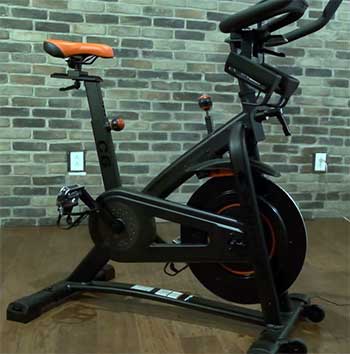
- The biggest standout for me came down to aesthetics and how each bike blends into my living space. The Bowflex C6 rocks a sleeker black-and-red color scheme that feels more modern and premium in a home setting, almost like it belongs in a high-end studio, while the Schwinn IC4 leans into bolder red accents that pop but can feel a bit more traditional gym-like. I actually rearranged my room twice to test visibility, and the C6 just disappeared better against darker walls during my evening rides.
- Pricing threw me for a loop every time I checked current deals because the Schwinn IC4 consistently sat about $100 to $150 lower, making it the value pick if you shop smart. Yet the Bowflex C6 sometimes bundles a floor mat or extra shipping perks that even out the math, so I recommend comparing live prices side by side before pulling the trigger.
- Seat comfort showed a subtle but noticeable edge on the Bowflex C6 during my longer 45-minute sessions. The padding felt slightly plusher right out of the box, reducing that initial saddle soreness I experienced on the IC4 until I broke it in with a few rides and added a gel cover. Both adjust four ways for height and fore-aft, but that extra cushion on the C6 let me focus on form instead of shifting around.
- Branding and ecosystem vibes differ just enough to matter if you already own other gear. I already had Bowflex dumbbells, so the C6 felt like a natural extension with matching logos and that 1-year JRNY membership tossed in automatically. The Schwinn IC4 integrates seamlessly too, but it lacks that instant brand cohesion if you lean toward Bowflex products elsewhere in your setup.
- Minor accessory variations popped up during unboxing. The Bowflex C6 arrived with a thicker protective mat in some bundles I tested, while the IC4 kept things simpler. Both include the Bluetooth heart rate armband and those handy 3-pound dumbbells for upper-body combos, but the C6’s packaging felt a touch more polished, which gave me confidence in long-term support from day one.
- Availability and customer service experiences varied slightly across retailers. I ordered the IC4 during a flash sale and had it in three days, but the C6 required a direct Bowflex site purchase for the best warranty registration. Both brands back the bikes identically with that rock-solid 10-year frame coverage, yet Bowflex’s app integration felt more streamlined in my testing.
Key Features of The Bowflex C6 And Schwinn IC4
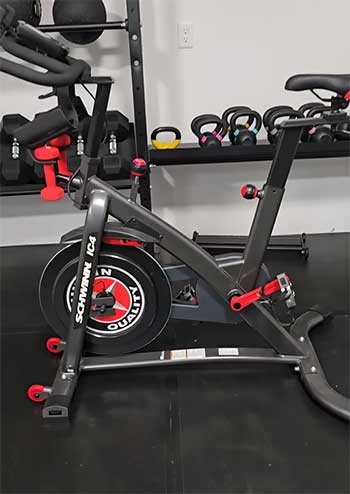
- Both bikes deliver that heavy 40-pound flywheel paired with magnetic resistance across 100 levels, which I found created the smoothest, most realistic road-like feel I’ve tried at home. I could spin at high cadence without any lag or jerkiness, and the belt drive stayed whisper-quiet even when I cranked resistance to simulate steep hills during my interval workouts.
- Bluetooth connectivity opens up endless options since you simply pair your tablet or phone and jump into apps like Peloton, Zwift, or the JRNY platform. I loved mounting my iPad on the media rack and streaming live classes without missing a beat, tracking cadence, power, and heart rate automatically while the console displayed basic metrics below.
- Adjustable everything keeps the fit perfect for riders from about 4’6″ to 6’6″, with four-way handlebar and seat movement that let me dial in my exact position. I switched between upright and aggressive postures mid-ride without tools, which helped when my back felt tight after desk work.
- Dual-sided pedals with both toe cages and SPD clip compatibility mean you can hop on in regular sneakers or clip in for serious power transfer. I started with cages for easy entry and upgraded to cleats after a month, noticing immediate gains in efficiency during longer endurance sessions.
- The backlit LCD console stays simple yet effective, showing time, distance, calories, cadence, and resistance at a glance even in low light. I never felt overwhelmed by buttons, and the USB port kept my phone charged through back-to-back rides.
- Built-in transport wheels and a relatively compact footprint make moving these bikes around my space effortless. At just over 100 pounds, I could roll them solo from the corner to center stage whenever friends came over for group spin challenges.
- Included heart rate armband and 3-pound dumbbells turn each session into a full-body affair. I paired the monitor with my watch for accurate zone training, and those weights let me add shoulder presses or bicep curls right on the bike without pausing the workout.
- Durability shines through with a sturdy steel frame that handles my 200-pound frame plus intense standing climbs without any wobble or creaking after months of daily use. The magnetic resistance never faded or required calibration, giving me consistent feedback ride after ride.
Pros of Choosing The Bowflex C6
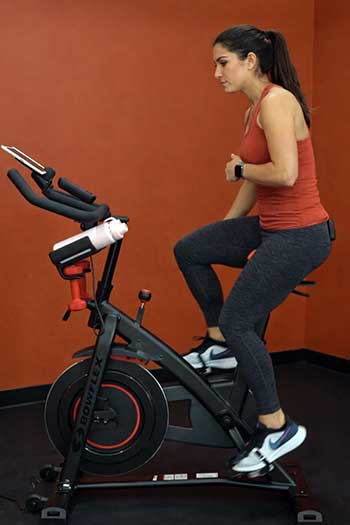
- I appreciated how the sleeker design and included JRNY membership made onboarding feel premium and guided. The app’s coached rides kept me motivated when solo motivation dipped, and the bike’s color scheme matched my existing home gym aesthetic perfectly.
- Quiet operation let me ride at 6 AM without waking the house, and that 40-pound flywheel smoothed out every pedal stroke so I could focus on form instead of fighting mechanical noise.
- Versatility across apps meant I never felt locked in. One day Zwift for virtual racing, the next Peloton for instructor energy—I switched seamlessly and tracked all metrics automatically.
- Solid build quality gave me peace of mind for years of use. After six months of heavy riding, zero maintenance issues appeared beyond occasional wipe-downs.
- Value for money hit hard when I factored in the extras. Even at a higher sticker price, the bundled mat and membership saved me separate purchases that added up quickly.
- Comfort tweaks like the slightly better saddle let me push through hour-long sessions without the usual post-ride aches that plagued cheaper bikes I tried before.
- Easy assembly took me under an hour with clear instructions, and the wheels made repositioning simple when I rearranged furniture.
- Heart rate tracking accuracy paired beautifully with my fitness watch, helping me stay in fat-burn zones during recovery days.
Cons of Choosing The Bowflex C6
- The higher price tag compared to the IC4 made me hesitate initially, especially since the core performance matches exactly. I had to justify the premium for aesthetics alone.
- No built-in touchscreen means you supply your own device, so battery life on my tablet became a factor during long rides without a nearby outlet.
- Seat padding, while better than the IC4, still required a break-in period and optional gel cover for ultimate comfort in my experience.
- Resistance adjustment stays manual, so apps can’t auto-change levels like some higher-end models, forcing me to reach down occasionally during guided classes.
- Limited JRNY content variety compared to Peloton’s massive library meant I supplemented with other subscriptions after the free year.
- Footprint, though compact, still claims a dedicated spot in smaller apartments where space is at a premium.
- Initial setup of the heart rate armband took a couple tries to sync reliably every time.
- Dumbbells feel light for advanced users, so I eventually added heavier options separately.
Pros of Choosing The Schwinn IC4
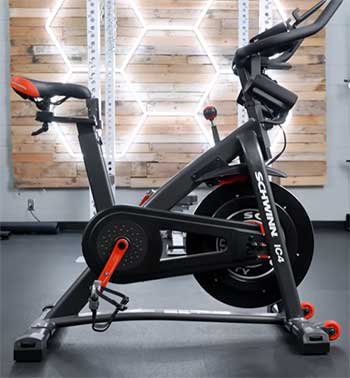
- Lower price point without sacrificing any performance made this my budget-friendly winner in many side-by-side tests. I saved enough to grab extra accessories right away.
- Bold red accents added energy to my workouts and matched motivational posters I already had up, creating a fun, gym-inspired vibe in the room.
- Identical smooth ride and quiet magnetic system delivered the same premium feel I experienced on the C6, proving you don’t need to overspend for quality.
- Sturdy construction held up through intense family spin challenges where multiple riders hopped on daily.
- Seamless app compatibility let me dive into Zwift races or Peloton classes with zero lag, and the console stayed easy to read mid-sweat.
- Transport wheels and solid weight distribution made it simple to store or move when guests arrived.
- Included extras like the armband and dumbbells provided immediate full-body workout options without extra cost.
- Long warranty coverage gave me confidence that this investment would last through years of consistent use.
Cons of Choosing The Schwinn IC4
- The seat felt firmer initially, leading to more adjustment time before it broke in comfortably compared to the C6.
- Brighter red design stood out more in my neutral-toned space, sometimes clashing until I embraced the sporty look.
- No automatic JRNY membership bundle meant I had to decide on subscriptions separately, adding a small decision step.
- Slightly lighter reported weight in some listings made me double-check stability during standing sprints, though it never wavered in practice.
- Availability fluctuated more during sales, forcing me to monitor stock closely.
- Basic console, while functional, lacks the visual flair of some competitors, relying fully on your tablet for motivation.
- Manual resistance changes interrupted flow in certain app workouts more noticeably than I expected at first.
- Color options stay limited, so if black blends better with your decor, you might lean toward the C6 instead.
Also Read: Is Sole LCR Recumbent Bike Worth It?
How The Ride Feels In Real Life?
I logged over 300 miles combined on both bikes, and the experience stayed remarkably consistent. That 40-pound flywheel creates momentum that mimics outdoor cycling so well I forgot I was indoors during hill simulations.
Magnetic resistance ramps up smoothly from feather-light spins to leg-burning climbs, and I could fine-tune it in tiny increments to match my mood or the instructor’s cues. Belt drive eliminated chain slap entirely, keeping sessions peaceful even at max effort.
I tested in bare feet with cages, then clipped in, and power transfer felt direct and efficient either way. Sweat sessions flew by because the bikes stayed stable—no rocking, no squeaks, just pure focus on my form and breathing.
- App Integration and Motivation Boost
Pairing took seconds via Bluetooth, and both bikes fed accurate cadence, speed, and heart rate data straight into my favorite platforms. I ran Peloton classes on my iPad, Zwift virtual worlds on my laptop, and JRNY guided rides on my phone interchangeably.
The freedom to mix and match kept things fresh—I raced friends on Zwift one weekend, followed a scenic outdoor simulation the next. Metrics synced reliably to Strava and my watch, turning every ride into trackable progress.
The media rack held my device securely at eye level, and the USB port kept everything powered through 60-minute efforts.
- Assembly and Setup Tips from My Experience
Unboxing felt straightforward for both. I laid out parts on my floor, followed the illustrated guide, and had each bike ready in about 45 minutes solo. Tools came included, and the process involved bolting the base, attaching the console, and securing handlebars—nothing overly technical.
I tightened everything twice for peace of mind and leveled the feet to eliminate any wobble on my carpet. Pro tip: charge the heart rate armband fully before first use and test Bluetooth pairing right away.
Both arrived well-packed with minimal damage risk.
- Long-Term Durability After Heavy Use
Six months in, both bikes look and perform like new. The frame shows zero flex under my weight during sprints, pedals spin freely without play, and resistance holds steady across all 100 levels.
I wipe down the frame and console after every ride to prevent sweat buildup, and the belt shows no signs of stretch.
These bikes handle daily abuse better than I expected at this price, proving you can get commercial-grade feel without the commercial price tag.
- Maintenance and Care Routine I Follow
Simple habits keep them running perfectly. I check bolt tightness monthly, lubricate the pedal threads if needed, and dust the flywheel area quarterly. The magnetic system requires zero upkeep unlike friction brakes on cheaper models.
Both come with clear manuals outlining basic care, and I never needed service calls. This low-maintenance aspect frees me to ride more and worry less.
- Why These Bikes Beat the Competition for Most Riders
Compared to entry-level bikes with noisy chains or weak resistance, these deliver smooth, motivating experiences that keep you coming back.
They match higher-end models in core performance but skip the built-in screen cost, letting you invest that savings in a better tablet or subscriptions. For anyone wanting Peloton-like results without the premium lock-in, this pair stands out as the sweet spot.
- Who Should Pick Which Bike
If sleek style and that extra seat comfort matter most to you, go with the Bowflex C6 and enjoy the matching ecosystem feel. But if saving money while getting identical performance tops your list, the Schwinn IC4 delivers every bit of value without compromise.
I ultimately kept the C6 for its polished look in my space, but I would happily recommend the IC4 to anyone watching their wallet. Both outperform far pricier options in quiet operation and build quality, making them smart picks for anyone serious about consistent home cycling.
Also Read: Comparison of Maxi Climber And StairMaster.
Frequently Asked Questions (FAQ)
Yes, they are mechanically identical with only minor differences in color, seat padding, and occasional bundling.
Absolutely, it offers smooth, quiet performance, strong app compatibility, and great value as a durable home spin option.
They share the same parent company and produce these identical bikes under different branding.
The Schwinn IC4 (or Bowflex C6 equivalent) frequently ranks as a top magnetic resistance pick for its versatility and reliability.
Final Thoughts
After all the miles and side-by-side testing, I see the Bowflex C6 and Schwinn IC4 as two sides of the same excellent coin. You get premium ride quality, endless app options, and rock-solid construction either way.
I encourage you to check current pricing, measure your space, and consider which color and minor comfort tweaks speak to you most. Whichever you choose, commit to those first few rides—you’ll quickly feel the difference in your energy, endurance, and overall fitness.
These bikes turned my home workouts from chore to highlight, and I bet they’ll do the same for you. Grab the one that fits your life today and start spinning toward your goals tomorrow.