
As someone who has spent countless mornings tweaking my coffee routine, I know how much a good grinder matters. The Baratza Encore has been a staple in home setups for years, but the newer Encore ESP promises better performance, especially for espresso lovers.
In this article, I will compare them head-to-head from my own experience using both, highlighting key features, differences, pros, and cons to help you pick the right one for your daily brew.
| Feature | Baratza Encore | Baratza Encore ESP |
| Burr Type | 40mm conical steel burrs | 40mm conical steel burrs (improved geometry) |
| Grind Settings | 40 stepped settings | 40 macro settings with finer micro-adjustments in espresso range (1-20) |
| Best For | Filter coffee, pour-over, drip, French press | Espresso + all filter methods |
| Grind Speed | 0.8–1.1 g/sec | 1.5–2.4 g/sec (faster overall) |
| Static Reduction | Standard | Improved anti-static design |
| Included Accessories | Grounds bin | Grounds bin + dosing cup |
| Build Material | Plastic housing | Plastic housing with some enhancements |
| Noise Level | Moderately loud | Similar, slightly higher pitch |
| Weight | 7 lbs | 7 lbs |
| Approximate Price Range | Entry-level (more affordable) | Mid-entry (higher than original) |
| Ease of Cleaning | Excellent, tool-free burr access | Excellent, same design with minor improvements |
Key Differences Between The Baratza Encore And Encore ESP
Here’s a deeper breakdown of what sets them apart:
- Grind adjustment mechanism
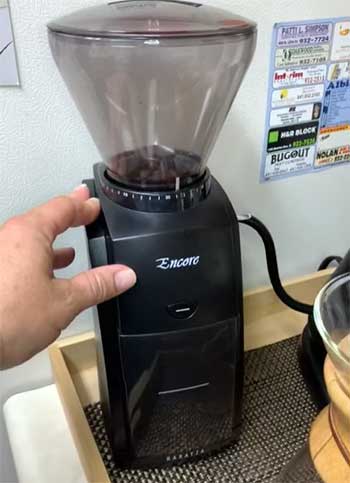
This is the biggest upgrade on the ESP and the one I notice every single time I dial in a new bean.
The original Encore has 40 evenly spaced stepped settings that work great across the board but feel a bit coarse in increments when you’re chasing espresso.
The ESP uses a dual-range system: settings 1-20 are tightly calibrated with high-resolution micro-adjustments (as fine as 20 microns per click in some areas), perfect for nailing espresso consistency, while 21-40 handle filter methods with the same broader steps as the original.
I can make tiny tweaks on the ESP that actually change extraction times predictably, whereas the original often left me stuck between two settings that were either too fast or too slow.
- Espresso performance
The original Encore can technically go fine enough for some espresso machines, but in practice, it’s hit-or-miss—I’d get uneven extraction with channeling or choking depending on the roast. The ESP, however, reliably produces the powdery, uniform fines needed for creamy shots without modification.
With the tighter adjustments and better burr calibration, I pull balanced 25-35 second shots consistently now. If espresso isn’t part of your routine, the original is plenty; but if you ever want to experiment with a home machine, the ESP saves a ton of frustration.
- Burr set and particle uniformity
Both use 40mm conical steel burrs, but they’re not identical. The original comes with the M3 burr set, while the ESP has the upgraded M2 burrs designed specifically for better performance in the fine range.
This translates to fewer boulders and more even particle distribution when grinding for espresso. In filter brewing, I notice slightly cleaner cups from the ESP—less silt in my pour-overs and a touch more clarity with light roasts—but the difference isn’t night-and-day like it is for espresso.
- Grinding speed
The ESP feels noticeably snappier in everyday use. Both are rated similarly on paper (around 1.3-2.2 grams per second depending on setting), but real-world tests show the ESP hitting up to 2.4 grams per second on coarser grinds thanks to internal optimizations.
For a full 18-gram espresso dose, the ESP finishes a few seconds faster, which adds up when you’re grinding multiple shots in the morning. It’s not a huge leap, but it makes the workflow smoother.
- Static and mess reduction
Static was one of my minor gripes with the original Encore—grounds would cling to the chute and bin, especially in dry weather, leaving a light dusting on the counter.
The ESP addresses this with a redesigned chute, pre-installed silicone gasket, and overall better anti-static properties. I get way less cling now, and the grounds fall cleanly into the dosing cup. Cleanup between grinds is genuinely easier.
- Included accessories and workflow
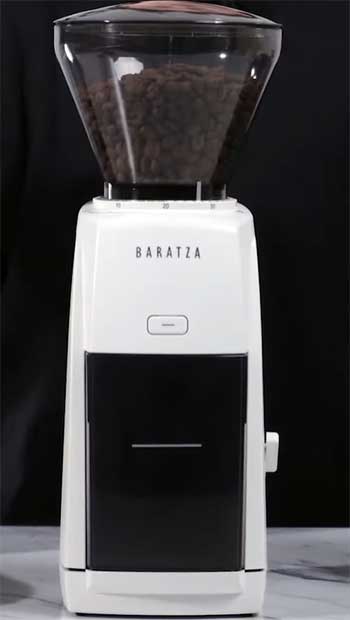
The original ships with just the grounds bin, which works fine for pouring into a drip basket or brewer.
The ESP adds a proper 54mm dosing cup (with a 58mm adapter ring) that sits perfectly under the chute and fits most home portafilters directly.
This makes single-dosing for espresso so much cleaner—no more tapping grounds out of the bin or dealing with transfer mess.
The cup also has a vulcanized rubber base that keeps everything stable.
If you’re grinding straight into a portafilter, this alone makes the ESP feel more professional.
- Build and design refinements
They’re both plastic-heavy and compact, but the ESP has some subtle upgrades like a metal grind adjustment collar for better durability (the original uses more plastic parts there) and a slightly redesigned body that’s a bit slimmer at the back.
The ESP also has a quick-release burr system that makes removing the upper burr carrier even easier for deep cleaning. Both are built to last with Baratza’s legendary repair support, but the ESP’s tweaks make maintenance feel a notch more refined.
- Noise and vibration
They’re pretty similar in volume—both have that characteristic conical burr whir—but the ESP’s rubber stand and minor chassis changes reduce vibration slightly. It still fills the kitchen with sound during a grind, but it doesn’t dance around the counter as much.
- Versatility across brew methods
The original Encore shines brightest for filter coffee and is the go-to recommendation for pour-over, drip, French press, and Aeropress enthusiasts.
The ESP matches it step-for-step in the coarser range (I can’t tell the difference in my V60 cups) while adding true espresso capability. If you brew a mix of methods or think you might get into espresso later, the ESP becomes the clear all-rounder.
- Price and value positioning
The original Encore remains the budget king—it’s often significantly cheaper and delivers outstanding value if you’re staying in the filter world. The ESP commands a premium for its espresso upgrades and accessories, but in my opinion, it’s worth it if you use the extra features.
If espresso isn’t on your radar, the original saves you money without sacrificing much.
My Experience With The Baratza Encore
I started my grinding journey with the original Baratza Encore a few years back. It was my first real upgrade from a blade grinder, and it completely changed how my coffee tasted. The consistency it brought to my pour-overs was immediate—cleaner cups, better extraction, no more muddy French press messes.
What drew me in initially was its simplicity. You load beans into the hopper, twist the dial to your setting, and flip the switch. No fancy screens or timers, just reliable performance day after day.
Key Features of The Baratza Encore
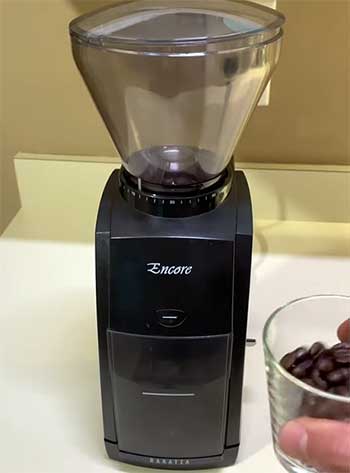
- 40mm conical burrs that crush beans evenly rather than chopping them
- 40 distinct grind settings covering everything from coarse French press to medium drip
- Durable DC motor that runs cool and quiet enough for morning use without waking the house
- 8-ounce bean hopper that holds enough for several days of brewing
- 5-ounce grounds bin that catches everything neatly
- Front pulse button for manual control when you need just a small dose
- Tool-free burr removal that makes deep cleaning straightforward
- Hardened steel components built to last with Baratza’s excellent repair support
I appreciate how the Encore focuses on what matters most: consistent particle size across the medium to coarse range. For anyone brewing primarily with drip machines, V60 pour-overs, or Chemex, it delivers uniform grounds that extract beautifully.
Pros of the Baratza Encore
- Affordable entry into quality burr grinding without breaking the bank
- Exceptional consistency for filter brewing methods I use most often
- Extremely reliable with minimal breakdowns over years of daily use
- Super easy to maintain and clean thanks to the accessible design
- Compact footprint that fits easily on my counter without dominating space
- Proven track record with thousands of home baristas trusting it daily
- Great value retention if you ever decide to upgrade later
- Low heat generation preserving delicate coffee flavors
- Simple operation perfect for anyone new to better coffee
In my kitchen, the Encore became my workhorse. I could grind for a full pot of drip coffee or a single Aeropress dose with equal ease. The motor’s torque handled light and dark roasts without stalling, and the results in the cup were always balanced.
Cons of the Baratza Encore
- Limited performance in true espresso range leading to choking machines
- Noticeable static causing grounds to cling and make minor messes
- Slower grind times compared to newer models, especially for larger batches
- Plastic construction that feels basic though it holds up well
- Stepped adjustments that sometimes lack precision for fine-tuning
- No included dosing cup forcing you to grind directly into bins or portafilters
- Higher retention in coarser settings requiring occasional purging
- Can produce some fines that muddy lighter roasts in certain brews
The biggest limitation I hit was when I started experimenting with espresso. Even at the finest setting, the grinds weren’t uniform enough for consistent shots. I would get some fast sinkers mixed with boulders, making dialing in frustrating.
Introducing The Baratza Encore ESP
After hearing about the upgrades, I picked up the Encore ESP last year. Baratza clearly listened to feedback about espresso performance while keeping everything that made the original great. It’s essentially the same grinder but refined where it counts most.
The most noticeable change right away is the dual-range adjustment system. Settings 1-20 focus on espresso with much tighter increments, while 21-40 handle coarser brews like the original.
Key Features of the Baratza Encore ESP
- Enhanced 40mm conical burrs with sharper geometry for better fines control
- Innovative grind adjustment collar offering micro-steps in the espresso zone
- Faster motor calibration reaching up to 2.4 grams per second
- Anti-static technology reducing cling and mess significantly
- Included dosing cup perfect for direct portafilter grinding
- Rubber stand minimizing vibration and protecting counters
- Same 8-ounce hopper capacity with clear markings
- Identical tool-free cleaning access as the original
- Upgraded chute design for smoother grounds flow
- LED indicator for power status
What stands out to me is how the ESP maintains versatility. I still use it for pour-overs and cold brew, but now I can confidently pull espresso shots without constantly fighting the grind.
Pros of the Baratza Encore ESP
- Excellent espresso capability with precise adjustments in the fine range
- Reduced static making workflow much cleaner, especially for single dosing
- Faster grinding speed saving time during busy mornings
- True all-purpose performance handling every brew method I try
- Included dosing cup that fits most portafilters perfectly
- Improved consistency across roast levels from light to dark
- Retains all the repairability and support Baratza is known for
- Better particle distribution reducing channeling in espresso pucks
- Minimal clumping thanks to anti-static improvements
- Still compact and user-friendly for daily routines
Since switching to the ESP for espresso, my shots have become more repeatable. I can make small adjustments and see real differences in extraction time without huge swings in flavor.
Cons of the Baratza Encore ESP
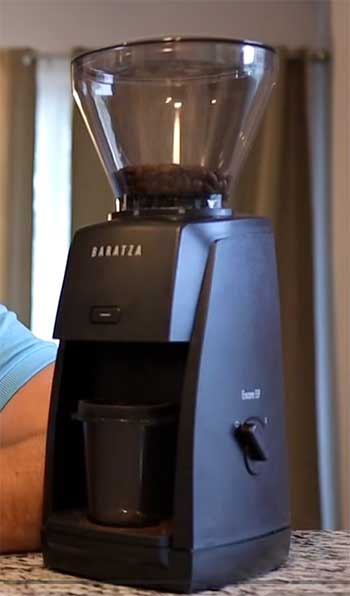
- Higher price point than the original for similar overall build
- Still uses plastic housing that doesn’t feel premium
- Noise level remains prominent, especially at finer settings
- Some retention requiring the same purging habits
- Micro adjustments can feel fiddly until you get used to the system
- Dosing cup is small for larger filter batches
- Occasional minor clumping in very fine espresso grinds
- Not as quiet as higher-end competitors
- Plastic impeller that could be more robust
While the ESP solved my espresso issues, it isn’t perfect.
The noise is still there—it’s a high-pitched whir that fills the kitchen.
And though static is reduced, it’s not eliminated entirely.
- When I Recommend the Original Encore?
If your brewing stays in the filter world—drip, pour-over, Aeropress, French press—the original Encore is hard to beat. I still think it’s one of the best values in home grinding. You get professional-level consistency for non-espresso methods at an accessible price.
Many of my friends who drink mostly drip coffee are perfectly happy with their Encores years later. The simplicity means less to go wrong, and the results in the cup are excellent.
- When the Encore ESP Makes More Sense?
Once you start pulling espresso shots regularly, the ESP becomes worth the upgrade. The ability to dial in shots properly without frustration changes the home barista experience completely.
I now use the ESP exclusively because I alternate between espresso and pour-over throughout the day. Having one grinder that handles both well saves space and money compared to buying separate machines.
Real-World Performance Comparison
In my testing, I brewed the same single-origin Ethiopian bean through both grinders.
For pour-over at setting 22:
- Both produced beautifully uniform grounds
- Extraction times were nearly identical
- Cup profiles showed similar brightness and clarity
For espresso at the finest settings:
- Original Encore: Inconsistent shots ranging from 20 to 40 seconds
- Encore ESP: Repeatable 28-32 second shots with better crema
The difference in espresso was night and day. The ESP’s tighter adjustment let me chase sweetness without choking or flooding.
Also Read: My Experience With SMEG Espresso Coffee Machine.
Frequently Asked Questions (FAQ)
Yes, the Encore ESP is a distinct model focused on improved espresso performance. There is no direct “EncorePro”—Baratza has separate lines like the Virtuoso+ or newer ESP Pro variants.
Absolutely. It performs just as well as the original for pour-over and other filter methods while adding espresso capability.
Yes. The simple controls and clear markings make it approachable, though the micro-adjustments take a little practice for espresso.
Moderately loud with a high-pitched whir—similar to the original but noticeable in quiet kitchens.
Final Thoughts
As I wrap this up, I can say both grinders have earned their place in my coffee journey. The original Encore taught me what consistent grinding could do, while the ESP opened up espresso without needing a second machine.
If you’re wondering which to buy, think about your brewing habits: stick with the classic Encore if you love filter coffee, but go for the ESP if you want flexibility for espresso too. Either way, you will taste the difference in every cup.
Your perfect morning brew is waiting—choose the grinder that matches how you drink coffee most.