
I’ve spent years chasing the perfect cup at home, upgrading gear and tweaking every variable along the way. In this article, I put the Baratza Encore ESP and Breville Smart Grinder Pro head-to-head – two of the most popular entry-level burr grinders on the market.
My aim is to help you decide which one deserves a spot on your counter, whether you’re focused on espresso, pour-over, French press, or a mix of everything. I’ll break down their features, performance, strengths, and weaknesses based on my own hands-on time with both.
| Feature | Baratza Encore ESP | Breville Smart Grinder Pro |
| Approximate Price | $199 | $229 |
| Burr Type | 40mm conical steel burrs | Stainless steel conical burrs |
| Number of Grind Settings | 40 macro settings (finer steps in espresso range) | 60 settings |
| Motor Speed | 550 RPM | Higher speed (around 1600-1800 RPM estimated) |
| Operation Style | Manual side switch or front pulse button | Digital LCD with programmable timed dosing |
| Hopper Capacity | 8 oz | 16 oz |
| Anti-Static Technology | Yes, built-in | No |
| Dosing Accessories | Metal dosing cup + grounds bin | Portafilter cradles (54mm and 58mm) + sealed container |
| Build Materials | Heavy-duty plastic with metal components | Plastic housing with stainless accents |
| Weight | 7 lbs | 6.4 lbs |
| Dimensions (H x W x D) | 13.8″ x 4.7″ x 6.3″ | 15.3″ x 8.5″ x 6.3″ |
| Warranty | 1 year | 1 year |
Key Differences Between
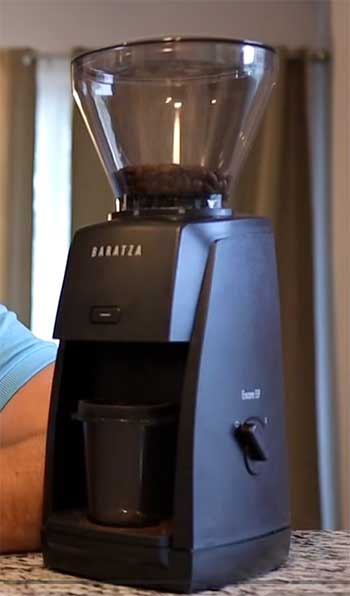
- Grind Adjustment Mechanism: The Encore ESP uses a dual-range system where the lower 20 settings have tighter increments tailored for espresso, letting me make micro-adjustments that noticeably improve shot balance. The Smart Grinder Pro spreads its 60 steps more evenly across the full range, which feels smoother when jumping between espresso and coarser filter grinds but can make fine-tuning shots a bit more frustrating with larger jumps in the critical fine zone.
- Operation Philosophy: Baratza keeps everything manual, pushing me to use a scale and develop better habits, which has honestly made me a more precise home barista over time. Breville leans into automation with timed dosing and programmable shots, shaving minutes off busy mornings and making consistent doses effortless even when I’m half-awake.
- Retention and Single-Dosing: The Baratza retains only about 1-2g and flows cleanly, so switching beans mid-week feels painless with minimal waste. The Breville traps more grounds internally—often 3-5g—meaning I have to purge or accept some flavor carryover when single-dosing different roasts.
- Static Management: Baratza’s built-in ionizer and metal cup almost eliminate static for me; grounds pour out in a tidy stream even on dry winter days. The Breville produces noticeably more cling, leaving grounds stuck to the chute and bin that require brushing or tapping to clean up.
- Build and Longevity: Baratza’s heavier, more modular construction gives it that “built-like-a-tank” confidence, and the easy part replacements mean mine will likely outlast the Breville. The Smart Grinder Pro feels lighter and more plastic-heavy, which works fine day-to-day but raises questions about surviving years of heavy use.
- Noise Level: The Baratza’s slower motor produces a lower-pitched hum that’s easier on the ears, especially during longer grinds. The Breville’s higher RPM creates a sharper, more piercing sound that stands out more in a quiet kitchen.
- Workflow Integration: Breville wins hands-down for direct portafilter grinding with its stable cradles— I can lock in the portafilter, hit start, and walk away. With the Baratza, I grind into the metal cup first, then transfer, adding an extra step but giving me more control over distribution.
- Motor Characteristics: Baratza’s low-speed DC motor runs cooler and gentler on beans, helping preserve nuanced flavors in specialty light roasts. The Breville grinds faster but generates more heat, which can subtly mute those delicate notes over repeated use.
- Versatility Focus: Both handle multiple methods well, but the Baratza’s upgraded burrs give it a clear edge in espresso clarity and sweetness, while the Breville’s even steps and larger hopper make daily filter brewing feel more seamless for mixed-use households.
- Learning Curve: The Breville is instantly approachable—plug it in and you’re making decent coffee in minutes. The Baratza rewards spending a weekend learning its quirks, delivering noticeably better results once you understand the adjustment system.
- Counter Space: Baratza’s narrower, shorter profile slides easily under cabinets and leaves room for other gear. The Breville’s wider base and taller hopper demand more real estate.
- Price-to-Performance: At nearly the same cost, the Baratza delivers superior particle consistency and long-term reliability, while the Breville justifies its price through convenience features that streamline the entire brewing process.
Key Features of The Baratza Encore ESP
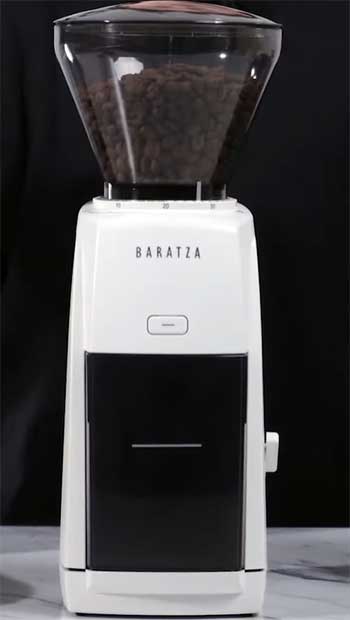
- Upgraded Conical Burr Set: The ESP version uses a sharper, redesigned 40mm steel conical burr set specifically tuned for finer grinds. In my experience, this produces fewer fines and boulders compared to the original Encore, leading to cleaner espresso shots with better extraction.
- Dual-Range Grind Adjustment: The clever ring system gives you 40 macro settings, but the lower 20 settings have much smaller steps for espresso precision. I love how this lets me dial in shots without huge jumps that choke or flood the puck.
- Low-Speed, High-Torque DC Motor: Running at 550 RPM, it generates minimal heat and keeps static low. I’ve noticed grounds come out cooler and less clumpy than faster motors, preserving delicate flavor notes in light roasts.
- Anti-Static Technology: An ionizer and metal dosing cup dramatically reduce static cling. When I grind fine for espresso, the grounds drop cleanly into the cup instead of coating everything in a dusty mess.
- Simple Manual Controls: A side switch for continuous grinding and a front pulse button give total control. I appreciate the no-frills approach – no timers to calibrate, just pure manual operation that forces me to weigh doses accurately.
- Compact and Sturdy Footprint: At just 7 pounds with a small base, it fits easily under cabinets. The build feels tank-like, and Baratza’s legendary repairability means parts are cheap and easy to replace.
- Versatile Brew Range: While optimized for espresso, it handles medium to coarse grinds beautifully for pour-over, AeroPress, and drip. I’ve pulled everything from syrupy espresso to bright V60 brews with consistent results.
- Quiet Relative to Power: It’s not silent, but the low RPM keeps noise manageable. In my morning routine, it doesn’t wake the household like some high-speed grinders do.
Pros of The Baratza Encore ESP
- Exceptional Grind Consistency for the Price: The upgraded burr geometry produces remarkably uniform particles, especially in the espresso range. My shots taste balanced with clear sweetness and acidity.
- Outstanding Durability and Repairability: Baratza’s modular design means I can replace nearly any part affordably. I’ve heard stories of Encores lasting 10+ years with basic maintenance.
- Low Static and Clumping: The anti-static system works wonders. Grounds fall cleanly, making single-dosing easy and reducing waste.
- Excellent Customer Service: Baratza’s support is legendary. When I had a minor issue years ago with another model, they sent parts free even out of warranty.
- Versatile Across Brew Methods: It shines for espresso but doesn’t sacrifice coarser grinds. My pour-overs come out clean and vibrant.
- Minimal Heat Generation: Low RPM preserves delicate aromatics. Light roasts retain their fruity character better than with hotter-running grinders.
- Compact Design: Takes up minimal counter space and stores easily when needed.
- Great Value Retention: These hold value well on the used market due to reliability.
- Quiet Enough for Early Mornings: Noticeably less disruptive than many competitors.
- Encourages Better Technique: Manual operation forces me to weigh doses and time shots, improving my overall barista skills.
Cons of The Baratza Encore ESP
- Manual Operation Only: No timer means I must weigh every dose. This slows workflow compared to automated options.
- Some Retention: Around 1-2g stays in the chute. Single-dosing requires purging or marking.
- Noisy at Finer Settings: The motor works harder for espresso, producing a noticeable grind sound.
- Limited Hopper Size: 8 oz means more frequent refills for heavy users.
- Basic Aesthetics: Functional black plastic design lacks premium feel.
- Learning Curve for Adjustment: The dual-range system takes getting used to initially.
- No Direct Portafilter Grinding: Requires transferring from dosing cup, adding a step.
- Static Can Still Occur: With very dry beans, some cling remains despite anti-static tech.
- Pulse Button Placement: Front button requires two hands for short bursts.
- No Backlighting: Hard to see markings in dim light.
Key Features of The Breville Smart Grinder Pro
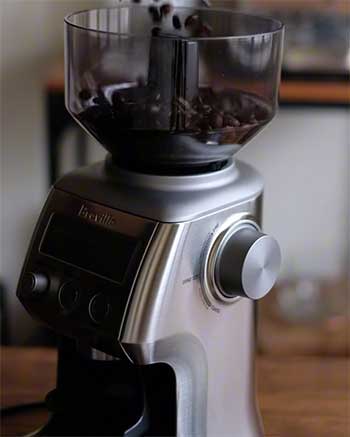
- 60 Precise Grind Settings: The wide range covers ultra-fine Turkish to coarse French press. I find the steps even across the spectrum, making it easy to switch between brew methods without frustration.
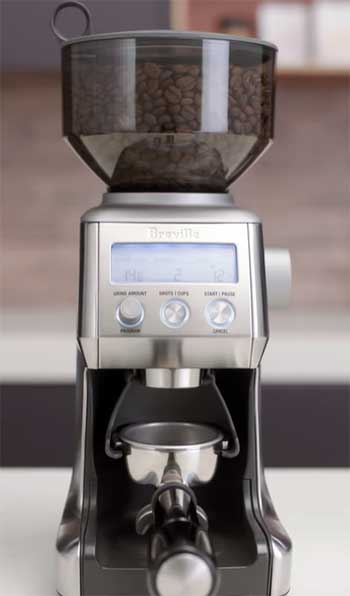
- Dosing iQ Technology: Programmable grind time in 0.2-second increments with pause/resume functionality. Once I dial in a time for my 18g dose, it delivers repeatable results shot after shot – a huge time-saver.
- Backlit LCD Display: Shows grind setting, time, and shots/cups mode clearly. The interface feels modern and intuitive; I can save favorite settings for different beans or brew styles.
- Portafilter Cradles: Included 50-54mm and 58mm cradles let me grind directly into the portafilter hands-free. This workflow feels seamless when I’m rushing through morning espresso.
- Large Bean Hopper: 16 oz capacity with locking system for easy removal and cleaning. I can keep a full pound of beans loaded without constant refills.
- Adjustable Upper Burr: A small dial lets me calibrate for alignment if needed. I’ve used this to fine-tune consistency when switching bean types.
- Magnetic Grounds Tray: The bin snaps in place securely, reducing spills. Cleanup is straightforward with removable parts.
- Multiple Dosing Options: Choose between shots (espresso mode) or cups (filter mode) with automatic adjustment suggestions. This flexibility suits households with varied brewing preferences.
Pros of The Breville Smart Grinder Pro
- Incredibly User-Friendly Interface: The LCD and buttons make operation intuitive. Beginners feel confident immediately.
- Precise Timed Dosing: Once calibrated, it delivers consistent doses without a scale – perfect for busy mornings.
- Wide Grind Range: 60 settings cover virtually every brew method convincingly.
- Hands-Free Portafilter Grinding: Cradles make workflow smooth and mess-free.
- Large Hopper: Less refilling, great for families or high volume.
- Programmable Settings: Save favorites for different beans or drinks.
- Modern Design: Stainless accents look sharp on any counter.
- Good Consistency Across Range: Especially strong for filter coffee and medium espresso settings.
- Adjustable Calibration: Fine-tune burr alignment if needed.
- Magnetic Tray: Secure and easy to clean.
Cons of The Breville Smart Grinder Pro
- Higher Retention: 3-5g can stay inside, requiring purging for bean switches.
- More Static Issues: Grounds often cling without anti-static measures.
- Build Quality Concerns: More plastic components feel less durable long-term.
- Noisier Operation: Higher speed motor creates noticeable buzz.
- Clumping at Fine Settings: Some users report needing WDT tools more often.
- Timer Drift Over Time: May need occasional recalibration.
- Larger Footprint: Takes more counter space.
- Less Repairable: Parts harder to source compared to Baratza.
- Heat Generation: Faster motor can slightly affect delicate roasts.
- Portafilter Cradle Fit: Not perfect for all machines.
My Experience with Espresso Performance
When I first started pulling shots seriously, the Encore ESP transformed my results. The finer steps let me make tiny adjustments that eliminated channeling. Shots developed beautiful crema and layered flavors.
The Breville performed well too, especially with timed dosing keeping my routine fast, but I noticed more inconsistency day-to-day, requiring frequent recalibration.
My Experience with Pour-Over and Filter Coffee
Both shine here, but the Breville’s even steps and larger hopper make it slightly more convenient for daily drip or V60 sessions. The Baratza still produces excellent clarity, often with fewer fines muddying the cup.
Which One Should You Choose?
If you’re serious about espresso and willing to weigh doses, I lean toward the Baratza Encore ESP for its superior consistency and longevity. If you value convenience, timed automation, and direct portafilter grinding, the Breville Smart Grinder Pro will make your mornings smoother.
Also Read: My Experience With Hamilton Beach FlexBrew.
Frequently Asked Questions (FAQ)
The ESP has upgraded burrs and a dual-range adjustment system optimized for espresso, offering finer resolution and better consistency in the fine range.
The Baratza Sette 270 is generally superior for espresso with lower retention and faster grinding, though it’s more expensive.
Yes – it’s excellent for beginners with great features and consistency across brew methods.
The standard Encore struggles with fine enough grinds; the ESP version is designed specifically for espresso and performs well.
Final Thoughts
After months alternating between these two grinders, I keep coming back to what matters most to me: consistent, flavorful coffee that improves over time. The Baratza Encore ESP has earned permanent counter space in my setup because it delivers better espresso and feels built to last.
But I completely understand why you’d choose the Breville Smart Grinder Pro – that timed dosing and sleek interface make brewing feel effortless.
Ultimately, you can’t go wrong with either. Pick based on whether you prioritize precision and durability or convenience and features, and you’ll be pulling better shots than most cafes in no time.