
For years I’ve been using both balance boards and wobble boards in my own training, rehabilitation, and daily movement routines. They look similar at first glance, but they challenge your body in very different ways.
In this article, I’ll compare them side-by-side, break down their key features, pros, cons, and real-world differences so you can decide which one fits your goals—whether you’re recovering from an injury, building athletic performance, or simply wanting better stability as you age.
| Feature | Balance Board | Wobble Board |
| Shape | Usually rectangular or oblong | Almost always round |
| Movement type | Primarily one-directional (side-to-side or front-to-back) | 360-degree tilt in all directions |
| Base/fulcrum | Rocker bottom or removable roller | Fixed dome or pivot point in the center |
| Difficulty curve | Easier to learn, progressive difficulty | Steeper learning curve, instantly unstable |
| Primary muscle focus | Ankles, knees, linear core stability | Full core, proprioception, multi-plane stability |
| Best for | Beginners, rehab, surfing/snowboarding simulation | Advanced users, injury prevention, dynamic sports |
| Portability | Often larger and heavier | Usually compact and lighter |
| Price range | $40–$200+ | $25–$150 |
| Risk of falling | Moderate | Higher |
Key Differences Between Balance Boards And Wobble Boards
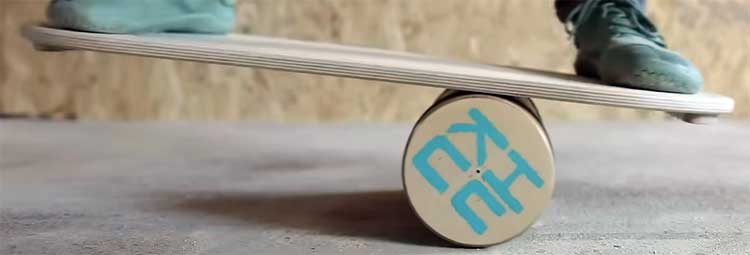
I’ve spent countless hours on both types of boards, and the differences become crystal clear once you’ve experienced them side by side. Here’s a detailed breakdown of how they truly stack up against each other.
- Movement Freedom
Balance boards typically limit motion to a single plane—either side-to-side (rocker style) or front-to-back (with a roller). This controlled, predictable tilt feels almost forgiving because you only have to anticipate one direction at a time.
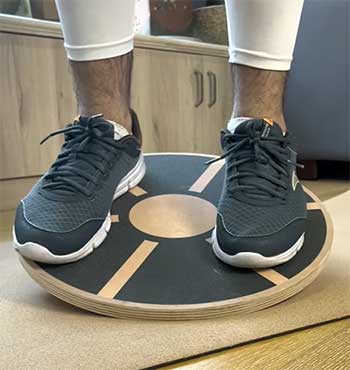
Wobble boards, on the other hand, give you full 360-degree freedom. The central dome lets the board tip in any direction, often all at once. The first time you step on one, you realize your body has to react to threats from every angle simultaneously. This makes wobble boards far more “real-world” in their challenge.
- Learning Curve
With a balance board, you can achieve basic competence in minutes. You rock gently, find your center, and gradually increase range or speed. It’s progressive and confidence-building. A wobble board hits you with maximum instability from the very first second.
There’s no gentle introduction unless you buy an adjustable model with a very low dome. Most people wobble violently at first, arms windmilling for balance. It can take days or weeks to feel comfortable just standing still.
- Muscle Recruitment
Balance boards primarily target the muscles that stabilize in straight lines—your peroneals, tibialis, quadriceps, and glutes in a more isolated way. They’re excellent for building strength along one axis.
Wobble boards force constant micro-adjustments through multiple planes, lighting up deeper stabilizers like the transverse abdominis, multifidus, obliques, and smaller hip rotators. After a 10-minute wobble session, I feel my entire core and lower body buzzing in a way a balance board never replicates.
- Fall Risk and Safety
Balance boards are generally safer, especially for beginners or rehab settings.
The limited motion means you’re less likely to tip unexpectedly in a random direction.
Many have stops or removable rollers to cap difficulty.
Wobble boards carry higher risk because a sudden shift in weight can send you flying sideways or backward without warning.
I always recommend starting near a wall or with a spotter until you develop the reflexes.
- Sport Specificity
If you surf, snowboard, skateboard, or wakeboard, a balance board (especially a roller style) mimics the linear edge-to-edge transitions perfectly. I use mine to practice carving turns.
For field or court sports—soccer, basketball, tennis, trail running—a wobble board better replicates the chaotic, multi-directional demands. Quick cuts, pivots, and sudden stops all require that omnidirectional awareness.
- Space Requirements
Roller-style balance boards need clear floor space because the roller can shoot out if you over-rotate. You have to plan your workout area accordingly. Wobble boards stay in one spot—the dome keeps everything contained. This makes them ideal for small apartments or quick sessions in tight corners.
- Progression Options
Balance boards offer almost endless ways to scale difficulty: narrower stance, taller roller, eyes closed, single-leg, adding weights, or combining with other exercises. You can fine-tune progression week by week.
Wobble boards have fewer built-in adjustments. You progress mainly by changing stance width, holding time, closing eyes, or adding dynamic movements like tosses or squats. Some advanced models let you swap domes, but most are fixed.
- Rehabilitation Focus
Physical therapists often start patients on balance boards for early-stage ankle sprains or knee rehab because the controlled motion rebuilds strength without overwhelming the joint. Wobble boards shine in late-stage rehab and proprioceptive training, where the goal is restoring full-body awareness and preventing re-injury through unpredictable challenges.
- Calorie Burn and Energy Demand
Both elevate heart rate above standing on solid ground, but wobble boards win decisively. The constant multi-directional corrections recruit more muscle fibers and spike energy expenditure.
Research on unstable surfaces shows increased activation, and the full 360-degree demand pushes that even higher—often 15-25% more than stable exercises.
- User Confidence and Mental Aspect
Balance boards build confidence quickly. You see progress fast, which keeps you coming back. Wobble boards can be psychologically brutal at first—repeated failures are common, and that can discourage some people. Once you break through, though, the sense of accomplishment is huge, and the mental focus required sharpens overall body awareness.
Key Features of Balance Boards
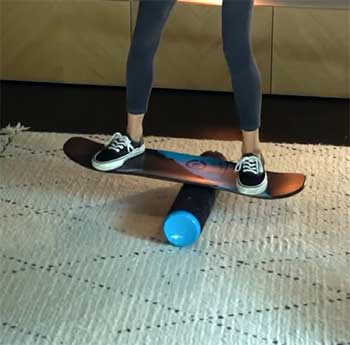
- Rectangular or elongated shape for directional stability
- Single-plane movement that limits tilt to one axis at a time
- Adjustable difficulty—beginners can use a narrow rocker, advanced users switch to a wider roller
- Non-slip surface, often cork or grip tape
- Durable wood or composite construction that handles heavy weight
- Often paired with a separate roller or stops to prevent over-rotation
- Larger standing area that accommodates wider stances
- Some models include handles or straps for rehab exercises
I appreciate how predictable the movement feels. You know exactly which direction you’re going to tip, which makes it far less intimidating when you’re just starting out.
Pros of Balance Boards
- Beginner-friendly learning curve that builds confidence quickly
- Excellent for targeted ankle and knee rehabilitation after sprains
- Simulates lateral movements in sports like surfing, skateboarding, and snowboarding
- Allows progressive overload—you can make it harder by widening stance or closing eyes
- Lower risk of sudden falls compared to full 360-degree boards
- Great for linear core work and glute activation in single-leg exercises
- Larger platform gives more room for squats, push-ups, and planks
- Many models let you remove the roller for floor exercises
- Often more affordable at entry level
- Easier to store upright or under a bed
When I tore my ACL years ago, my physical therapist had me on a rocker balance board from week six. The controlled side-to-side motion rebuilt my confidence without overwhelming my knee.
Cons of Balance Boards
- Limited to one plane of movement, so less functional for real-life multi-directional demands
- Can become too easy for advanced users within weeks
- Roller versions require space to prevent the roller from shooting out
- Larger size makes them less portable for travel
- Less engagement of deep core stabilizers compared to 360-degree options
- Some cheap models wear out or splinter over time
- Not as effective for advanced proprioceptive training
- Can feel repetitive after extended use
I outgrew my first rocker board fairly quickly and found myself craving something that forced me to react in every direction.
Key Features of Wobble Boards
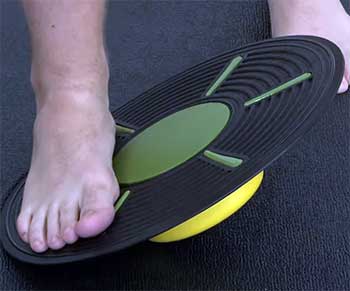
- Round shape with central fulcrum for omnidirectional movement
- Fixed dome height that determines difficulty (higher = harder)
- Compact diameter, usually 14–20 inches
- Lightweight plastic or wood construction
- Textured or rubberized top for grip
- Some adjustable-angle versions let you change the dome
- Extremely portable—fits easily in a backpack
- Stable when not in use because it sits flat on the dome
- Often used in therapy settings with marked circles for precision drills
The first time I stepped on one, I lasted maybe five seconds. That instant feedback of instability is both humbling and addictive.
Pros of Wobble Boards
- Trains true multi-plane stability that mimics real-life demands
- Rapidly improves proprioception and reaction time
- Engages deep core muscles and hip stabilizers constantly
- Excellent for injury prevention in sports requiring quick changes of direction
- Compact and travel-friendly—perfect for hotel room workouts
- Forces constant micro-adjustments that burn more calories
- Highly effective for ankle sprain rehabilitation and prevention
- Works well for advanced exercises like single-leg holds or catches
- Builds mental focus and body awareness fast
- Affordable across most models
- Versatile for seated, kneeling, or hands-on variations
I noticed my running economy improved dramatically after three months of daily wobble board work. My ankles and hips learned to absorb impact better.
Cons of Wobble Boards
- Steep learning curve—many people fall off repeatedly at first
- Higher initial risk of injury if you push too hard too soon
- Smaller standing area limits certain exercises like deep squats
- Constant instability can be exhausting for beginners
- Less forgiving—no “easy mode” on basic models
- Can feel intimidating for older adults or those with poor balance
- Some users experience motion sickness early on
- Plastic versions can crack under very heavy users over time
- Harder to progress gradually without buying multiple dome heights
- Noise factor—tipping makes more sound on hard floors
I’ve seen plenty of people give up after the first frustrating session because they expected instant mastery.
My Personal Experience Using Both
I own three balance boards and two wobble boards, and I still use all of them depending on the day. When I want a focused lower-leg rehab session or to simulate surfing stance, I reach for my rocker-roller combo.
When I want to wake up my entire core and nervous system before a trail run, I grab the 16-inch wobble board and do five minutes of single-leg holds.
I’ve introduced both to friends and clients. Beginners almost always prefer starting with a balance board—they feel accomplished after one session. Athletes and younger adults tend to gravitate toward wobble boards because the challenge is immediate and obvious.
- Which One Burns More Calories?
Both elevate heart rate, but wobble boards win here. The constant multi-directional corrections recruit more muscle fibers and demand greater energy expenditure. Studies on unstable surfaces show increased caloric burn of 10–20% compared to stable ground, and the 360-degree demand pushes that higher.
- Are They Safe for Kids?
Yes, with supervision. I’ve used both with my own kids starting around age six. Balance boards are generally safer for younger children because the movement is more predictable. Start with very short sessions and always stay close.
- Can Older Adults Benefit?
Absolutely, and I’ve seen it firsthand with my parents. Low-profile balance boards or wobble boards with smaller domes are excellent for fall prevention. The key is starting conservatively—30 seconds at a time near a stable surface.
- How to Progress Safely
Start near a wall or sturdy furniture. Begin with two feet, eyes open. Progress to eyes closed, then single-leg, then adding movement (catches, squats, reaches). Move slowly—mastery takes weeks, not days.
Also Read: Is Schwinn 230 Recumbent Bike Worth It?
Frequently Asked Questions (FAQ)
It depends on your goals. Choose a balance board if you’re a beginner, recovering from injury, or want controlled progression. Choose a wobble board for advanced core training, multi-directional stability, and faster proprioceptive gains.
Steeper learning curve, higher initial fall risk, smaller standing area, and can be intimidating or exhausting for beginners.
Superior multi-plane stability, rapid proprioception improvement, deep core engagement, injury prevention for dynamic sports, and compact portability.
Yes, especially rocker-style versions. They improve ankle strength, reaction time, and confidence, all of which reduce fall risk when used progressively and safely.
Final Thoughts
After years of using both, I can say neither is universally “better”—they serve different purposes beautifully. If I could only keep one, I’d choose the wobble board because it forces adaptation that translates everywhere.
But if you’re just starting, ease in with a balance board and graduate later. You’ll thank yourself for building that foundation.
Whichever you pick, consistency matters far more than the tool itself. Ten minutes a day on either will transform your stability, strength, and body awareness. Your future self—the one who doesn’t twist an ankle on an uneven sidewalk—will appreciate the effort you put in today.