
I’m a coffee obsessive who’s brewed hundreds of cups with both the AeroPress and the Clever Dripper. In this article, I’ll share my real-world experience comparing these two popular immersion brewers head-to-head.
I’ll break down their key features, pros, cons, and differences to help you decide which one deserves a spot on your counter — or if you should own both like I do.
Whether you’re chasing bold espresso-style shots or clean, balanced cups, this comparison will give you the clarity you need.
| Aspect | AeroPress | Clever Dripper |
| Brewing Method | Full immersion + air pressure | Full immersion + valve release (pour-over style) |
| Brew Time | 1–2 minutes | 3–5 minutes |
| Typical Yield | 1–2 cups (8–10 oz concentrated) | 1–4 cups (up to 16–20 oz) |
| Coffee Style | Concentrated, bold, espresso-like or American | Clean, bright, balanced drip-style |
| Portability | Extremely portable (light, compact, durable) | Less portable (ceramic/plastic, bulkier) |
| Ease of Cleaning | Very easy (puck pops out) | Easy (filter rinses, but valve needs attention) |
| Paper Filters Needed | Yes (micro-filters included) | Yes (standard #4 or Melitta filters) |
| Versatility | High (espresso-style, cold brew, inverted) | Moderate (mainly full immersion drip) |
| Build Material | Food-grade plastic (BPA-free) | Ceramic or plastic |
| Price Range | $35–$50 | $20–$35 |
| Learning Curve | Moderate (technique matters) | Very low (forgiving) |
Key Differences Between AeroPress And Clever Dripper
I’ve brewed with both devices side-by-side for years, using the exact same beans, grind settings, water temperature, and ratios whenever possible.
The differences aren’t just on paper — they show up dramatically in the cup, in your morning routine, and in how each brewer fits into different parts of your life. Here’s a much closer look at what truly sets them apart.
- Extraction method
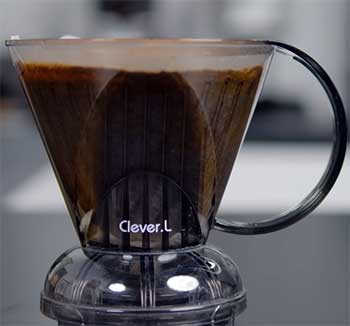
This is the biggest fundamental difference.
The AeroPress combines full immersion with manual air pressure.
You steep the coffee briefly, then physically push the plunger to force water through the grounds and filter.
That pressure (around 1–2 bar at most) extracts more oils and creates a richer body.
The Clever Dripper is pure immersion followed by gravity filtration.
The coffee steeps fully submerged, then you place it on your cup and the valve opens, letting gravity pull the brew through the filter slowly.
No pressure means fewer oils make it into the cup, resulting in a cleaner, brighter profile.
- Brew Capacity And Serving Size
AeroPress is designed for small batches — officially about 10 oz of concentrate, which translates to one large mug or two smaller cups. If you’re making coffee for a group, you’ll be brewing multiple times.
The Clever Dripper handles much larger volumes comfortably — 16–20 oz in one go, enough for three to four standard mugs. For me, this makes the Clever my weekend or guest brewer, while the AeroPress stays my solo daily driver.
- Total Brew Time And Workflow
AeroPress is lightning fast. From grinding to first sip, I can finish in 90–120 seconds. Setup, steep 30–60 seconds, press 20 seconds, done. The Clever takes longer — usually 4–5 minutes total. You add water, wait 3–4 minutes for full immersion, then another minute or so for draining.
It’s slower, but most of that time is hands-off. If you’re rushing out the door, AeroPress wins. If you’re enjoying a relaxed morning, the Clever feels more meditative.
- Flavor Profile And Mouthfeel
This is where personal taste comes in strongest. AeroPress coffee tends to be bolder, more viscous, with pronounced body and sometimes subtle sweetness from the emulsified oils.
It can taste closer to espresso (though not quite) and handles medium to dark roasts beautifully, bringing out chocolate, caramel, and nutty notes.
The Clever produces a cleaner, more tea-like cup with higher perceived acidity and brighter fruit notes. It’s exceptional with light roasts, letting floral and citrus characteristics shine without the heavier mouthfeel.
In blind tastings I’ve done, most people describe AeroPress as “rich and intense” and Clever as “clean and lively.”
- Technique Sensitivity And Forgiveness
AeroPress rewards attention to detail. Small changes in grind size, agitation, press speed, or steep time noticeably affect the cup. It’s great if you love tinkering, but it means early attempts can be inconsistent. The Clever is incredibly forgiving.
As long as your grind isn’t wildly off and you steep for 3–4 minutes, you’ll get a solid cup almost every time. This makes it ideal for beginners or mornings when you’re half-asleep.
- Portability And Travel-Friendliness
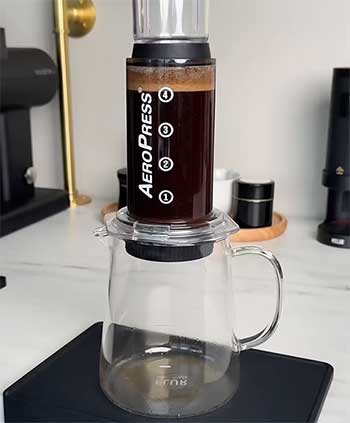
AeroPress is the undisputed champion here.
The whole kit — chamber, plunger, cap, scoop, stirrer, and filters — weighs under a pound and packs into a slim cylinder.
I’ve taken mine hiking, on international flights, to hotels, and even to the office.
It’s unbreakable plastic and needs no stand. The Clever is bulkier and, in the ceramic version, fragile.
The plastic Clever is lighter but still takes up more space and requires a mug or carafe to sit on.
It’s a stay-at-home brewer for most people.
- Physical Effort Required
AeroPress demands a steady, firm press — about the force of pushing a stubborn French press but for only 20 seconds. It’s not hard, but if you have wrist issues or are brewing multiple cups, it can become tiresome.
The Clever requires zero pressing. You just set it down and let gravity work. This makes it gentler on the body and more accessible for some users.
- Cleanup process
Both are easy, but in different ways. AeroPress cleanup is uniquely satisfying — unscrew the cap, push the plunger over the trash or compost, and the spent grounds pop out as a compact puck.
Rinse everything in seconds. The Clever involves removing the filter and grounds (which can be messier), rinsing the dripper, and occasionally cleaning the valve to prevent buildup. The valve is the only potential pain point — fines can occasionally clog it, requiring a quick poke with a toothpick.
- Filter Types And Ongoing Costs
AeroPress uses proprietary round micro-filters that are finer than standard paper. They produce exceptionally clean coffee but are specific to the device (though third-party options exist).
The Clever uses widely available #4 cone filters or Melitta-style baskets — cheaper per filter and easier to stock up on. If you hate running out of supplies, Clever wins.
- Heat Management During Brewing
The Clever’s larger mass (especially ceramic) and full immersion keep water temperature more stable throughout the steep. AeroPress, being smaller and plastic, loses heat faster, especially in the standard upright method.
The inverted AeroPress method helps mitigate this by extending steep time without dripping, but it’s an extra technique to learn.
- Versatility In Brew Styles
AeroPress is a playground for experimentation. Standard method, inverted method, bypass dilution for Americano-style, concentrated shots for milk drinks, quick cold brew, even tea or broths. There are World AeroPress Championship recipes that push boundaries.
The Clever is more one-note — excellent at full-immersion drip coffee, but you can’t easily do concentrates, pressure shots, or inverted tricks. It’s great at what it does, but limited beyond that.
- Best Suited Roast Levels
From my experience, AeroPress shines with medium to medium-dark roasts where body and sweetness matter. The pressure helps extract deeper notes without excessive bitterness. Light roasts can work but sometimes taste muted or overly acidic.
The Clever excels with light to medium roasts, preserving delicate fruit and floral notes while taming acidity through immersion. Dark roasts in the Clever can taste flatter compared to AeroPress.
Key Features of The AeroPress
Here are the standout features that keep me reaching for my AeroPress almost daily:
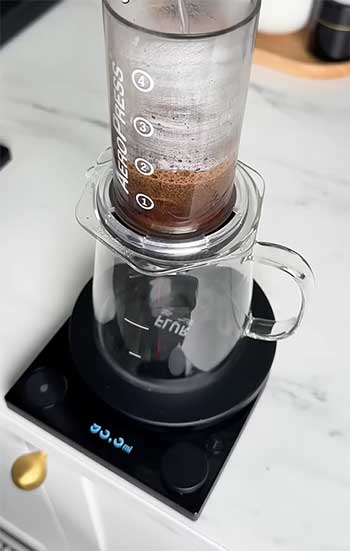
- Rapid brewing: Total time from setup to sipping is usually under two minutes.
- Inverted method option: Flip it upside down for longer immersion without dripping.
- Pressure extraction: The manual press adds body and extracts oils that paper filters alone might not.
- Micro-filters: Tiny pores block sediment better than most paper filters, resulting in a super clean cup.
- Multiple brew styles: From strong concentrate (great for lattes) to lighter American-style.
- Cold brew capability: Quick cold brew in minutes instead of hours.
- Durable and lightweight: Survives travel, camping, and daily abuse without breaking.
- Included accessories: Scoop, stirrer, funnel, filter holder, and hundreds of paper filters.
- Metal filter compatibility: For those who want more oils and a fuller mouthfeel.
- Easy puck ejection: Pressed grounds pop out as a neat puck — satisfying and clean.
Pros And Cons of the AeroPress
Pros
- Speed: Nothing beats it for a quick morning cup.
- Flavor intensity: Produces bold, rich coffee with excellent clarity.
- Portability: My favorite travel brewer — fits in a backpack side pocket.
- Versatility: Endless recipes and methods (inverted, bypass, cold brew, etc.).
- Easy cleanup: Rinse and pop out the puck — done in 20 seconds.
- Consistent with practice: Once you dial in your recipe, it’s repeatable.
- Affordable long-term: Filters are cheap, and the unit lasts forever.
- Community support: Massive online recipe database and championships.
- No electricity needed: Perfect for camping or power outages.
- Quiet operation: No noisy machines.
Cons
- Small batch size: Best for 1–2 cups; larger batches require multiple brews.
- Manual pressure needed: Can be tiring if making several cups back-to-back.
- Learning curve: Grind size, water temp, and press speed all affect taste significantly.
- Plastic construction: Some people worry about plastic taste (I never noticed after initial washes).
- Paper filters required: Adds ongoing cost (though reusable metal filters exist).
- Can produce slightly acidic cups if over-extracted.
- Not ideal for very light roasts: Pressure can sometimes mute delicate notes.
- Messy if you rush: Plunger can spray if not pressed steadily.
- Limited to single servings for most users.
- Replacement parts needed eventually: Seals wear out after 2–3 years of heavy use.
Key Features of The Clever Dripper
The Clever has its own set of strengths that shine when I’m brewing for more than one person:
- Immersion + drip hybrid: Steep for full extraction, then release for filtered clarity.
- Large capacity: Officially up to 16 oz, but I regularly do 18–20 oz batches.
- Simple valve mechanism: No electricity, no moving parts beyond the silicone stopper.
- Uses standard filters: #4 cone or Melitta-style — easy to find and cheap.
- Consistent results: Very forgiving; hard to mess up even if you’re distracted.
- Heat retention: Ceramic version stays hot longer during steeping.
- No pressing required: Gravity does the work — gentler on wrists.
- Transparent brewing: You can watch extraction through the plastic version.
- Stackable design: Multiple units store neatly.
- BPA-free materials: Both plastic and ceramic versions are food-safe.
Pros And Cons of the Clever Dripper
Pros
- Larger batches: Easily brews 16–20 oz without multiple rounds.
- Forgiving process: Even beginners get good results.
- Clean, balanced flavor: Highlights origin characteristics beautifully.
- Excellent for light roasts: Doesn’t overpower delicate notes.
- No manual pressing: Gentler and more relaxed brewing experience.
- Uses cheap, widely available filters.
- Great heat retention (especially ceramic model).
- Set-it-and-forget-it steeping: Multitask while it brews.
- Consistent temperature during immersion.
- Affordable entry price.
- Easy to scale recipes up or down.
- Minimal sediment with proper filter and grind.
Cons
- Longer brew time: 4 minutes total is slower than AeroPress.
- Less portable: Ceramic version is fragile; plastic is bulky.
- Valve can clog: Coffee fines sometimes get stuck (rare but annoying).
- Less flavor intensity: Not as bold or concentrated as AeroPress.
- Requires a carafe or large mug: Can’t brew directly into small cups easily.
- Plastic version can retain odors if not cleaned well.
- No pressure extraction: Misses some body and oils.
- Harder to do cold brew: Not designed for it.
- Limited versatility: Mainly one brewing style.
- Draining can be slow with very fine grinds.
- Ceramic version heavy and breakable.
Also Read: Differences Between Fellow Aiden And Moccamaster.
My Personal Experience With Both

After years of using both, here’s how they’ve fit into my routine.
The AeroPress is my weekday morning hero. I wake up, grind beans, and have a rich 9 oz cup in my hand before my brain fully boots.
When traveling, it comes with me — I’ve brewed great coffee in hotel rooms, Airbnbs, and even on planes (using hot water from the cart).
The Clever Dripper shines on lazy weekends. I brew 18 oz, pour it into a thermal carafe, and sip slowly while reading or working.
It’s also my go-to when having friends over — one brew serves three or four people easily.
I’ve run side-by-side tastings with the same beans. With medium roasts, the AeroPress gives more chocolate and caramel notes with thicker mouthfeel. The Clever highlights fruit and acidity with a tea-like clarity. Both are excellent — just different.
Which One Should You Buy?
It depends on your lifestyle:
Choose the AeroPress if:
- You usually brew for one (or two).
- You value speed and intensity.
- You travel or want ultimate portability.
- You enjoy experimenting with recipes.
- You want espresso-style concentrate for milk drinks.
Choose the Clever Dripper if:
- You brew larger batches regularly.
- You prefer clean, balanced drip coffee.
- You want a forgiving, low-effort method.
- You drink light roasts and want to taste origin notes.
- You already own cone filters and want simplicity.
Many enthusiasts (including me) own both. They’re inexpensive enough that having one for quick solo cups and one for relaxed larger brews makes perfect sense.
Also Read: My Experience With Bodum Pour Over Coffee Maker.
Frequently Asked Questions (FAQ)
Small batch size, requires manual pressing, moderate learning curve, ongoing filter cost, and plastic construction that some people dislike.
It depends on your taste. AeroPress produces bolder, more concentrated coffee with greater body. Traditional drip (including Clever) often tastes cleaner and more nuanced. Neither is objectively “better” — they’re different styles.
Common criticisms include the small capacity, need for constant filter purchases, plastic material concerns, and the fact that it doesn’t make true espresso despite marketing similarities.
Yes, it’s excellent — especially for clean, balanced cups in larger quantities. It’s forgiving, consistent, and produces coffee that rivals high-end pour-over with minimal effort.
Final Thoughts
You and I both know that great coffee comes down to personal preference. I’ve loved my journey with both the AeroPress and Clever Dripper, and each has earned permanent counter space in my kitchen.
If you’re just starting, think about how you drink coffee most days. Want fast and bold? Grab an AeroPress. Craving relaxed, larger batches with clarity? The Clever is calling your name.
Whichever you choose, you’ll be making coffee that’s leagues better than any pod machine. Enjoy the process — that’s half the fun.